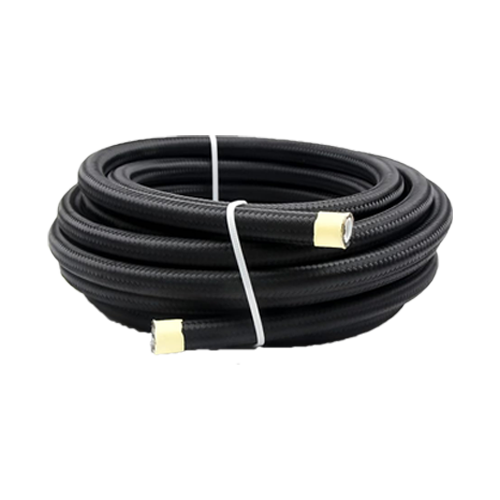
A customer called us about an engine that kept stalling after ten minutes of mowing. The tank was full, the plug was fresh, and the carburetor had been cleaned the month before. What he found when he finally traced the fuel line was a cracked hose that had gone hard and split at the fitting. That is the pattern behind most of the fuel line calls we get, and it is one of six problems this guide walks through — what each one looks like, how to diagnose it, and how to fix it without replacing parts you do not need. If you are specifically troubleshooting small outdoor power equipment, read our dedicated lawn mower fuel line guide.
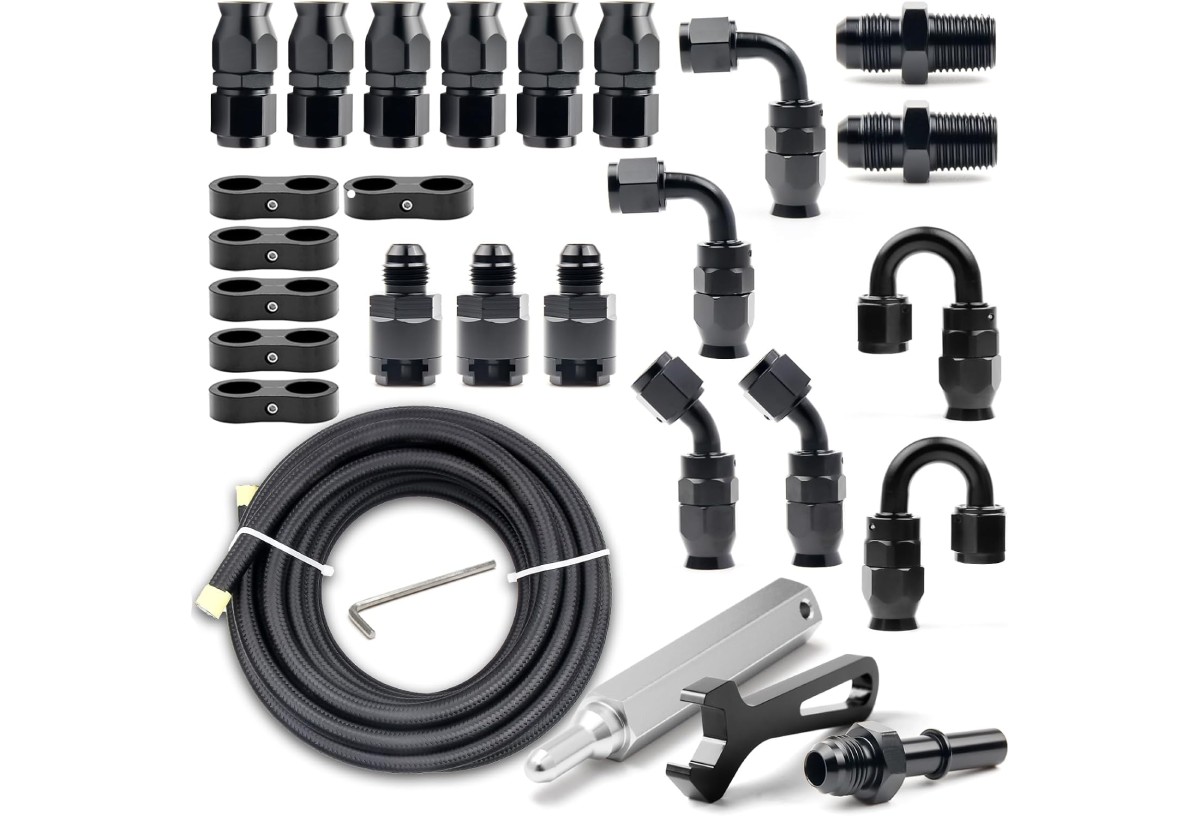
Here are the six most common fuel line problems we see, how to diagnose each one, and the right way to fix it. We’ve organized each problem by symptoms, diagnosis steps, and the exact fix — so you can go from symptom to solution without wasting time on guesswork.
Problem 1: Fuel Leak at a Connection
Symptoms: Fuel smell near the connection point, visible drips or wetness around fittings, fuel stains on the undercarriage below the connection.
Most likely cause: A loose fitting is the first thing to check. If that’s not the issue, the hose ID may not match the fitting barb — a hose that’s too large won’t seal no matter how tight the clamp is. On push-lock fittings, the hose may not have been fully seated. On fuel injection systems with quick-connect fittings, a damaged O-ring inside the connector is a common cause.
How to diagnose: With the engine running, inspect each connection point. Use a mirror for hard-to-see locations. If the leak is at a barb fitting, mark the hose position relative to the fitting, then disconnect and check if the hose ID matches. For quick-connect fittings, carefully pry apart the connector and inspect the O-ring — look for cuts, flattening, or debris trapped under the seal. A fuel pressure test can also help: if the rail pressure drops more than 5 PSI over 10 minutes with the engine off, you have a leak somewhere in the system.
Fix: Tighten hose clamps to spec — fuel injection clamps should be snug but not crushing the hose. For push-lock fittings, push the hose fully onto the barb (use lubricant if needed). If the hose ID is wrong, replace both the hose and fitting with matching sizes. For quick-connect O-rings, replace the O-ring seal — they’re available in standard metric sizes at most auto parts stores. Never use Teflon tape on fuel fittings; it can break loose and clog the fuel system.
Problem 2: Hose Cracking or Hardening
Symptoms: Visible surface cracks on the hose exterior, stiffness when you bend the hose, fuel odor in the engine bay even without visible leaks.
Most likely cause: Age and heat degradation. Standard rubber fuel hose exposed to ethanol-blended fuel will harden and crack within 1-3 years. Heat accelerates the process — hoses running near exhaust components fail much faster. UV exposure from open-hood storage also contributes to surface cracking on rubber hoses. This failure pattern is equally common in small engine applications where standard rubber lines sit near hot exhaust; swapping in a dedicated lawn mower fuel line kit prevents recurring seasonal cracking.
How to diagnose: Visually inspect the full length of every fuel hose. Pay special attention to sections near heat sources (exhaust manifold, turbo, catalytic converter). Squeeze the hose — if it feels hard or brittle, it’s time to replace it regardless of visible cracks. A useful test: bend the hose 90 degrees. If it cracks or shows white stress marks at the bend point, replacement is overdue. Check also where the hose passes through firewall grommets or chassis clips — these hidden sections often fail first because they trap moisture and debris against the hose surface.
Fix: Replace with FKM (Viton) hose. FKM resists ethanol degradation and lasts 10+ years. For sections that run near heat sources, add heat shielding or reroute the hose. Replace all clamps at the same time — old clamps may not grip new hose properly. When replacing, cut back to a section of hose that’s not heat-affected; if the entire visible length is hardened, trace the hose to both ends and replace the full run.
Not sure which inner diameter, reinforcement, or material rating matches your application? Read our guide on how to choose a fuel line hose kit.
Problem 3: Hose Swelling
Symptoms: Hose appears visibly larger in diameter, won’t sit properly in brackets, hose feels soft or spongy when squeezed.
Most likely cause: The hose material is absorbing fuel — a chemical incompatibility. This happens when standard rubber, EPDM, or low-quality aftermarket hose is used with ethanol-blended fuel. The fuel softens the rubber and causes it to expand. This problem has become significantly more common since the widespread adoption of E10 and E15 fuels — many older vehicles still have original rubber hoses that were never ethanol-rated.
Why it’s dangerous: Swollen hose has reduced burst pressure. It can rupture under normal fuel pressure, causing a sudden, high-pressure fuel leak directly onto hot engine components. A swollen hose that looks “just a little puffy” can fail catastrophically at any moment. We’ve seen swollen hoses rupture at idle — not just under load.
How to diagnose: Compare the swollen section to a known-good section of the same hose. If you don’t have a reference, measure the OD with calipers. A 10% increase in outer diameter over specification indicates significant internal degradation. Check all hoses in the system — swelling in one section usually means the entire run is compromised.
Fix: Replace immediately with FKM hose or upgrade to a stainless-reinforced rubber fuel line hose kit to permanently eliminate ethanol absorption and fuel vapor permeation. Do not drive the vehicle until the hose is replaced. If the swelling is extensive, flush the entire fuel system to remove degraded rubber particles that may have entered the fuel rail or injectors. A fuel filter replacement is mandatory as part of this repair — degraded rubber particles will clog the filter within miles if not already. This is one case where we strongly recommend professional shop service rather than DIY, especially for modern EFI systems.
Problem 4: Clogged or Restricted Fuel Line
Symptoms: Engine stumbles or hesitates at high RPM, won’t rev past a certain point, hard starting, or no-start condition. Fuel pressure at the rail reads below specification.
Most likely cause: Debris in the fuel system, internal hose degradation (flaking), or fuel contamination. If you recently replaced a fuel hose and the problem appeared afterward, a piece of debris may have been dislodged during the repair. Other common causes: rust particles from a steel fuel tank, sediment from a gas station’s underground tank, or algae growth in diesel fuel systems.
How to diagnose: Check fuel pressure first — low pressure indicates a restriction somewhere. If pressure is normal at idle but drops at high RPM, the restriction is partial. If the car won’t start and fuel pressure is zero, the line may be completely blocked or the fuel pump may have failed. Here’s a systematic approach:
- Test fuel pressure at the rail with a gauge. Compare to manufacturer specs (typically 40-60 PSI for EFI)
- If pressure is low at idle, check the fuel filter first — it’s the most common restriction point
- If the filter is clear, disconnect the fuel line at the tank and blow compressed air backward through the line (low pressure — 20-30 PSI max — to avoid damaging components)
- If air won’t pass, the line has a mechanical blockage (crushed section or severe internal delamination)
Fix: Replace the fuel filter first — this solves most restriction issues. If the problem persists, inspect the fuel hose for internal degradation. Cut open the old hose and look for flaking or debris inside. If the hose is degrading internally, replace all fuel hoses with FKM and flush the system. For crushed metal lines, the affected section must be cut out and replaced with rubber hose and barb unions — never try to straighten a crushed metal fuel line, as it will be weakened and prone to cracking.
Diagnosis Quick Reference — Problems 1-4
| Problem | Key Symptom | Primary Diagnosis Tool | Urgency | DIY Difficulty |
|---|---|---|---|---|
| Leak at connection | Visible wetness, fuel smell | Visual inspection, pressure test | High | Easy |
| Cracking/hardening | Brittle feel, surface cracks | Squeeze test, 90° bend test | Moderate | Easy |
| Swelling | Oversized, spongy feel | Caliper measurement, visual | Critical | Moderate |
| Clog/restriction | Low fuel pressure, stumbling | Pressure gauge, backflow test | Moderate | Moderate |
Problem 5: Hose Blow-Off
Symptoms: Hose separates from fitting under pressure, sudden fuel spray, engine stalls, strong fuel smell.
Most likely cause: Inadequate clamping for the pressure involved. EFI systems operate at 40-60 PSI — standard vacuum hose clamps won’t hold at these pressures. This is also common when a hose is the wrong ID for the fitting (too large), or when a fitting is worn or corroded. On AN-style fittings, an improperly assembled hose end (ferrule not fully crimped or nut not fully tightened) is the typical cause.
How to diagnose: Check the fitting for damage — worn barbs won’t grip. Check the clamp type — are you using fuel-injection-rated clamps or standard worm-gear clamps? Check the clamp position — it should sit behind the barb shoulder, not on top of it. For AN fittings, check that the hose is bottomed out in the socket and that the ferrule has been properly compressed — a gap between the ferrule and the nut indicates incomplete assembly.
Fix: Use fuel injection clamps designed for EFI pressure. For push-lock fittings, make sure the hose is fully seated. If the fitting is damaged, replace it. For AN-style fittings, verify the hose end is properly assembled with the correct ferrule. A blow-off event often damages the hose end — replace at least 2 inches of hose past the damaged section, or the full run if the hose shows any signs of wear.
Problem 6: Vapor Lock
Symptoms: Engine runs rough after hot soak (parking a hot engine), hard restart when hot, loss of power in hot weather or after hard driving.
Most likely cause: Fuel boiling in the fuel line due to heat soak from the engine or exhaust. Ethanol-blended fuels have a lower boiling point than pure gasoline, making vapor lock more common with modern fuels. E10 gasoline boils at roughly 160°F at atmospheric pressure, while pure gasoline boils at 200°F-plus — meaning ethanol blends are significantly more prone to vaporization in hot engine bays.
How to diagnose: If the symptoms appear only when the engine is hot but disappear when it cools down, vapor lock is likely. Check the fuel line routing — does it pass near the exhaust manifold, turbo, or catalytic converter? Is the line shielded from heat? A quick diagnostic: after a hot-soak no-start condition, carefully open the fuel cap. If you hear a rush of vapor (pressure release), vapor lock is confirmed. You can also check fuel rail temperature with an IR thermometer — if it exceeds 150°F after shutdown, vapor lock conditions exist.
Vehicles most prone to vapor lock:
- Carbureted vehicles with mechanical fuel pumps (the pump can’t pull liquid through vapor)
- Returnless EFI systems (no return line to circulate cool fuel back to the tank)
- Classic cars converted to ethanol-blended fuels without upgrading the fuel system
- Vehicles with headers or turbo systems where fuel lines run close to the exhaust
- Any vehicle operating in ambient temperatures above 95°F, especially in stop-and-go traffic
Fix: Insulate the fuel line with heat wrap or reflective shielding. Reroute the line away from heat sources if possible. In severe cases, install a fuel cooler or switch to a return-style fuel system (aftermarket EFI systems). For carbureted engines, an electric fuel pump mounted near the tank can push fuel past vapor bubbles — this is the single most effective fix for older vehicles. A simple and cost-effective first step: wrap the fuel line sections within 12 inches of any heat source with DEI or Thermo-Tec reflective sleeve. Many vapor lock issues are resolved at this level.
Diagnosis Quick Reference — Problems 5-6
| Problem | Key Symptom | Primary Diagnosis Tool | Urgency | DIY Difficulty |
|---|---|---|---|---|
| Hose blow-off | Separation, fuel spray | Fitting/clamp inspection | Critical | Moderate |
| Vapor lock | Hot restart failure | IR thermometer, fuel cap check | Moderate | Easy to moderate |
Cost Estimates for Common Repairs
| Repair | Parts Cost (DIY) | Shop Labor (estimate) | Total (shop) | Time (DIY) |
|---|---|---|---|---|
| Replace single fuel hose (2 ft) | $15-25 | $50-100 | $65-125 | 30 min |
| Replace all fuel hoses (full engine bay) | $50-100 | $150-300 | $200-400 | 2-3 hrs |
| Fuel filter replacement | $10-25 | $40-80 | $50-105 | 20 min |
| Flush fuel system | $30-50 | $100-200 | $130-250 | 1-2 hrs |
| Reflective heat shielding install | $15-30 | $50-100 | $65-130 | 30 min |
When to Call a Professional
Not all fuel system repairs are DIY-friendly. Here’s when we recommend professional service:
- Fuel tank removal — tank replacement or internal cleaning requires dropping the tank, which involves fuel pump, sending unit, and emissions connections. One mistake can mean a fuel leak inside the cabin
- High-pressure fuel system work (direct injection, 1,500+ PSI) — these systems can inject fuel through skin. The pressures involved require special training and tools
- Diesel injection lines — the pressures are extreme (20,000+ PSI) and the fittings require precise torque
- Fuel system on a running vehicle with active fuel leaks — if fuel is actively spraying or pooling, get professional help. Do not drive the vehicle
- Any repair after a fuel fire event — heat damage may have affected components beyond the visibly damaged hose
If you’re tracking down stubborn fuel puddles or intermittent seepage across your line connections, check our detailed troubleshooting guide on why is my fuel line leaking to pinpoint the exact source before heading to the shop.
Preventive Maintenance Schedule
- Annual: Visual inspection of all fuel hoses for cracking, swelling, or abrasion. Check all clamps for tightness. Test fuel pressure at the rail (should hold within 5 PSI of spec while running)
- Every 3 years: Replace standard rubber fuel hoses (sooner if using ethanol). Replace fuel filter
- Every 5 years: Replace FKM hoses as preventive maintenance (though they often last longer). Replace fuel pump if original equipment and high-mileage
- Every 10 years: Replace nylon fuel lines — inspect for brittleness. Replace all rubber fuel system components including filler neck hose and vapor lines
- After any fuel system repair: Check fuel pressure and inspect all connections for leaks. Test drive at varying RPMs and recheck for leaks after heat cycling
- Seasonal (cold climate): Before winter, inspect hoses for flexibility. A stiff hose that cracks at freezing temperatures will fail during winter operation. In spring, check for rodent damage — mice and squirrels chew through rubber fuel hoses for the sugar content in residual fuel
Staying on top of hose replacement schedules is simple when you keep an all-in-one replacement kit on hand — explore our complete rubber fuel line hose kit options for reliable preventive maintenance.
FAQ — Fuel Line Problems
Q: Can I use rubber hose as a temporary repair for an EFI fuel line?
A: No. EFI pressures (40-60 PSI) exceed the rating of standard SAE 30R7 rubber hose. A temporary rubber hose repair can fail within minutes. If you’re stranded, call a tow truck rather than attempting a roadside rubber-hose repair on an EFI system.
Q: How do I know if my fuel line problem is the hose vs. the pump?
A: Measure fuel pressure at the rail. If pressure is normal, the pump is working and the restriction is downstream. If pressure is zero or very low, it’s likely the pump or a complete blockage upstream.
Q: Does fuel hose have a shelf life?
A: Yes. Even uninstalled hose degrades over time. FKM hose stored in a cool, dark place lasts 5-8 years on the shelf. Standard rubber hose degrades faster — 2-3 years. Always check the manufacture date on the hose jacket before installation.
Q: Why does my fuel line leak only when the engine is hot?
A: Thermal expansion causes the hose material to soften and fittings to expand. A marginal seal at room temperature becomes a leak when hot. This is often the first sign of a failing hose — replace it before it becomes a full rupture.
Q: Can I repair a cracked nylon fuel line?
A: Not permanently. A cracked nylon line should be replaced. Temporary repairs with epoxy or tape will fail under fuel pressure. Cut out the cracked section and splice in FKM hose with barb unions and fuel injection clamps as a permanent repair.
Replacing a fuel line soon? We supply rubber fuel line by the roll and complete kits — sized for lawn mowers, generators, and small engines. Request a wholesale quote or browse fuel line hose kits.
For FKM fuel hose, fittings, and clamps, visit LEDAUT.