The Complete Guide to Exhaust Cutouts for B2B Buyers
Exhaust cutouts give drivers a way to control exhaust sound and flow by opening or closing a valve in the exhaust system. For B2B buyers, the real question is not only how an exhaust cutout works, but how to choose the right type, size, motor quality, packaging, and spare-part strategy for your market.
In this guide, we explain electric and manual exhaust cutouts, common sizes, installation points, legal considerations, motor failure risks, and sourcing tips for importers, distributors, online sellers, and performance shops.
Quick Answer
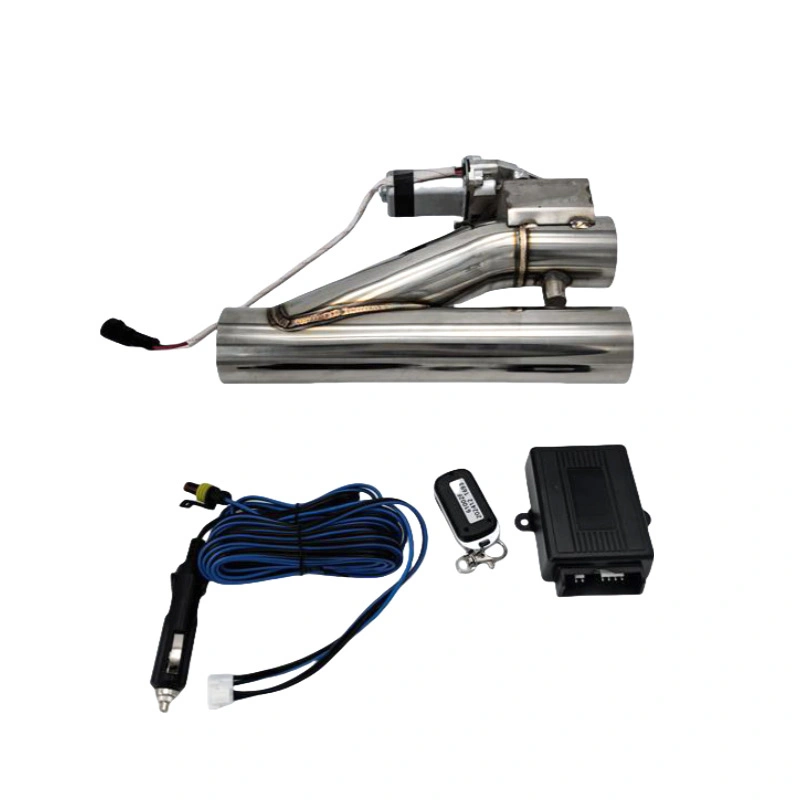
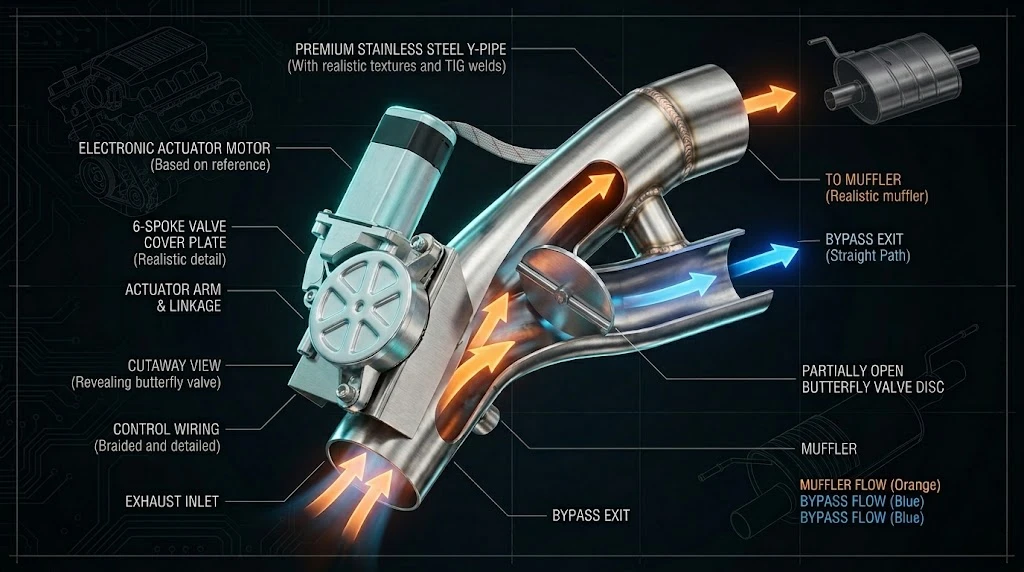
An exhaust cutout is a valve installed in the exhaust system that can open a bypass path for exhaust gases. When open, it can make the exhaust louder and may reduce restriction. When closed, gases continue through the normal muffler path.
For B2B buyers, the most important factors are cutout type, pipe size, motor durability, sealing, wiring quality, installation position, legal-use wording, spare parts, and OEM/ODM support.
Comparing kits for wholesale? Learn more about OEM/ODM exhaust cutout support.
What Is an Exhaust Cutout and How Does It Work
An exhaust cutout is an aftermarket modification—a controllable bypass valve installed in the exhaust pipeline. Its primary function is to give the driver manual or electronic control over the vehicle's exhaust routing.
Exhaust gases flow through the normal muffler path, maintaining factory sound levels and backpressure.
Exhaust gases exit through a bypass opening before reaching the muffler. Resulting in a significantly louder, aggressive exhaust note, potential flow improvement, and altered backpressure behavior.
B2B Point: The quality of the product depends entirely on valve sealing, pipe fitment precision, motor reliability, and the durability of the installation design.
Learn more about LEDAUT exhaust cutout options on our exhaust cutouts category page.
Y-Pipe vs Inline Designs
Y-Pipe Design
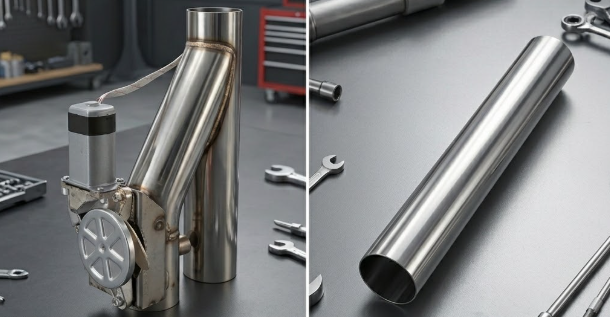
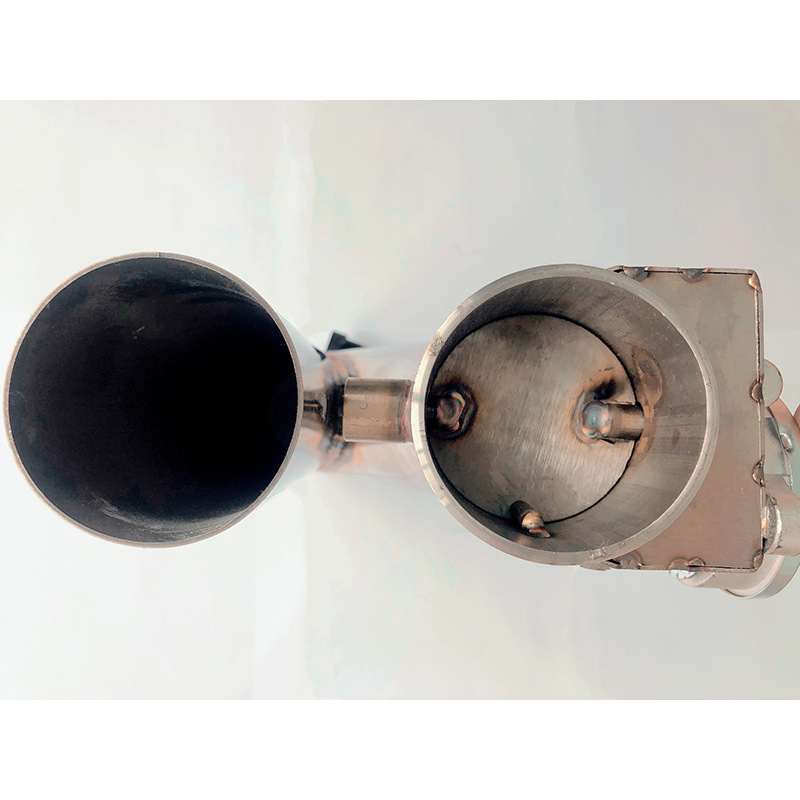
This setup adds a "Y" branch to the main exhaust pipe. It is the most common configuration for bypass-style exhaust cutout kits. It offers a very clear open/closed flow path and is typically installed just before the muffler.
Inline Valve Design
The valve is installed directly into the main exhaust path. This is highly useful when under-car space is limited or the layout requires a more compact valve position. Fitment relies heavily on existing pipe routing and chassis clearance.
Need help choosing between Y-pipe and inline cutout designs for your market? Contact LEDAUT for sourcing support or explore our electric valvetronic Y-pipe cutout kit.
Types of Exhaust Cutouts
Manual Exhaust Cutouts
Operated by manually unbolting a block-off plate. Highly reliable due to zero electronic parts, but requires getting under the vehicle to open or close the valve.
Electric Exhaust Cutouts
Features a motorized butterfly valve operated via a switch or remote from inside the cabin. This is the standard for modern performance modifications.
Remote-Control Electric
A sub-category of electric cutouts that utilizes a wireless remote fob rather than a hardwired toggle switch on the dashboard, making installation cleaner and faster.
Vacuum or Pneumatic
Actuated by engine vacuum or an external air compressor rather than an electric motor. Often used in high-end Valvetronic systems.
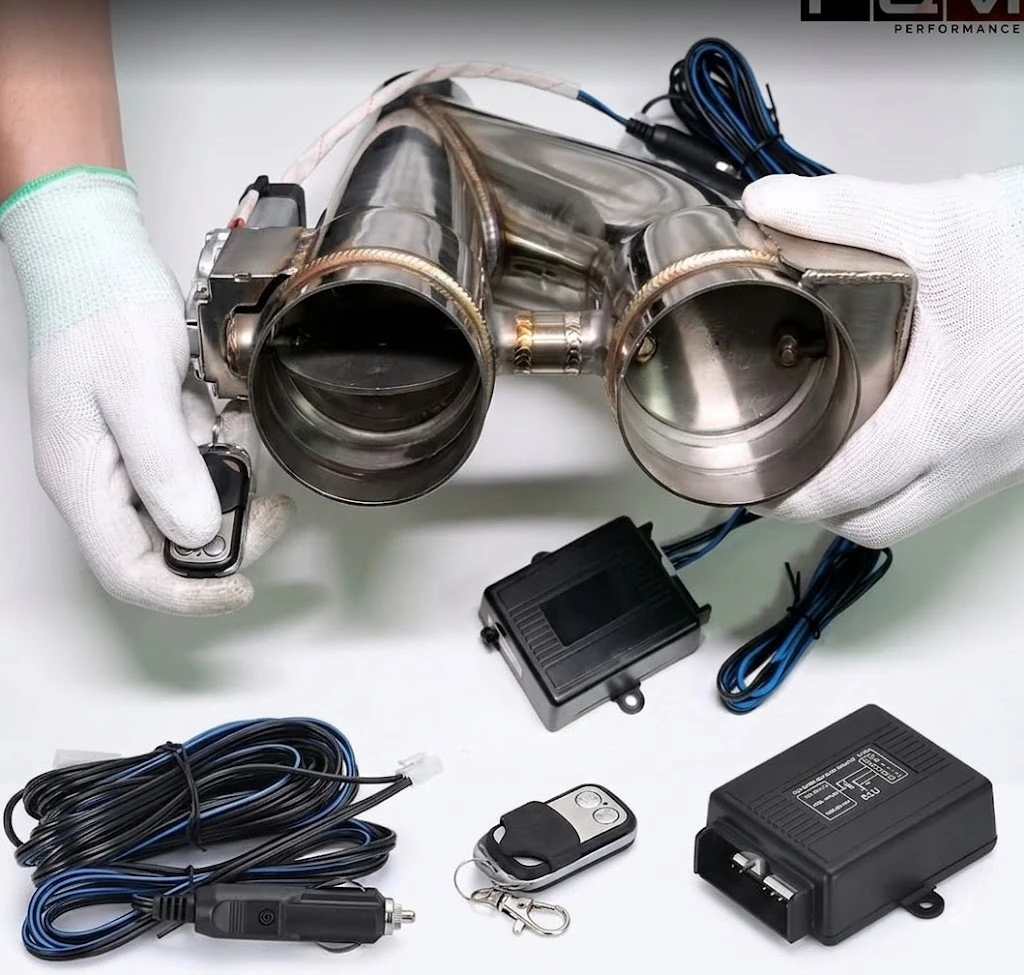
For most wholesale and retail programs, electric exhaust cutout kits are easier to market because they offer quick sound control with a switch or remote.
Electric vs Manual: Which to Choose
When deciding what to stock for your distribution network, understanding the trade-offs between manual and electric is critical.
| Factor | Manual Exhaust Cutout | Electric Exhaust Cutout |
|---|---|---|
| Price | Lower | Higher |
| Operation | Manual open/close (unbolting) | Switch or remote control |
| Installation | Simpler mechanically | Requires wiring and motor setup |
| Convenience | Lower | Higher |
| Failure Points | Fewer | Motor, wiring, switch, sealing |
| Best For | Budget builds, occasional track use | Retail buyers, performance shops, daily sound control |
| B2B Risk | Lower feature appeal / Low margin | Higher after-sales risk if motor quality is poor |
Choosing electric cutouts for wholesale?
Ask LEDAUT about motor testing, wiring kits, spare motors, packaging, and OEM branding for exhaust cutouts.
Common Exhaust Cutout Sizes
Sizing an exhaust cutout is based on matching the vehicle's existing exhaust pipe outer diameter (OD), not strictly engine displacement.
2.25" and 2.5" Exhaust Cutouts
Commonly used on smaller displacement engines, street cars, and light performance builds. The 2.5-inch is a highly common retail size.
3-Inch Exhaust Cutouts
The core size for many sellers. Widely used on V8 engines, trucks, and serious performance builds.
3.5-Inch and 4-Inch Exhaust Cutouts
Designed for higher-flow custom systems, heavy-duty trucks, diesel applications, or specialized racing builds.
| Size | Common Use | B2B Stocking Note |
|---|---|---|
| 2.25 inch | Smaller exhaust systems | Useful but lower demand in some markets |
| 2.5 inch | Street cars, light performance builds | Common retail size |
| 3 inch | V8, trucks, performance builds | Core size for many sellers |
| 3.5 inch | Higher-flow custom systems | More specialized |
| 4 inch | Trucks, diesel or custom builds | Check market demand before stocking deep |
Not sure which sizes to stock first? LEDAUT can help plan your custom exhaust cutout sizes based on your target market. Explore our 3 inch electric exhaust cutout kit.
Do Exhaust Cutouts Add Horsepower?
Short Answer:
Exhaust cutouts may help some vehicles gain horsepower by reducing exhaust restriction when open, but the result is not guaranteed.
- If the original factory exhaust is highly restrictive, opening a cutout bypasses the bottlenecks, reducing backpressure and freeing up engine flow.
- If the exhaust is already a well-designed aftermarket system, the actual horsepower gain may be minimal.
- Engine setup, tuning, pipe diameter, and installation position all play major roles in performance outcomes.
B2B Note: For resellers, it is safer to market exhaust cutouts as sound-control and flow-improvement products instead of promising fixed horsepower gains. Check our exhaust cutout sourcing guide for more marketing tips.
Are Exhaust Cutouts Legal?
Exhaust cutout laws vary drastically by country, state, and vehicle use. In many markets, using an open cutout on public roads may violate noise ordinances, muffler-bypass rules (such as the California Vehicle Code), or emissions-related regulations.
For B2B sellers, product pages and packaging should avoid "street-legal" claims unless the product has been explicitly reviewed for the target market. Trust LEDAUT manufacturing and technology support for proper compliance labeling.
How to Install an Exhaust Cutout
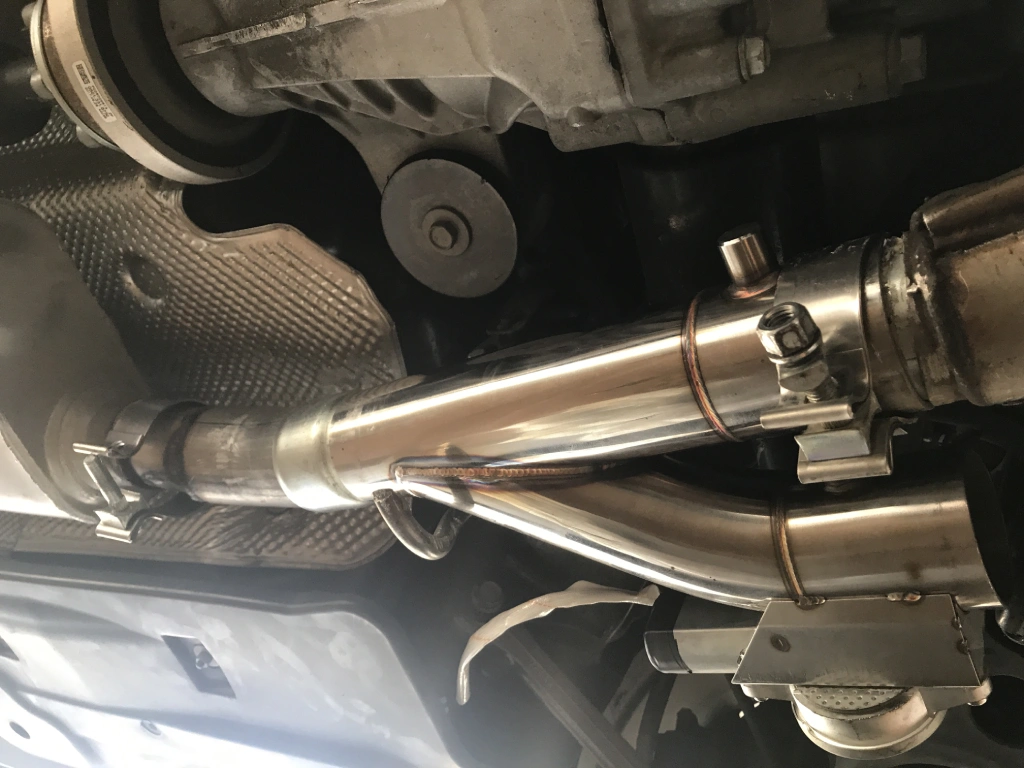
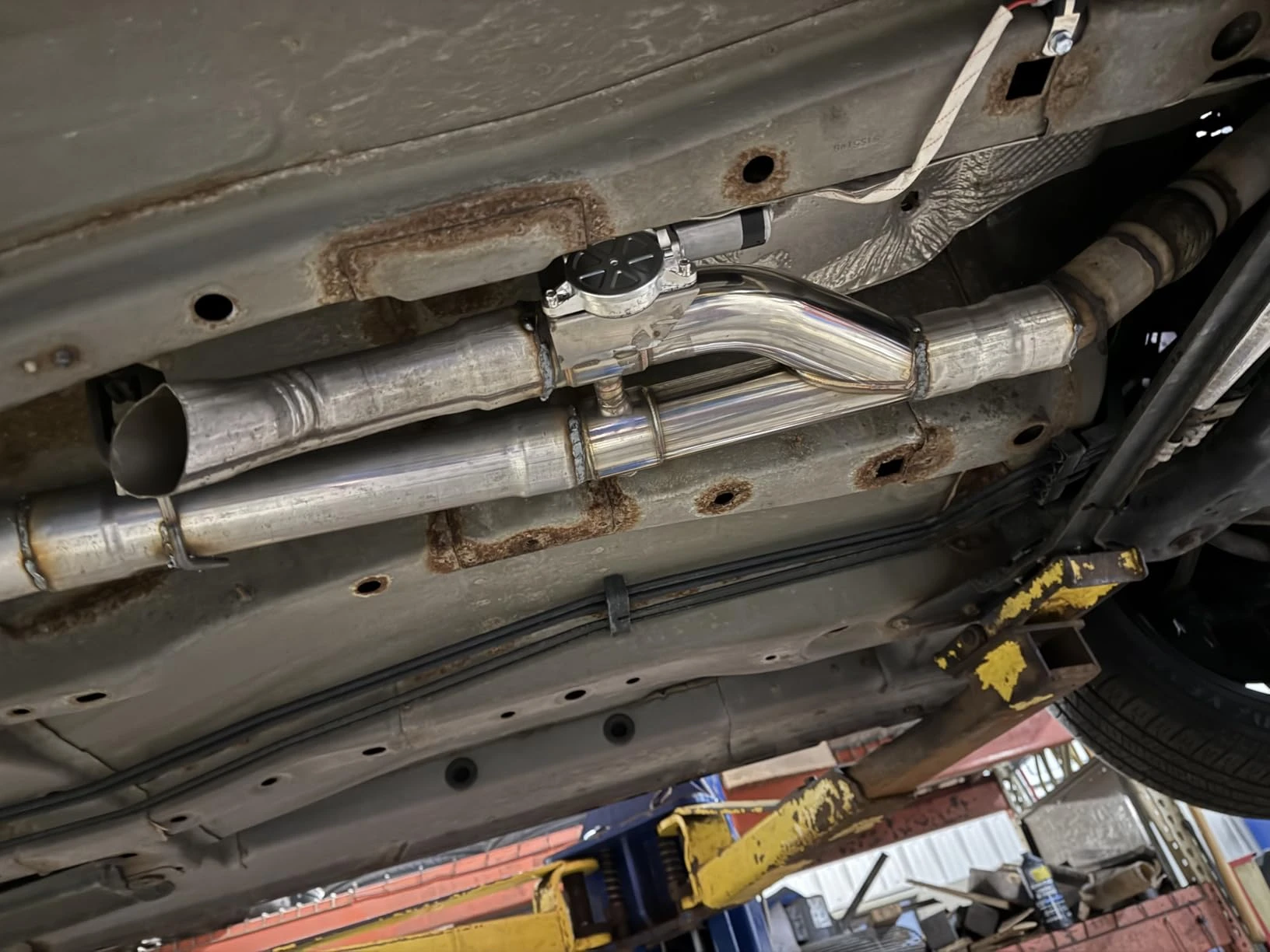
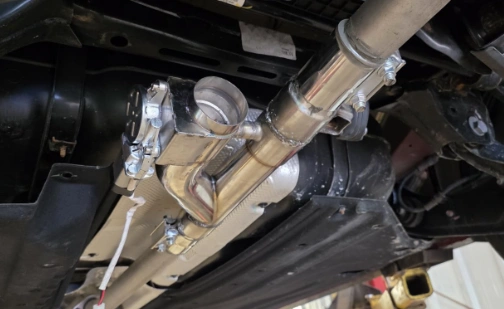
While kits come with hardware, we highly recommend professional installation. The valve opening should point toward the rear of the vehicle and slightly downward toward the ground, safely away from heat-sensitive components.
- Choose the correct cutout size to match the exhaust OD.
- Select a safe installation location (usually just before the muffler).
- Mark and cut the factory exhaust pipe.
- Install the Y-pipe or inline valve into the gap.
- Weld or clamp the assembly securely to prevent leaks.
- Route wiring safely into the cabin, keeping it far from exhaust heat and moving drivetrain parts.
- Install the switch on the dash or connect the remote control receiver module.
- Test the open/close operation and inspect for any exhaust leaks.
Need installation-friendly kits?
LEDAUT supplies complete electric exhaust cutout kit components with wiring, switches, gaskets, and clear packaging for B2B resale.
Why Electric Cutout Motors Fail
Electric cutouts live in one of the harshest environments on a vehicle. Understanding why they fail is the key to minimizing your warranty return rates.
Heat Exposure
Positioned directly on the exhaust, motors can melt or short out if the internal insulation isn't rated for high-temperature thermal cycling.
Water and Road Debris
Mounted under the chassis, the motor is constantly exposed to rain, puddles, road salt, and dirt. If the housing isn't sealed, corrosion destroys the internals quickly.
Poor Sealing
If the butterfly valve plate doesn't seal tightly against the housing, hot exhaust gas escapes, melting nearby wiring and creating an annoying "exhaust tick" sound.
Gear Wear or Motor Overload
Cheap plastic gears strip easily under pressure. Holding the button for too long can burn out lower-quality motors without built-in overload protection.
Wiring and Switch Problems
Frayed wires from improper routing or poorly weather-sealed connectors account for a massive percentage of "failed" units that are actually just electrical shorts.
Reduce after-sales risk with better spare-part planning.
Read why electric motors burn out, and ask LEDAUT about our spare motor planning for exhaust cutouts for bulk orders.
B2B Sourcing Checklist
If you are an importer, distributor, or online seller, use this 10-point checklist before placing your next bulk order:
Manual, electric, Y-pipe, or inline valve.
2.25", 2.5", 3", 3.5", 4".
High-grade stainless steel vs. aluminized steel; gasket quality.
Heat resistance ratings, water protection (IP rating), cycle testing data.
Valve close fitment, high-temp gaskets, leak control.
Harness length, switch quality, remote reliability, connector weather-proofing.
Retail-ready boxes, barcodes, private label options, clear instructions.
Availability of backup motors, switches, remotes, gaskets, bolts, and wiring.
Flexibility on standard products vs. custom branded products.
Clear claim process and replacement policy from the factory.
Source Exhaust Cutouts from LEDAUT
Build a private-label exhaust cutout program with custom sizes, OEM packaging, spare-part support, and reliable B2B bulk supply. View our exhaust cutout product range.
Exhaust Cutouts FAQ
1. Do exhaust cutouts really add horsepower?
They can reduce exhaust restriction and backpressure on restrictive factory setups, which may free up horsepower. However, on well-designed performance exhausts, the horsepower gain is usually minimal. They are primarily a sound-control modification.
2. Are exhaust cutouts legal for street use?
In many jurisdictions, driving with an open cutout on public roads violates noise and emissions regulations. They are generally marketed for off-road or track use only. Always verify local vehicle codes.
3. What size exhaust cutout do I need?
You need to measure the outer diameter (OD) of the exhaust pipe exactly where you plan to install the cutout. Common sizes are 2.5-inch and 3-inch, but sizes range from 2.25 to 4 inches.
4. What is the difference between electric and manual exhaust cutouts?
Manual cutouts require you to get under the vehicle and physically unbolt a block-off plate. Electric cutouts use a 12V motor to open and close a butterfly valve via an interior switch or wireless remote.
5. Why do electric exhaust cutout motors fail?
The primary causes of failure are extreme exhaust heat melting internal components, water/road salt causing corrosion, and users holding the switch too long, which burns out the motor or strips the internal gears.
6. Can rainwater damage an electric exhaust cutout?
Yes. If the motor housing and wiring connectors are not properly sealed and weather-proofed, splashing rainwater and road grime will easily short out the electronics and seize the motor.
7. How long do electric exhaust cutouts last?
Lifespan depends heavily on the build quality of the motor and how well it is shielded from the elements. High-quality units with proper thermal and moisture protection can last for years of normal use.
8. Can LEDAUT customize exhaust cutout kits for wholesale buyers?
Yes. LEDAUT offers comprehensive OEM/ODM services, including custom pipe sizes, specialized motor requirements, private-label retail packaging, and tailored spare-part packages for distributors.
Looking for a reliable exhaust cutout supplier?
Contact LEDAUT to discuss custom electric exhaust cutout kits, OEM packaging, spare motors, and B2B wholesale orders.
Contact LEDAUT