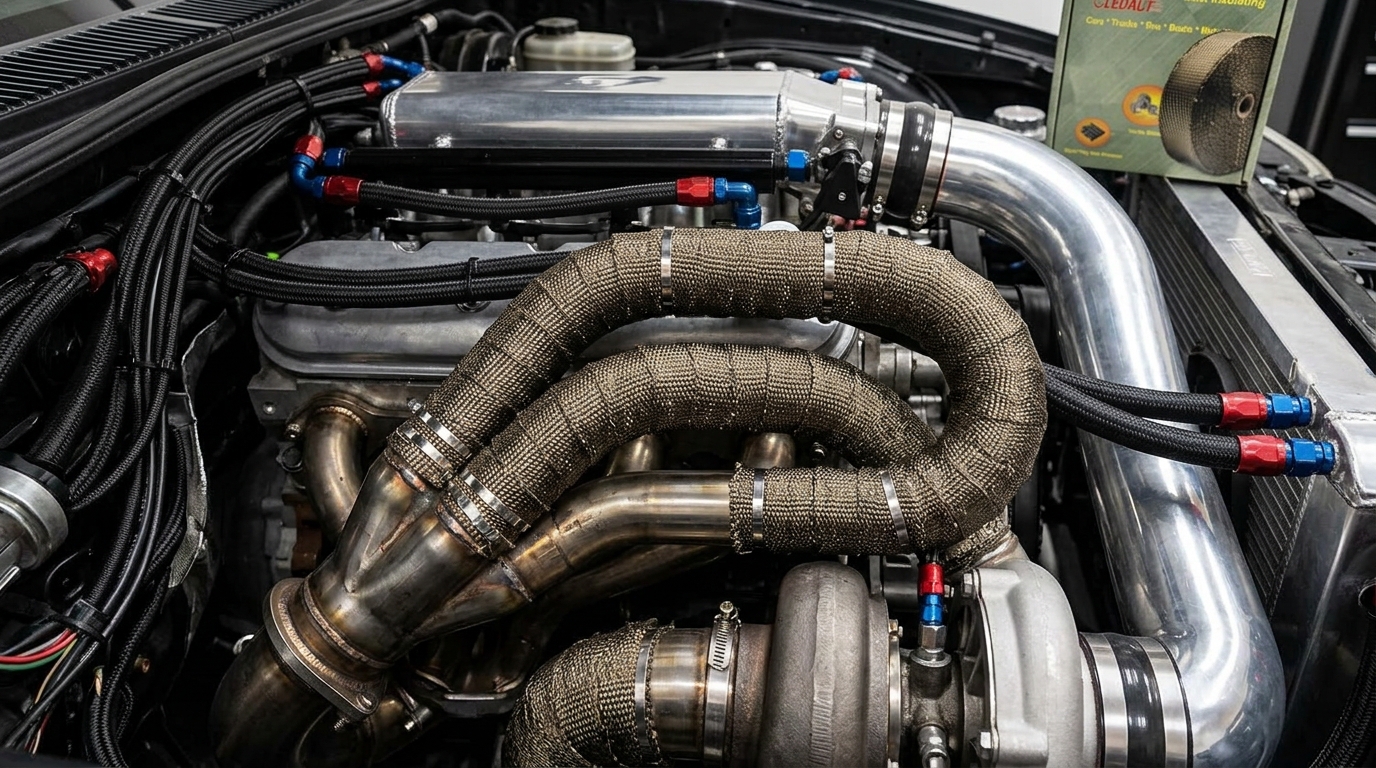
Yes, exhaust wrap works — just not the way the marketing often claims. It does not add horsepower. What it does is cut the radiant heat leaving the pipe by 30 to 50%, which is why the wiring, hoses, and paint near your exhaust survive longer with it than without. One owner wrapped his headers with our titanium wrap and temp-gunned them afterward, finding them about 100°F cooler at the surface (his own test, on his own channel). Here is what wrap does, what it does not, and when it earns its place.
Does Exhaust Wrap Work? — What Every Builder Needs to Know
Every weekend, garage forums light up with the same debate: “Is exhaust wrap worth it, or is it just cosmetic?” You’ve seen the sleek, wrapped headers on show cars and wondered if that layer of fabric actually does anything beyond looking cool. For DIY builders and performance shop owners alike, the question isn’t just about aesthetics—it’s about heat management, engine efficiency, and long-term reliability. Let’s cut through the noise and look at what the data and real-world experience say about exhaust wrap.
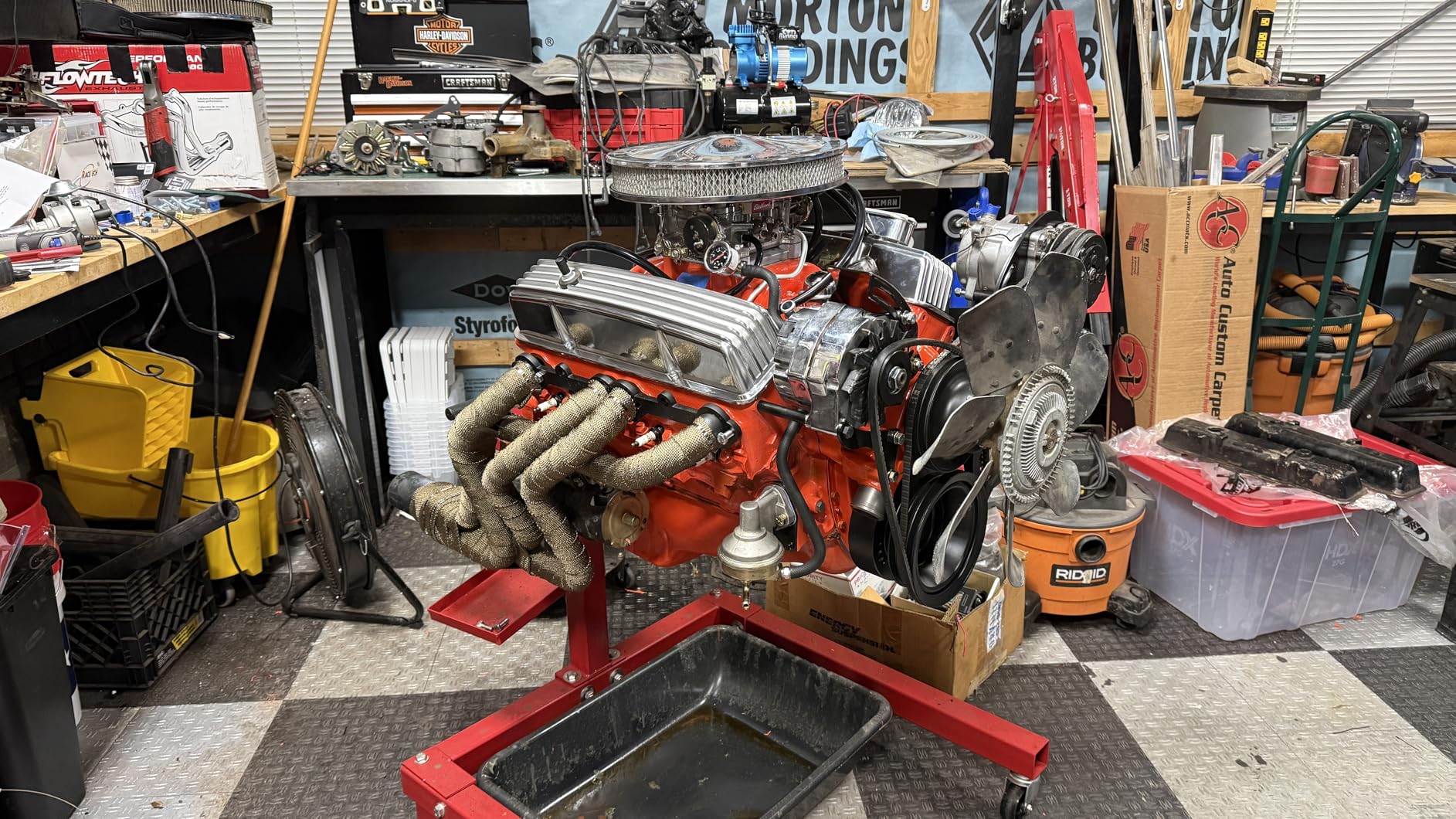
What Does Exhaust Wrap Do?
At its core, exhaust wrap is a thermal barrier designed to keep heat inside the exhaust system rather than letting it radiate into the engine bay. Made from materials like fiberglass or titanium, these wraps are woven tightly around headers, downpipes, and mufflers.
The primary function is insulation. By trapping heat within the pipes, the wrap prevents that energy from escaping into the surrounding area. This serves two critical purposes: first, it significantly lowers under-hood temperatures, protecting sensitive components like wiring harnesses, plastic intake manifolds, and fuel lines from heat soak. Second, it helps maintain higher exhaust gas temperatures, which improves gas velocity and scavenging. When you install exhaust wrap correctly, you’re not just covering a pipe; you’re optimizing the thermal dynamics of your entire exhaust system. For a detailed breakdown of different solutions and materials, check out our comprehensive exhaust wrap comparison.
What Is an Exhaust Bandage and How Does It Work?
An exhaust bandage, commonly known as an exhaust wrap, is a pliable, heat-resistant roll of woven material designed to tightly encase exhaust pipes, headers, and manifolds. It works by acting as an aggressive thermal insulator. Instead of allowing intense heat to radiate outward into the engine bay or onto the rider’s legs on a motorcycle, the bandage traps the thermal energy inside the metal piping. This fundamental principle of thermodynamics keeps the internal exhaust gases hotter. Hotter gases are less dense and travel at a higher velocity, which dramatically improves the system’s ability to expel exhaust fumes and pull fresh air into the combustion chamber.
Does Exhaust Bandage Work Better Than Ceramic Coating?
Both exhaust bandages and ceramic coatings are engineered for premium heat management, but they cater to different needs and budgets. An exhaust bandage is highly cost-effective, can be installed by any DIY builder in a home garage, and provides exceptional radiant heat reduction (often outperforming coatings in sheer temperature drops). Ceramic coating, on the other hand, is a permanent, professionally applied chemical barrier that excels at preventing moisture buildup and corrosion while maintaining a sleek aesthetic, though it comes with a significantly higher price tag. If your priority is maximum heat retention, ease of access, and affordability, the exhaust bandage is the clear winner. For show cars or high-moisture environments where rust prevention is critical, ceramic coating offers a distinct advantage.
Exhaust Wrap Benefits: Heat Protection and Performance Data
Why do builders bother with the extra labor? The benefits of exhaust heat wrap go beyond simple temperature reduction.
1. Lower Under-Hood Temperatures
The most immediate benefit is a cooler engine bay. Radiant heat from untreated headers can spike ambient temperatures by hundreds of degrees. By using exhaust heat wrap, you can reduce under-hood temps by 50–100°F (10–55°C).
2. Improved Scavenging Effect
Hotter gases are less dense and flow faster. By keeping the exhaust gases hot, the wrap enhances the scavenging effect—where exiting pulses help pull the next charge out of the cylinder.
3. Reduced Heat Soak
In stop-and-go traffic or during track days, heat buildup can cause performance loss. A properly wrapped system dissipates heat more slowly, helping your engine maintain consistent performance.
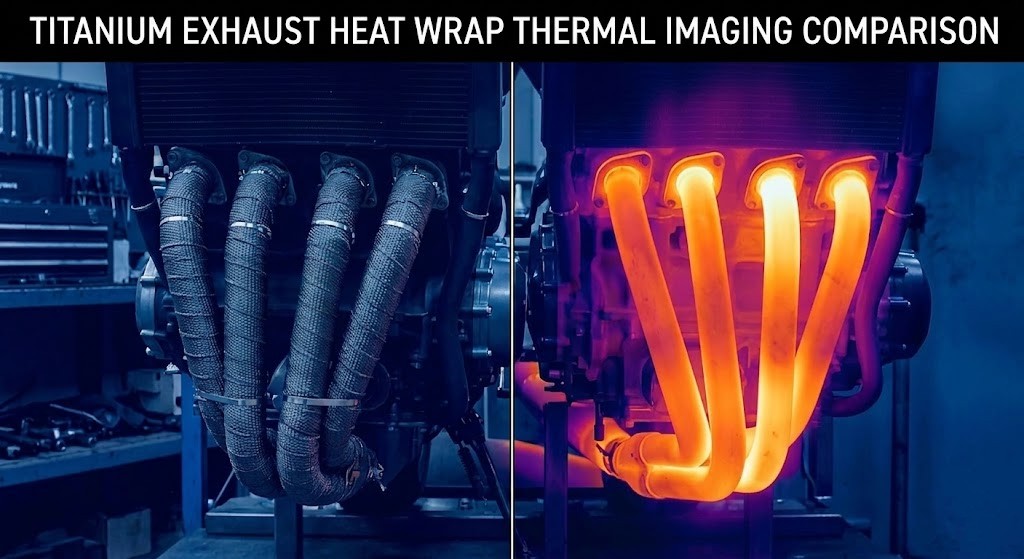
Ready to get these results for your build? Learn how to install exhaust wrap with our step-by-step 50% overlap technique guide.
Where Exhaust Wrap Falls Short
Honest builders know there are trade-offs.
Moisture Trapping and Corrosion
The biggest risk with any wrap is moisture retention. If water gets trapped between the wrap and the pipe, it can’t escape. This creates a perfect environment for rust.
The “Smoking” Phase 🔍[SOFT]
If you’re using a standard fiberglass exhaust wrap, be prepared for some smoke during the first few runs as binder resins burn off. This is normal but can alarm customers.
Installation Labor
Wrapping is tedious, requiring patience and precision. For shops, this means higher labor costs.
Exhaust Wrap Material Comparison: Fiberglass vs Titanium vs Ceramic
| Material | Temp Resistance | Pros | Cons | Best For |
|---|---|---|---|---|
| Fiberglass | ~1,000°F | Affordable, easy to cut | Absorbs moisture, initial smoking | Entry-level builds |
| Titanium Coated | ~1,800°F | Highly durable, water-resistant | More expensive | Performance builds |
| Heat Shields | ~2,000°F | Easy to install/remove | Less conformal | Race cars, quick access |
Explore more options on our exhaust wraps category page.
Motorcycle & Marine Use Cases
Motorcycles: Wrapping reduces surface temperature to prevent burns, protects rear swingarm and shock absorbers from radiant heat.
Marine Applications: Helps contain heat in poorly ventilated engine compartments. Marine environments require highly water-resistant materials.
B2B Sourcing — What to Look For
- Specification Consistency: Tight width and length tolerances across bulk inventory, including premium products like our titanium exhaust heat shield wrap.
- Packaging Integrity: Clean, dry, well-sealed arrival
- Supply Chain Stability: Reliable lead times across large orders
Looking for a reliable partner? Contact us to discuss sourcing options.
FAQ
Q1: How much temperature does exhaust wrap reduce?
A: Under-hood temps by 50–100°F (10–55°C); pipe surface temps by several hundred degrees.
Q2: Will wrapping hurt engine performance?
A: No, it typically helps by improving flow velocity. But moisture trapping can cause rust over time.
Q3: Can fiberglass wrap catch fire?
A: No. The initial smoking is binders burning off, not the material igniting.
Q4: How long does exhaust wrap last?
A: Fiberglass 1-2 years; titanium-coated 5+ years.
Conclusion
Yes, exhaust wrap works—but only if you choose the right material and install it correctly. It’s a proven way to manage heat, protect components, and squeeze out a bit more performance.
Sourcing in bulk? We supply fiberglass and basalt exhaust wrap direct from the factory — custom widths, titanium-look finish, and SS ties included.
Request a wholesale quote with your annual volume.