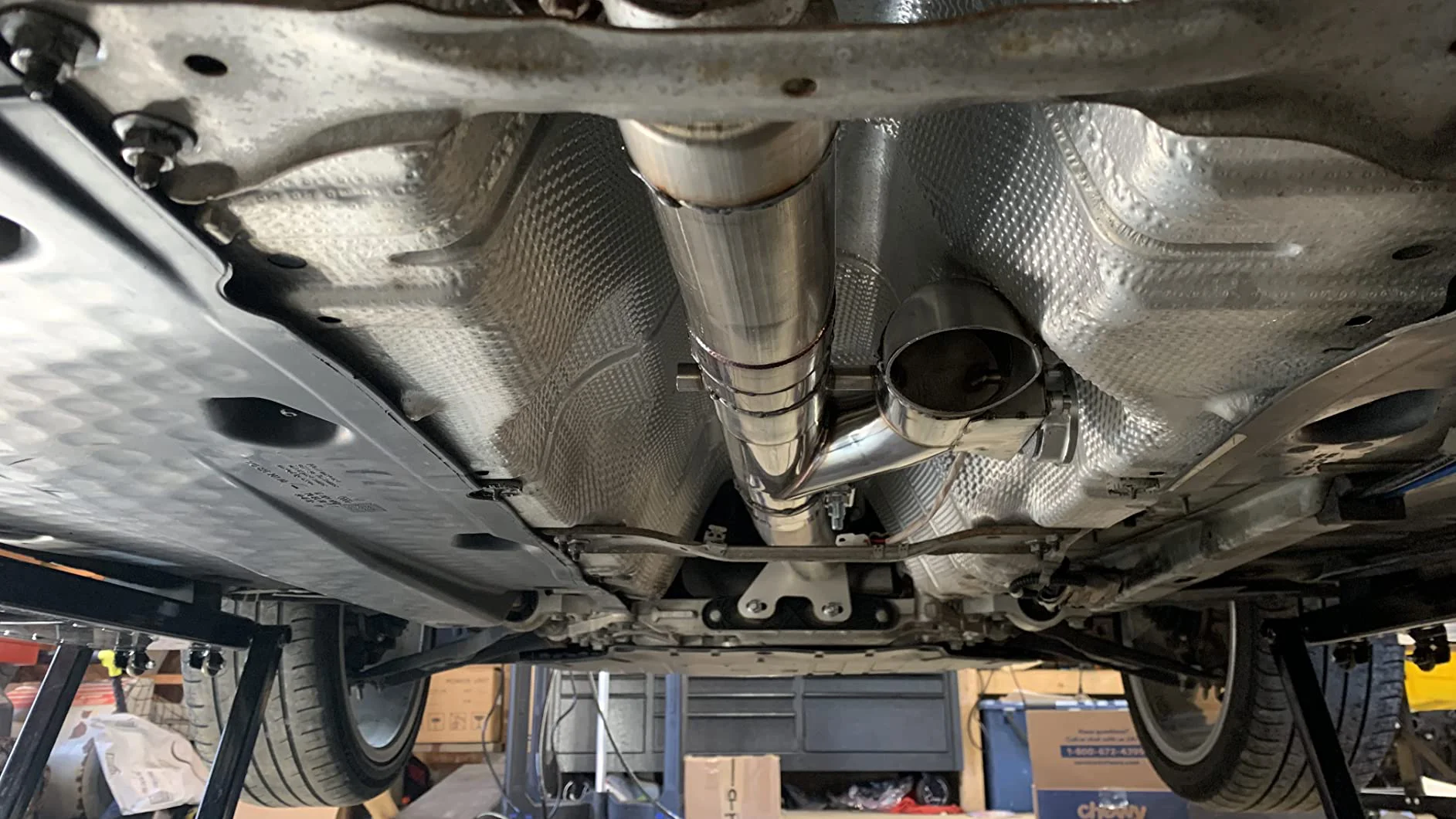
Electric cutouts open at the push of a button from inside the car — the choice for a daily driver that wants a loud exhaust on demand. Manual cutouts cost less and have fewer parts to fail, which suits track cars and weekend builds where convenience matters less than simplicity. This guide compares the two by control method, install time, cost, and long-term reliability, so you can match the valve to how you drive.
That counterintuitive twist is exactly why so many shops and fleet operators pick the wrong one. Electric vs manual exhaust cutout isn’t just convenience versus price — it’s about matching the right mechanism to how you actually use the vehicle. Electric needs 12V power and a switch or remote, and it costs more but lets you toggle from the driver’s seat — even dial in partial opening. Manual is simpler and cheaper: either a block-off plate you unbolt with a wrench, or a cable-lever you pull. We’ve supplied both types for over twenty years, and the failures we see tell a clear story about what works where.
If you’re deciding which type to stock, recommend, or install, here’s what field experience actually shows, not what a brochure claims.
How Do Exhaust Cutouts Work? (Electric vs Manual Mechanisms)
An exhaust cutout is a Y-pipe section with a valve that diverts exhaust gas either through the muffler (quiet mode) or out a separate dump pipe ahead of the muffler (loud mode). The difference between electric and manual comes down to how you actuate that valve.
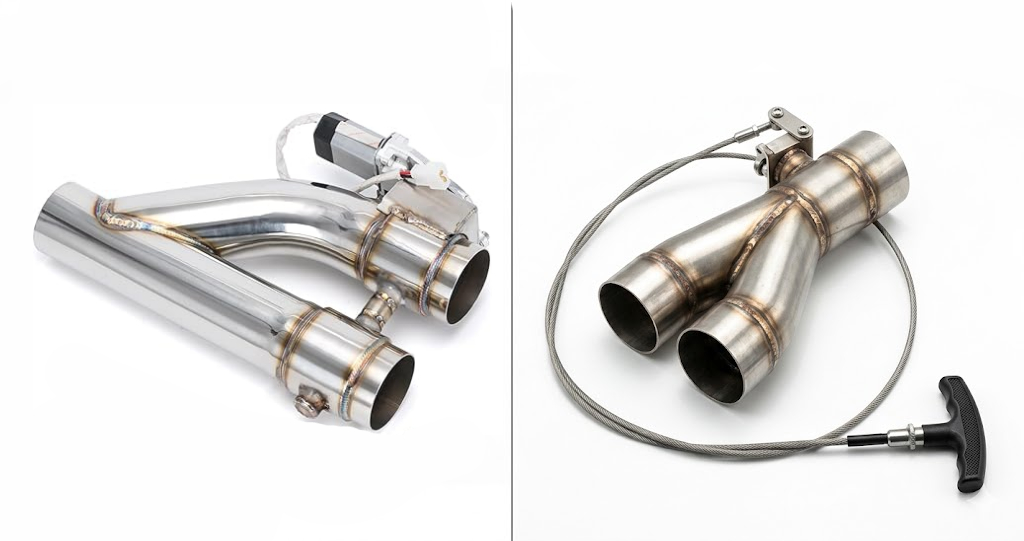
Electric cutouts use a small electric motor mounted on the valve shaft. The motor runs on 12V power tapped from the vehicle’s electrical system and is controlled by either a rocker switch mounted inside the cabin or a wireless remote control. Press the button, the motor turns the valve, and you switch modes instantly. Some higher-end kits even support proportional control — you can open the valve just a quarter way to keep a little rumble without going full loud.
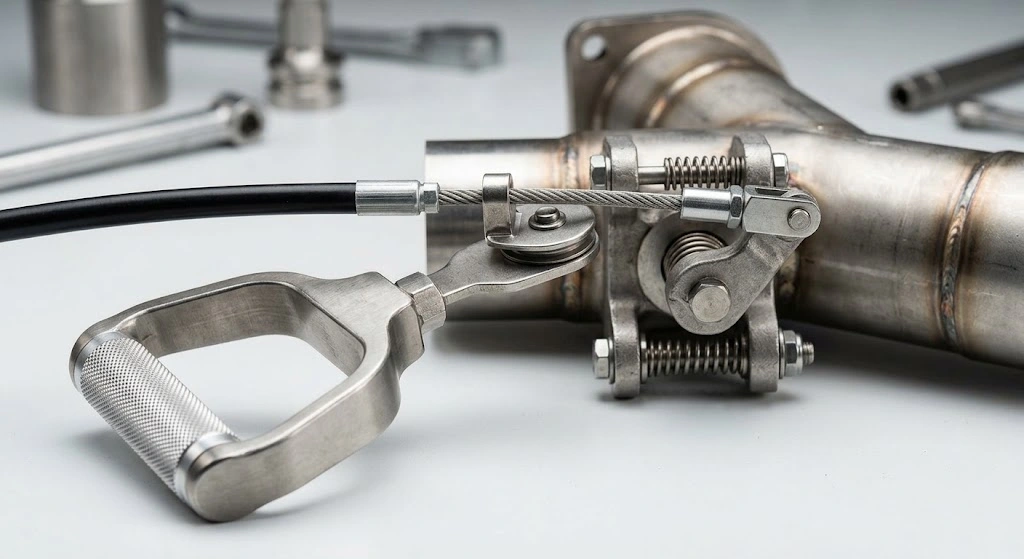
Manual cutouts come in two flavors. The first is the block-off plate style: a solid metal plate bolted into the Y-pipe opening, removed or installed with a wrench. This requires lifting the vehicle and working underneath — it’s not something you do on the fly. The second is the cable-lever style: a mechanical cable runs from a lever (usually mounted near the driver’s seat or under the dash) to the valve. Pull the lever, the cable rotates the valve. No electronics, no wiring, just pure mechanical linkage.
The core question isn’t which one is “better” — it’s which type matches how you actually use the vehicle. If you are new to the concept and want a breakdown of the fundamentals, start with our guide on what is an exhaust cutout.
Single-Valve vs Y Dual-Valve
Before choosing electric or manual, you also choose a valve configuration — and it matters for how the system sounds and flows.
A Y-pipe cutout splits a single exhaust outlet into two bypass paths from one valve body, so when it opens, flow takes both dump paths at once. On a single-exhaust vehicle, one Y-pipe unit is all you need — it diverts the one stream.
On a dual-exhaust or dual-outlet car, you need two cutout units, one per side, so each bank gets a balanced bypass. Two independently mounted valves (or a matched pair) keep both sides even, avoiding the uneven backpressure you’d get from dumping only one side. Dual-valve setups have gained ground on V8 and V6 dual-exhaust platforms for this reason — balanced sound and even flow.
Match the hardware to the exhaust layout: a single Y-pipe unit suits single exhaust, two units suit a true dual setup. Don’t add a second valve to a single pipe — there’s only one stream to divert.
How to Choose the Right Exhaust Cutout Size (2-inch to 4-inch)
Cutouts come in standard diameters — 2 in, 2.5 in, 3 in, and 4 in — and the right one is the one that matches your existing exhaust pipe diameter, measured before you order. A size mismatch forces adapters or custom fabrication.
In practice, most of our cutout orders are 2.5 in and 3 in, which cover the bulk of passenger cars and light trucks. The 2 in suits compact vehicles and some motorcycles; the 4 in is for heavy-duty trucks and high-output builds. When you’re between sizes, it’s easier to step up with a reducer than to live with a valve that’s oversized for the pipe and doesn’t seal properly. When in doubt, measure the pipe and pick the closest match. To browse available sizes and kit styles, check out our full collection of exhaust cutouts.
Electric Exhaust Cutout vs Manual: Pros & Cons
| Dimension | Electric | Manual |
|---|---|---|
| Control | Switch / remote in cab | Cable or hand plate |
| Install time | 2–4 hrs (wiring) | 30–60 min |
| Cost | Higher | Lower |
| Failure point | Motor / solenoid | Cable stretch |
| Best for | Daily driver, on-demand sound | Track, weekend, budget |
Heat is the number one killer of electric cutouts. Mount the valve as far downstream as your setup allows, or use thermal exhaust wraps around the pipe near the cutout to protect the motor housing from extreme radiant heat.
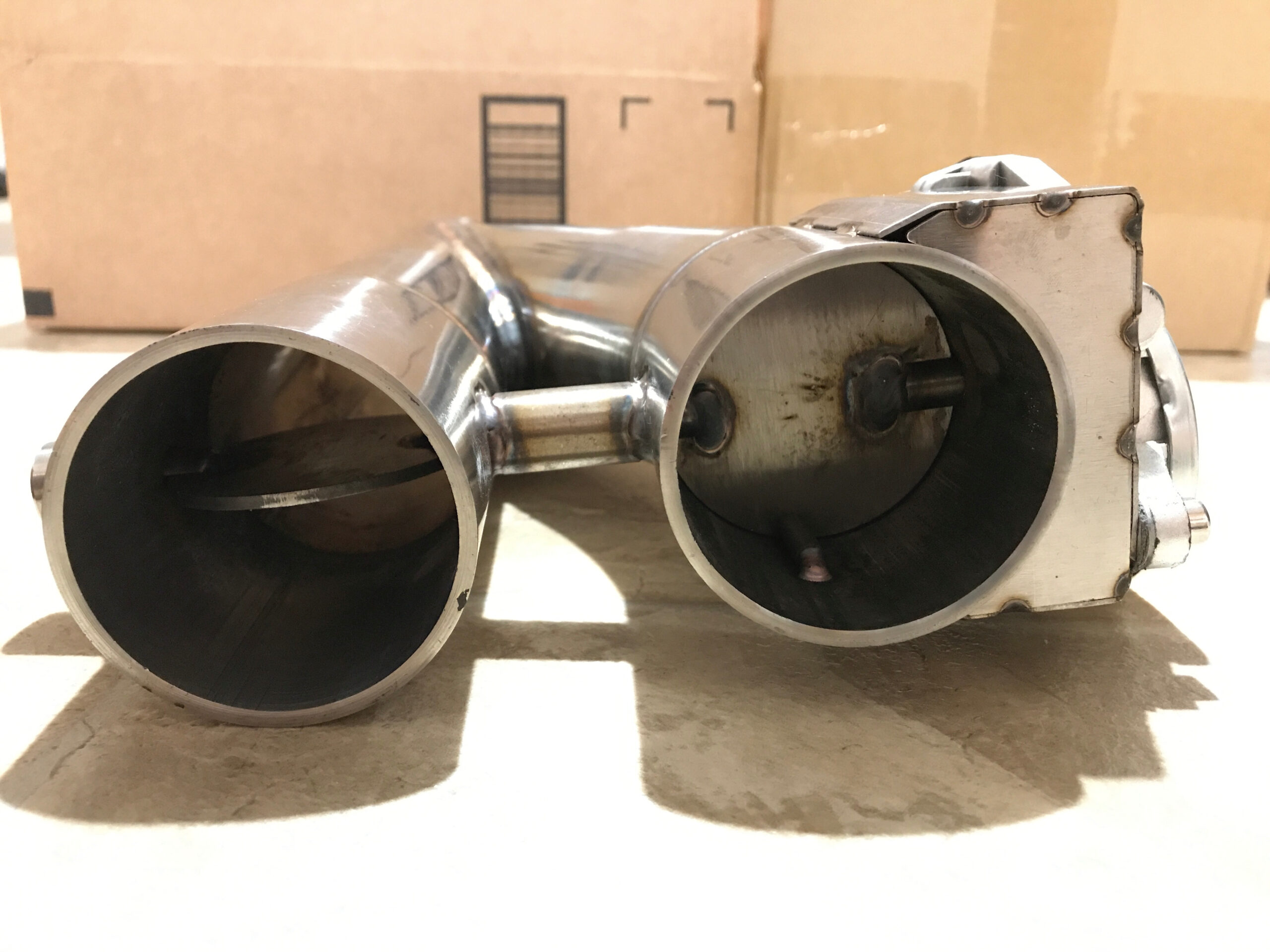
Tired of replacing burnt-out electric motors?
LEDAUT’s electric cutouts are built with high-torque motors, metal gears, and integrated heat shielding to outlast the competition. Need zero-failure reliability? Our manual SS304 kits are virtually bulletproof.
Installation Complexity Comparison
Electric cutouts require more planning but less physical labor once the wiring is routed. You need to tap into a 12V source (usually the battery or a switched accessory line), run the wire along the frame rail to the valve location, mount the switch or receiver inside the cabin, and connect everything. The valve itself bolts into the Y-pipe like any other exhaust component. Total time for an experienced installer: about 2–3 hours including the wiring.
For step-by-step guidance on routing wires and mounting switches safely, see Exhaust Cutout Installation Guide.
Manual block-off plates are simpler mechanically but harder physically: bolt the plate into the Y-pipe flange and you’re done in about 30 minutes on a lift, but switching modes later means reversing that process every time. Cable-lever systems fall in between — install the valve, route the cable (about 45 minutes), then pull the lever to switch.
Most installation problems come down to a small set of avoidable mistakes:
| Type | Estimated Install Time | Most common install mistakes |
|---|---|---|
| Electric | 2–3 hours | Wrong wiring polarity, loose ground |
| Manual (cable) | ~45 minutes | Cable routed too tight, kinked cable |
| Manual (block-off) | ~30 minutes (on a lift) | Stripped bolts, no anti-seize applied |
For electric systems, the extra effort is the wiring and control-module placement — routing the wire through the firewall, tapping a clean power source, and mounting the receiver somewhere accessible yet protected. Manual installs are simpler mechanically: mount the valve, route the cable or lever mechanism, and secure everything.
Cost Comparison
We don’t publish retail prices because they vary by region and distributor, but the relative cost structure is consistent:
- Manual block-off plate kits: Lowest cost. Just the plate, gasket, and hardware.
- Manual cable-lever kits: Moderate cost. Adds the cable, lever, and mounting brackets.
- Electric kits (rocker switch): Higher cost. Adds motor, wiring harness, switch, and connectors.
- Electric kits (wireless remote): Highest cost. Adds remote receiver and handheld transmitter.
For wholesale buyers, electric kits run 2–3× more than manual. The real question is whether your customers will pay for convenience — fleets on fixed routes rarely need on-the-fly switching, while show-truck builders usually will.
Reliability & Maintenance
Electric cutouts fail primarily due to motor burnout. The root cause is almost always thermal: the motor sits inches from the exhaust pipe, and even with heat wrapping or shielding, prolonged exposure degrades plastic gears and insulation. Higher-quality motors with metal gears and better heat shielding hold up far better — with good heat management, well-built units have gone years in our experience — while cheap imports can fail within months. Maintenance is minimal until failure: there’s nothing to lubricate or adjust. When the motor dies, you replace the entire motor assembly.
Manual block-off plates are virtually maintenance-free. The only issue is bolt corrosion, especially in regions that use road salt. Stainless steel bolts resist this better than mild steel, and periodic application of anti-seize compound during reinstallation prevents seizing. Otherwise, the plate just sits there doing its job.
Manual cable-lever systems require occasional inspection. Cables should be checked for fraying, rust, or binding every 6–12 months. If the cable snaps or seizes, replacement is straightforward but requires removing interior trim to access the lever end.
For manual cable-lever setups, lubricate the inner cable with a light silicone spray every 6-12 months. This simple maintenance step prevents binding, locks out moisture, and drastically extends the life of the cable mechanism.
In our experience, the most reliable setup overall is a manual block-off plate on stainless steel hardware — zero electronics, zero cables, zero motors.
Verdict: Is an Electric or Manual Exhaust Cutout Right for Your Build?
The decision comes down to three questions:
- How often will you switch modes? If the answer is “rarely” (once a season, or only for special events), a manual block-off plate is the logical choice. The inconvenience of crawling under the vehicle is acceptable when you’re only doing it a few times a year. If the answer is “frequently” (weekly track days, daily commuting with noise restrictions), electric is worth the premium.
- What’s your tolerance for potential failure? Electric motors will eventually fail — it’s a matter of when, not if. If you’re okay with replacing a motor every few years and paying more upfront, electric works. If you want a set-it-and-forget-it solution that lasts the life of the vehicle, manual block-off is the way.
- Do you need proportional control? If you want to fine-tune exhaust volume, only electric systems offer this. Manual systems are binary: fully open or fully closed.
For customers wondering whether cutouts actually improve performance, see Do Exhaust Cutouts Increase HP? for the measured picture.
At LEDAUT, we supply both electric and manual exhaust cutouts in SS304 stainless steel construction, with OEM/ODM customization available for repair shops, modification shops, and fleet operators worldwide. Our electric kits use high-torque motors with metal gears and integrated heat shielding; our manual kits feature precision-machined flanges and stainless hardware.
Need cutouts in volume? LEDAUT supplies electric and manual cutout kits with ISO/TS 16949 build quality — 2″ to 4″, single or Y dual-valve. Request a wholesale quote for pricing by quantity.
FAQ
Real questions from our inbox:
Q: Are exhaust cutouts legal on public roads?
A: Two separate legal layers apply. Federal law (the Clean Air Act) prohibits removing or disabling emissions equipment — a cutout installed after the catalytic converter keeps that equipment intact, while installing one before the cat bypasses it, and that’s where federal violations start. Separately, state and local noise laws ban operating a loud exhaust on public roads, so an open cutout may still draw a ticket depending on where you drive. Check your local regulations; what’s legal on a track day may not be on a public street.
Q: Which exhaust cutout is better, electric or manual?
A: It depends on your priorities: electric wins on convenience and proportional control, manual on reliability and lower cost.
Q: How long do electric exhaust cutout motors last?
A: Quality varies widely. Cheap motors with plastic gears may fail in 6–8 months due to heat exposure. Premium motors with metal gears and proper heat shielding hold up much longer — but service life still depends heavily on install location and how hot the mounting point runs.
Q: Can I convert a manual cutout to electric later?
A: Technically yes, but you’d replace the whole valve assembly since electric valves have integrated motors — cheaper to buy electric from the start if you might want it.
Q: Do manual cable-lever cutouts break easily?
A: Cables can fray or seize over time, especially in salty or wet conditions. Regular inspection (every 6–12 months) and occasional lubrication prevent most failures. Block-off plates have no cables and are more reliable.
Q: How fast do electric cutouts switch?
A: Premium valves with high-torque motors switch in 1–2 seconds; budget kits take closer to 8. Manual cable-lever systems are actually faster at 1–2 seconds, while block-off plates take minutes since you must lift the vehicle.
Q: Can I install a cutout on a diesel truck?
A: Yes. Many diesel owners run cutouts for both sound control and reduced backpressure under load. Choose a size that matches the truck’s exhaust diameter.
Q: Will an electric cutout work in cold weather?
A: Quality electric systems are built to handle temperature extremes, but extreme cold saps battery performance and can slow motor response. Mount the control unit somewhere protected, and if the vehicle sits in deep cold for long stretches, a manual system removes the electrical variable entirely.
Conclusion
So, electric vs manual exhaust cutout — which wins? Electric offers unmatched convenience and proportional control but carries the risk of motor failure and higher cost. Manual delivers bulletproof reliability and lower price but sacrifices on-the-fly switching. Choose electric if you’ll toggle frequently and accept eventual motor replacement; choose manual if you want a solution that simply lasts.
Custom Specifications & Bulk Orders
LEDAUT manufactures electric and manual exhaust cutouts in SS304 stainless steel, supporting OEM/ODM customization for repair shops, modification shops, and fleet operators worldwide. Contact LEDAUT for a quote on bulk orders or custom specifications tailored to your market.