TL;DR:Two ways to make an exhaust louder, two very different results. A straight pipe replaces the muffler with plain tube — loudest option, no HP gain to speak of. A muffler delete removes the muffler and leaves the rest of the system in place — slightly quieter, and often the same legal question. This guide compares sound, performance, and legal risk side by side so you know what you are actually buying.
What’s the Difference?
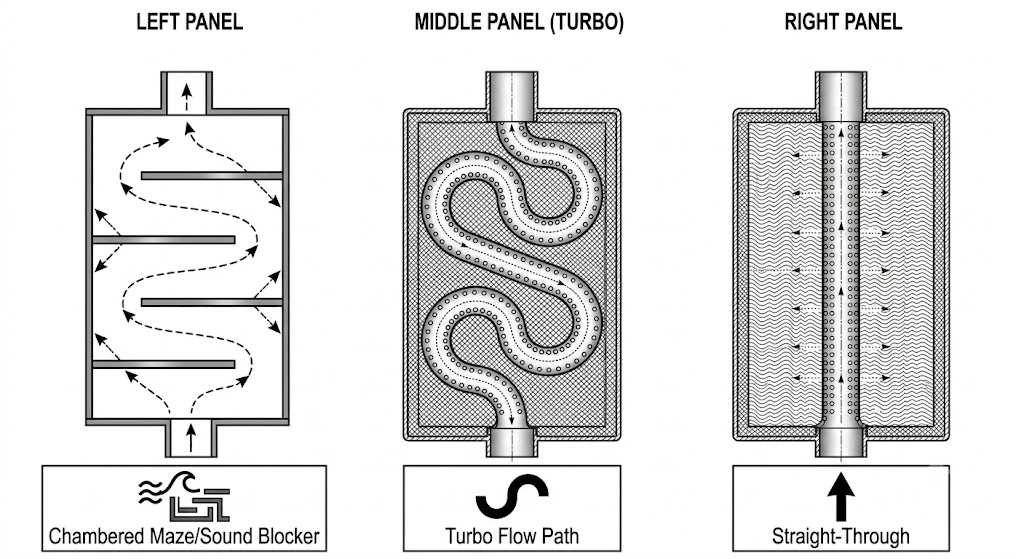
Before I get into which one is louder or whether either is worth it, let me clarify what we’re actually talking about. A lot of people use “straight pipe” and “muffler delete” interchangeably. They’re not the same thing, and the distinction matters — especially when you’re talking to a shop or ordering parts online.
Stock / Standard Exhaust — This is what came on your car from the factory. It has a catalytic converter, a resonator, and a muffler, all designed to keep things quiet enough for daily driving. The goal here isn’t performance; it’s noise compliance and emissions control. If you’re reading this, you already know that’s not what you want.
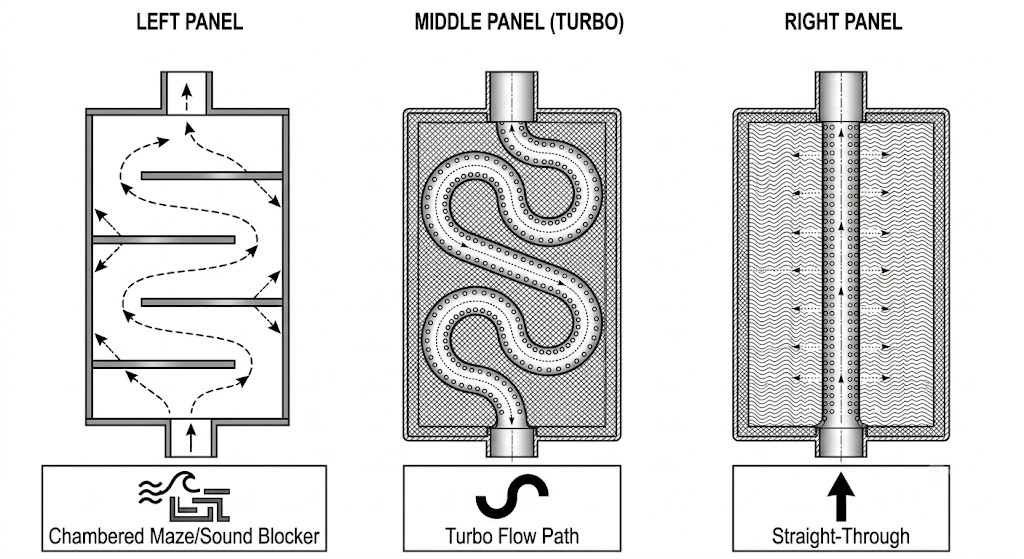
Muffler Delete — Exactly what it sounds like. You cut out the muffler and weld in a straight section of pipe in its place. Everything else stays: the catalytic converter, the resonator (if you have one), the factory pipe diameters. Of the two options, this is the milder one. It’s also the most common first mod for someone dipping their toes into exhaust work. You get a louder car with minimal fabrication, and because the resonator stays, the sound isn’t completely raw.
Straight Pipe — This is the full send. You remove the muffler and the resonator — sometimes the catalytic converter too (though that’s a separate can of worms legally). The entire exhaust path from the header or turbo back is one uninterrupted pipe. There’s nothing left to dampen sound or smooth out pulses. It’s pure, uncut exhaust flow.
The core reason anyone modifies their muffler is simple: faster exhaust flow and a louder sound. That’s the trade-off baked into every exhaust mod, from a simple axle-back swap to a full straight pipe. You’re trading civility for character. How much civility you’re willing to give up defines which path you take.
| Configuration | Muffler | Resonator | Volume |
|---|---|---|---|
| Stock | Yes | Yes | Quiet |
| Muffler Delete | Removed | Yes | Loud |
| Straight Pipe | Removed | Removed | Obnoxious |
—
Sound Comparison: dB Levels
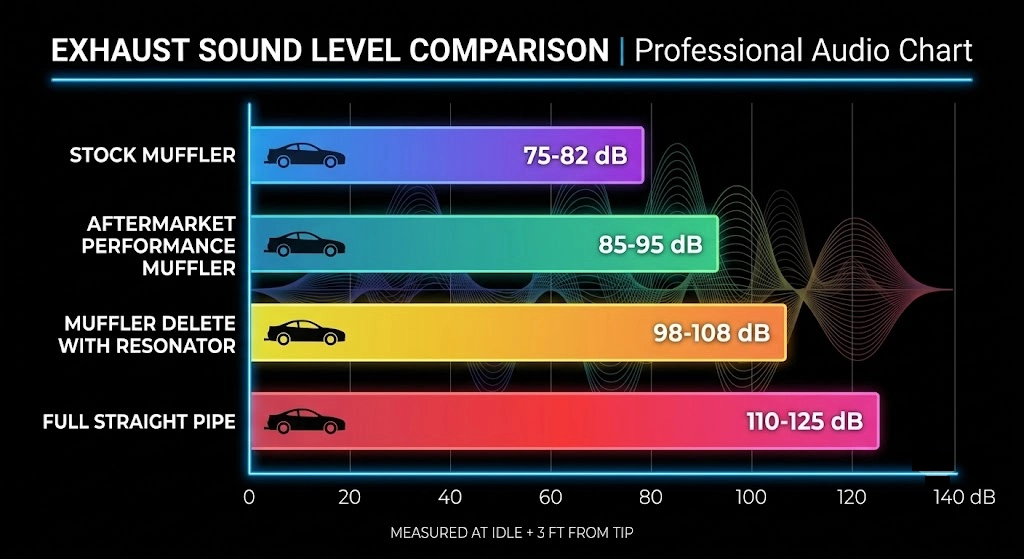
Let’s be real — most of us are here for the sound. I won’t pretend otherwise. The question is how much noise you actually want, and what that noise sounds like.
Here’s a rough decibel range for each setup, measured at idle and under moderate acceleration:
| Setup | Idle (dB) | Cruising (dB) | WOT (dB) |
|---|---|---|---|
| Stock exhaust | 65–72 | 70–78 | 78–85 |
| Muffler delete | 78–85 | 82–90 | 92–105 |
| Straight pipe | 85–95 | 90–100 | 105–120+ |
For context: normal conversation is 60 dB. A lawnmower is 90 dB. Sustained exposure above 85 dB damages hearing over time. A straight pipe at WOT can push past 120 dB. Understanding the straight pipe vs muffler delete sound profile matters because one is loud, and the other is damaging-to-your-ears loud.
What does it actually sound like?
A muffler delete gives you a deeper, throatier note. If your car still has a resonator (most do), that resonator cleans up the sound noticeably — louder than stock but not raspy. A straight pipe is louder and rowdier. No resonator means more raw combustion noise: crackles, pops, highway drone that shakes your teeth. Some people love it. Some undo it after a week.
For reference: a glasspack-style muffler is significantly quieter than a straight pipe, while a performance muffler is still noticeably louder than a glasspack. Even a mild muffler swap is louder than stock; a straight pipe is in a different league.
If you daily-drive your car, think about how long you spend on the highway. Drone isn’t just annoying — it’s exhausting. I’ve met guys who built straight-pipe cars and ended up wearing earplugs on road trips. That tells you everything.
—
Performance Impact
Here’s the uncomfortable truth about the straight pipe vs muffler delete debate: neither is going to transform your car’s performance.
The theory — Removing the muffler reduces backpressure in the exhaust system. Less restriction means the engine can expel exhaust gases more freely. In theory, this frees up horsepower. In theory.
The reality — On a naturally aspirated engine, muffler delete gains are minimal — often imperceptible in daily driving. Adding a straight pipe may offer slight additional gains on turbocharged engines, but we’re still talking about gains you won’t feel in the seat of your pants. On a turbo car, the gains are slightly better because reduced exhaust restriction helps the turbine spool. But even then, you’re looking at single-digit improvements without a tune.
The downside nobody talks about — Removing muffling can actually reduce low-end and mid-range torque on some engines. Modern exhaust systems are designed with specific pipe lengths and diameters to maintain exhaust velocity. When you remove the muffler (and especially the resonator), you change the pressure wave dynamics. The result is often a flatter torque curve below 3,000 RPM. Your car might feel slower around town even though it’s louder.
That’s a bad trade — more noise, less usable power, and the only benefit is a few peak HP at the top of the tach that you rarely use.
If you’re chasing power, spend on a tune, a downpipe upgrade (for turbo cars), or a cat-back system engineered for flow velocity. The straight pipe vs muffler delete debate is, at the end of the day, exhaust note math — not horsepower math.
—
Legal Reality: What You Need to Know
I’m not a lawyer. But I’ve been around this industry long enough to know what gets people into trouble. Let me lay it out straight.
Federal law (EPA) — The Clean Air Act prohibits tampering with a vehicle’s emissions control system. In the EPA’s view, the muffler is part of that system. Removing or bypassing it is technically illegal under federal law. Will the EPA come after you for a muffler delete? Probably not directly. But the law is on the books, and it gives states the authority to enforce it through inspection programs.
State laws — This is where it gets real.
- California: Most restrictive. Explicitly prohibits modifications that increase noise beyond factory level. Muffler delete is automatically illegal. Straight pipe is a guaranteed fix-it ticket. Officers can cite for excessive noise on sight.
- NY, NJ, MA: Annual inspections check for exhaust mods. A muffler delete or straight pipe will fail. Some shops won’t pass a car if they spot it underneath.
- TX: Inspections exist but enforcement varies. You can still be pulled over for excessive noise.
- FL, TN: No annual safety inspection. Muffler deletes are more common, but “no inspection” doesn’t mean “legal.” Noise ordinances apply everywhere.
The consequences range from a $100 fix-it ticket to a $1,000+ citation in jurisdictions with aggressive enforcement. Some states will also flag your registration, requiring a reinspection at your own cost before you can renew.
What about emissions? Removing the catalytic converter (sometimes bundled with a full straight pipe) is a different crime. That’s a federal violation with higher penalties — think $2,500+ per violation, and some states have started prosecuting shops that do the work.
The legal alternative — A quality muffler upgrade with a direct-fit performance muffler that stays within your state’s noise limits. If you’re weighing straight pipe vs muffler delete, this is the option that keeps you legal. A good performance muffler gives you a meaningful sound improvement without the legal risk. We manufacture bolt-on upgrades that comply with federal and state regulations, backed by over 20 years of fabrication experience.
—
Cost & Installation
I won’t quote prices here — they vary too much by region, vehicle, and shop rates. But I can tell you the pattern.
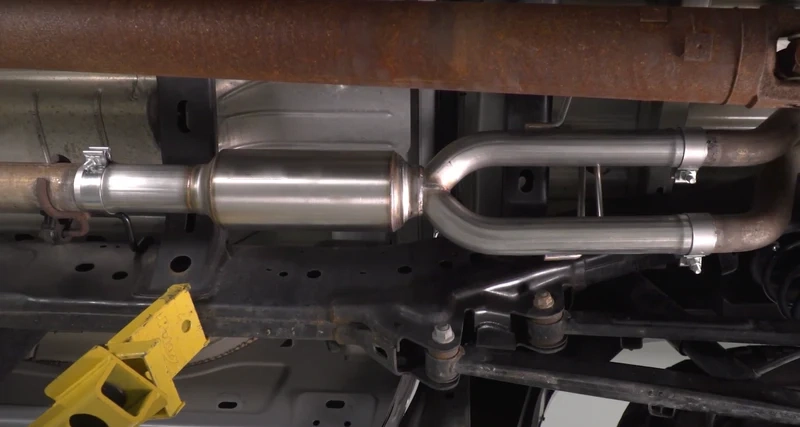
A muffler delete at an exhaust shop costs less than a straight pipe because it’s less work. They cut out the muffler, weld in a pipe, and you’re done. A straight pipe is a full custom job: remove the resonator and muffler, often bend custom pipe to match the factory routing, and weld everything into place. More labor, more materials.
DIY vs shop
If you own a welder and know how to use it, both a muffler delete and a straight pipe are weekend projects. Cut, measure, weld, hang. If you don’t weld, you’re paying a shop to do it. The skill floor isn’t high — plenty of people do their first muffler delete in a driveway with a sawzall — but the quality varies.
What to watch out for
- Hangers — Make sure whoever does the work reuses or replaces the rubber hangers. Old ones crack and let the pipe sag.
- Tack welds vs full beads — A corner shop might tack-weld a delete pipe and call it good. That will eventually leak or crack. Ask for a full bead.
- Stainless vs mild steel — If you’re in a state that uses road salt, a mild steel straight pipe will rust through in one winter. Stainless lasts. Ask before they cut.
- O2 sensor clearance — Some delete pipes sit too close to an O2 sensor and throw a code. A good shop will check this before welding.
—
Common Mistakes to Avoid
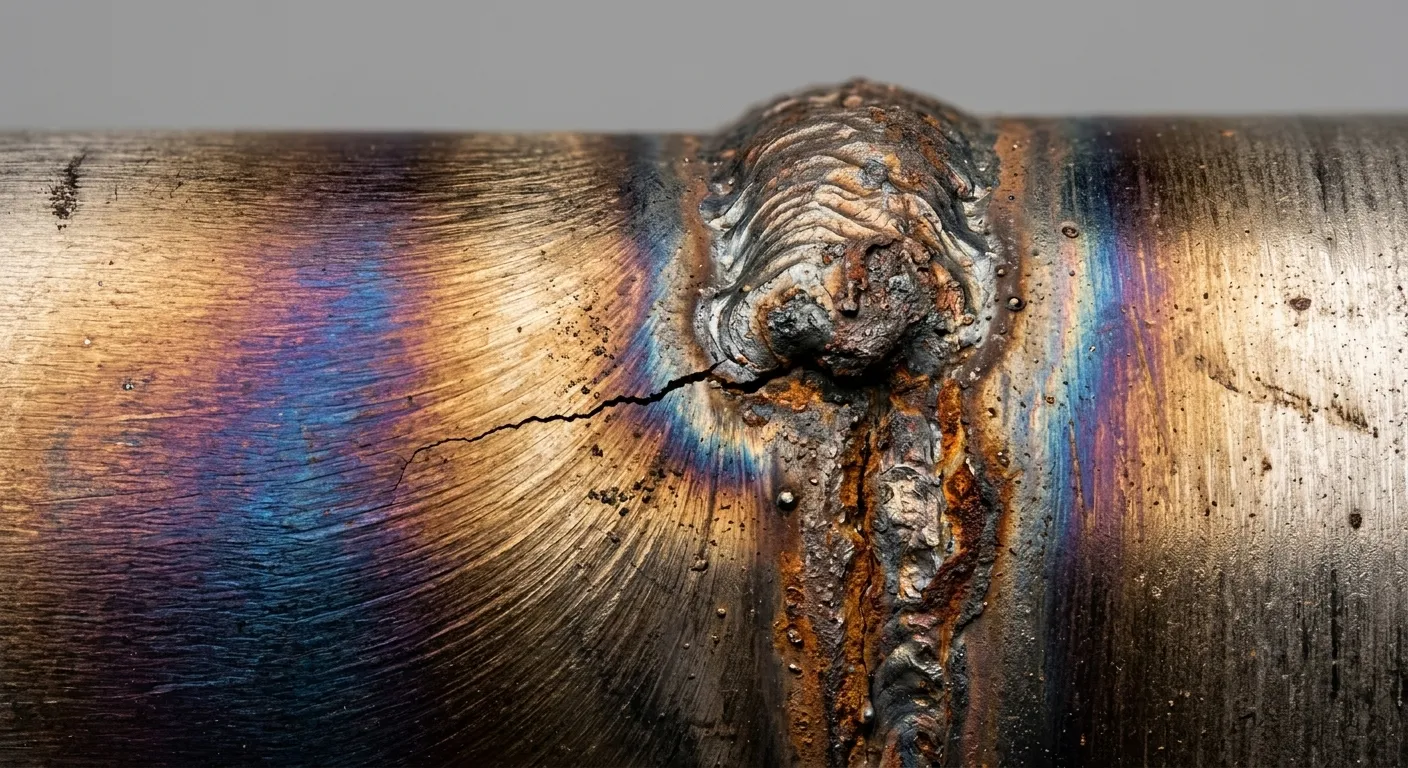
I’ve made some of these. I’ve watched friends make the rest. Don’t repeat them.
Mistake 1: Buying parts before measuring your pipe diameter. Every car uses a different exhaust pipe diameter. Ordering a universal delete pipe only to realize your car runs 2.25″ and the pipe you bought is 2.5″ means either a terrible fit or an extra trip to the shop for reducers. Measure with a caliper before you buy anything.
Mistake 2: Skipping the ECU tune after straight piping. When you remove the muffler and resonator, you change the backpressure characteristics. On some cars — especially turbocharged ones — the ECU detects the change and adjusts fuel trims. The result: a check engine light, reduced fuel economy, and sometimes a rough idle. A tune fixes this, but it’s an extra cost most people don’t budget for when they’re planning a straight pipe vs muffler delete build.
Mistake 3: Forgetting rust protection. Mild steel delete pipes are cheap, but they rust. If you live anywhere with snow, salt, or coastal humidity, your shiny new pipe will look like a barn find in six months. High-temp paint or ceramic coating helps. Stainless steel is the better answer, but it costs more up front.
Mistake 4: Only thinking about noise, not your actual life. That loud exhaust sounds great pulling into a Cars and Coffee at 10 AM. It sounds a lot worse at 6 AM when you’re leaving for work and your neighbor three houses down knows your schedule by heart. I’ve had friends get noise complaints filed against them, get cited under local ordinances, and end up spending more to revert to stock than they spent on the delete in the first place. Ask yourself honestly: will this still be fun in six months?
—
FAQ
Q1: Is a muffler delete illegal?
In most states, yes. Any modification that makes your car louder than factory spec violates EPA tampering laws and state vehicle codes. This is where the straight pipe vs muffler delete distinction matters less than the law sees it — both violate the same rules. In inspection states, neither will pass. In states without inspections, local noise ordinances still apply.
Q2: Is a straight pipe worth it?
If your goal is maximum volume with zero concern for legality, daily comfort, or resale value — you already know your answer. If you want a car that sounds aggressive but is still usable every day, a straight pipe is usually overkill. Most people who go straight pipe end up swapping to something more moderate within a year. I’d estimate fewer than 1 in 5 keep it long-term.
Q3: Can my car pass inspection with a muffler delete?
Not in states that do visual exhaust inspections. Most inspection stations check for catalytic converters, mufflers, and visible exhaust modifications. Even if the state doesn’t do a physical check, many OBD-II tests will catch a check engine light caused by exhaust changes. The short answer: assume it won’t pass.
Q4: How can I make a muffler delete legal?
You can’t — at least not in the strictest sense. But you can achieve a similar result legally by replacing your muffler with a quality performance muffler that’s within your state’s noise limits. Bolt-on upgrades are available for most makes and models, and they’ll give you a louder, more aggressive exhaust note without the legal headache. We carry a range of compliant options right here.
—
Conclusion
The straight pipe vs muffler delete decision comes down to one question: how much compromise can you live with?
A muffler delete gives you a louder, deeper exhaust note with minimal work and low cost — but it’s illegal on public roads in most states, offers negligible power gains, and can fail inspection. A straight pipe takes everything further: louder, more illegal, and not meaningfully faster.
Neither is the performance shortcut a lot of people hope for. Neither is a smart choice for a daily driver in an inspection state. And neither gives you the sound-to-usability ratio of a properly chosen muffler upgrade.
I’ve been building exhaust systems alongside our team for over 20 years. What I’ve learned is that the best setup isn’t the loudest one — it’s the one you can live with every day. If you want to go deeper, check out our guide to muffler types to see which design fits your build and your life.