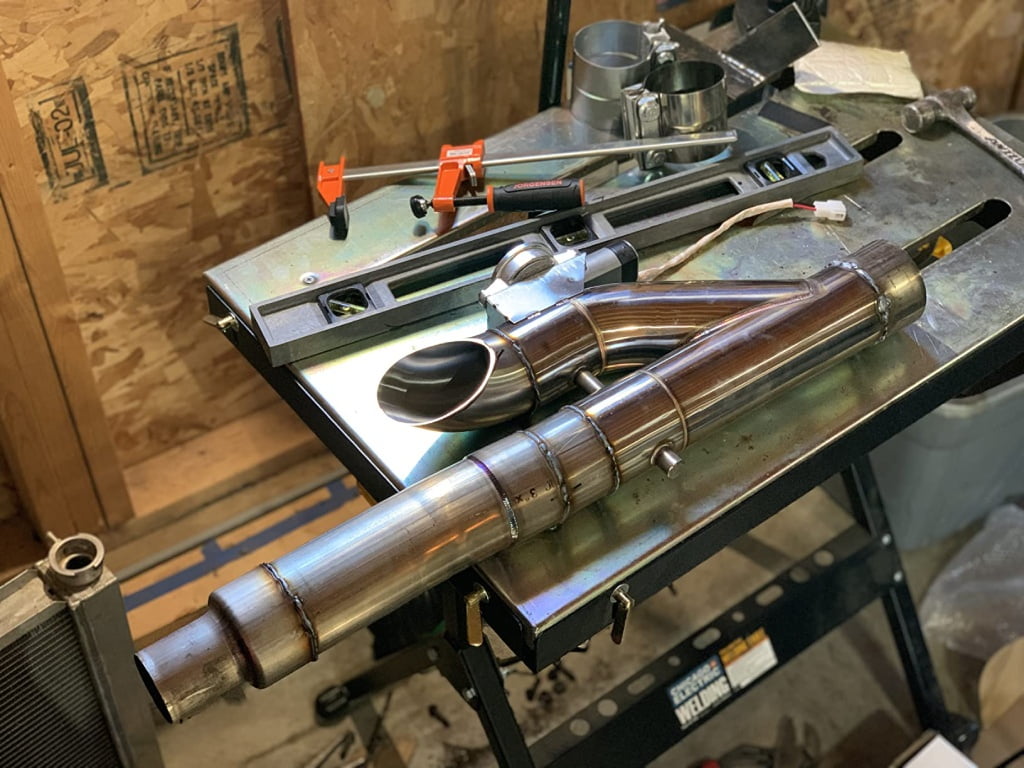
TL;DR Exhaust cutouts are used for three main things: controlling your exhaust sound on demand, unlocking a freer-flowing exhaust for a mild performance edge, and switching between a quiet street setup and a loud track setup without changing your system. Most people install a cutout first and foremost for sound control — the ability to go from stock-quiet to wide-open straight-pipe tone with a button or a lever. It’s the simplest way to get two exhaust personalities out of one car.
Sound Control — The Top Reason People Install Cutouts
Let’s be honest about why most of us are here: the sound. An exhaust cutout’s single biggest job is giving you control over how your car sounds, whenever you want.
When the cutout is closed, your exhaust flows through the muffler and resonator just like factory — quiet, civilized, neighbor-friendly. Open it up, and the gases bypass the muffler entirely, giving you that deep, raw, straight-pipe note that turns heads.
This on-demand switching is the whole point. You don’t have to commit to a permanently loud exhaust, and you don’t have to live with a permanently quiet one. You get a car that’s stock-civilized on your commute and genuinely loud when you open it up on the back roads.
For most owners, this is the primary reason for the install. The vast majority of people who add a cutout are doing it first and foremost for sound control — being able to flip between quiet and loud at will. The exact mix of reasons varies from person to person, but the sound control is almost always at the top of the list.
It’s worth being specific about what “sound control” actually feels like day to day. Closed, your car is the car you bought — no drone on the highway, no unwanted attention, no problems with neighbors or noise ordinances. Open, it’s a different machine: deeper, louder, with that characteristic crackle on deceleration that makes you smile. The gap between the two is exactly what a cutout gives you, and it’s why so many owners describe it as the favorite modification on their car.
Performance Gains — When Do Cutouts Actually Help?
Beyond sound, a cutout can add a small performance benefit — but it’s worth understanding what it does and doesn’t do.
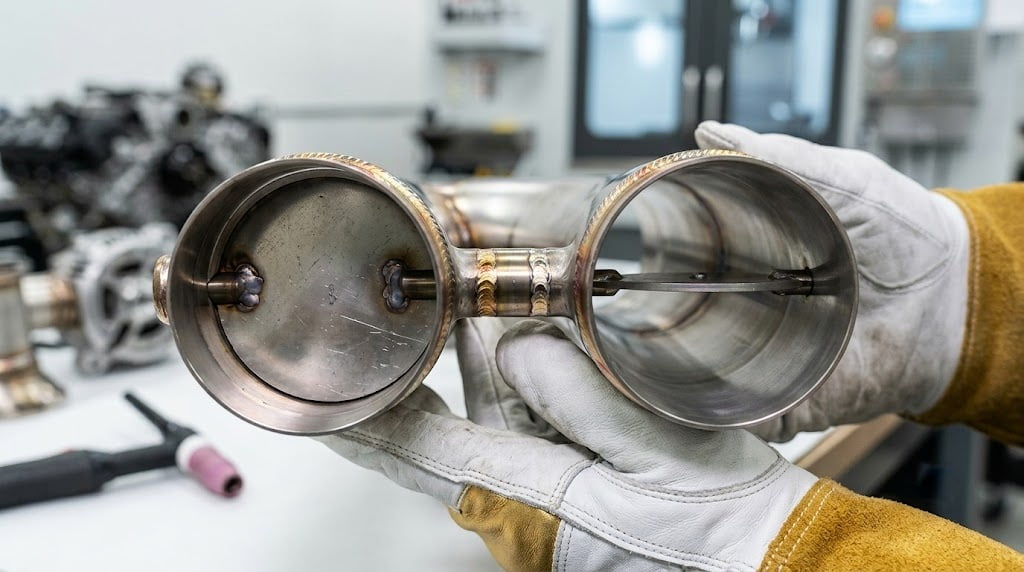
When the valve is open, the exhaust has a shorter, less restricted path to exit the engine. This reduces backpressure and lets the engine breathe more freely at high RPM. In practice, a number of enthusiasts and videos report a mild power gain from opening a cutout, especially in the upper rev range where exhaust flow matters most.
The honest way to think about it: an open cutout gets you in the neighborhood of a straight-pipe setup. The freer flow can support a modest improvement in high-RPM response, but it’s not a dramatic transformation on its own. The exact result varies by vehicle, exhaust layout, and whether you’re running a tune. If you’re chasing serious numbers, a cutout is best seen as one piece of a broader setup — freeing up the exhaust is helpful, but it works with everything else, not instead of it.
So, do cutouts add horsepower? In a word: sometimes. A cutout reduces restriction, and reduced restriction can translate to a small high-RPM gain. Just don’t expect a cutout alone to transform your car — its real, reliable value is the sound control, with the performance as a welcome bonus on top.
There’s also a practical angle worth mentioning. Because an open cutout lets the engine expel exhaust more freely, it can pair well with other breathing mods — a cold-air intake, a freer-flowing downpipe, or an aftermarket tune. If you’ve already upgraded the intake side, opening up the exhaust side with a cutout can help the whole system feel more balanced, particularly when you’re winding the engine out toward redline. To maximize this efficiency and keep under-vehicle temperatures under control, many enthusiasts pair their cutout installation with a titanium exhaust heat shield wrap. Because it is woven from pure basalt fiber, it offers superior heat insulation and doesn’t require the messy pre-burning wax process associated with traditional fiberglass wraps, making the overall exhaust upgrade cleaner and more effective.
Track vs Street — The Best of Both Worlds
This is where a cutout really shines: it lets one car serve two completely different purposes.
For street driving, you keep the cutout closed — stock sound, stock behavior, no unwanted attention. For the track, the strip, or a weekend drive with no neighbors around, you open it up for maximum exhaust note and freer flow.
The beauty is the switch is instant. On the way to the track, you’re quiet and comfortable. The moment you’re staged or on an open road, you open the cutout and get the full experience. On the way home, close it again and drive home in peace.
This “best of both worlds” setup is why cutouts are so popular among enthusiasts who daily-drive a car they also enjoy hard on weekends. You’re not choosing between a practical daily driver and a loud toy — you get both in one vehicle.
For people who attend track days or drag events regularly, the street/track split is especially valuable. You can drive your car to the event comfortably, run it hard with the cutout open, and drive home without drawing attention or sacrificing comfort. There’s no need to trailer a dedicated track car or deal with a loud exhaust on the daily commute — one setup, two modes, and the switch happens in seconds.
Types of Cutouts — Electric vs Manual
If you’re sold on the idea, the next question is electric or manual. Both do the same core job, but they differ in convenience.
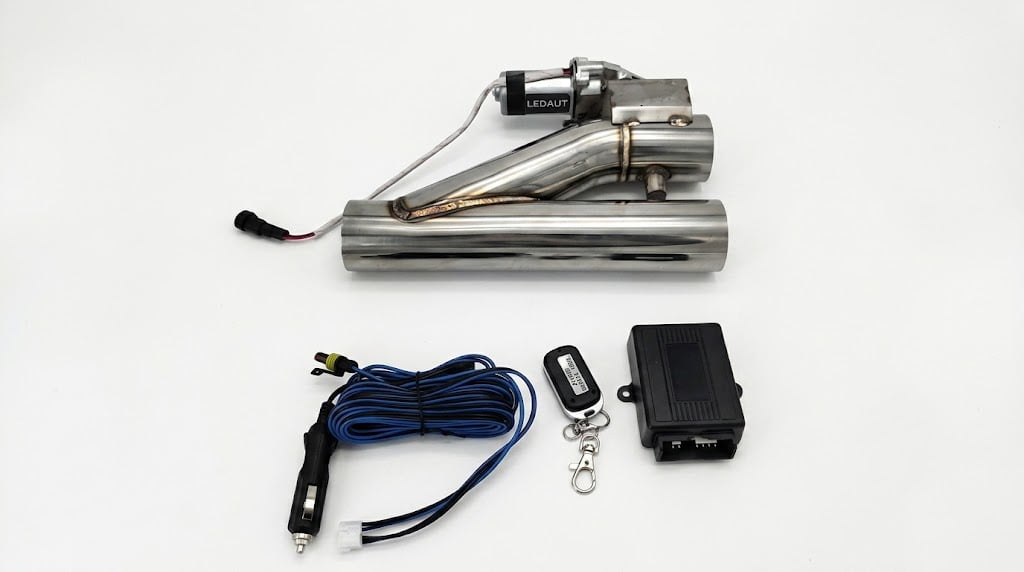
Electric exhaust cutouts are controlled by a remote from the driver’s seat. Press a button, and the valve opens or closes in a second or two. The speed matters in real life — you can quiet the car instantly if you need to, without getting out. Electric is the popular choice today, and for most people it’s the one that’s actually usable day to day.
Manual exhaust cutouts use a cable or a wrench, and you operate them by hand under the car. They’re mechanically simpler, but they’re less convenient — every sound change means stopping and getting out. And in a situation where you need to quiet the car fast, there’s no way to do it from the driver’s seat.
Given how much of a cutout’s value is in the ability to switch on demand, electric is the setup most people end up happiest with. Manual is a solid, no-electronics option, but the electric remote is what turns a cutout from a novelty into something you actually use every week. Want to compare them directly? Check out our breakdown of electric vs manual exhaust cutouts.
There’s one more thing to consider on the electric side: the wiring. An electric cutout needs a clean, reliable power connection to its actuator, plus the remote receiver. Most installers route the wiring along the factory harness and connect to a fused power source. It’s not complicated, but it’s worth doing carefully — a tidy, well-protected wire run is what keeps the actuator working reliably for years. A poorly routed wire can chafe, short, or fail over time, so take the extra few minutes to secure it properly. This is another reason the install is realistically a half-day job rather than a quick bolt-on. When it comes time to physically connect the cutout pipe to your existing exhaust system, achieving a perfect, leak-free seal without permanently crushing the pipes is critical. Instead of standard U-bolts, using a high-quality stainless steel lap joint exhaust band clamp allows for a secure, overlapping fit that is easy to adjust or remove later if you decide to change your setup.
FAQ
Are exhaust cutouts legal on public roads?
Laws vary by region. Many places restrict cutouts or open exhaust on public roads, though they’re often fine for off-road or track use. Check your local regulations before installing and before driving with the valve open.
Do exhaust cutouts void my warranty?
It depends on your vehicle and warranty terms. Because a cutout modifies the exhaust, it can affect exhaust-related coverage. Check with your dealer or manufacturer first.
Can I install cutouts on any vehicle?
Most cars with a standard exhaust pipe can accept a cutout, and it’s especially common on performance cars and trucks. Confirm your pipe diameter and available clearance before buying.
How long do exhaust cutouts last?
A stainless-steel cutout is durable. On electric models, the actuator is the most likely wear point, so keep wiring and connections clean for the longest service life.
Do cutouts affect fuel economy?
A cutout doesn’t meaningfully change fuel economy. When closed, it behaves exactly like stock; when open, any effect is minor and varies by driving style.
Conclusion
Exhaust cutouts exist for three reasons: sound control, a freer-flowing exhaust, and the ability to switch between street and track setups. For most owners, the sound control is the heart of it — the power to go from quiet to loud whenever you want. Add in the mild performance edge and the street/track flexibility, and it’s easy to see why cutouts are a favorite among enthusiasts.
Ready to add one to your build? Contact LEDAUT to check sizing, confirm the right cutout for your pipe diameter, and request a quote for your vehicle. Our team can walk you through electric versus manual to find the setup that fits how you actually drive — and help you confirm it’s the right fit for your exhaust before you buy.