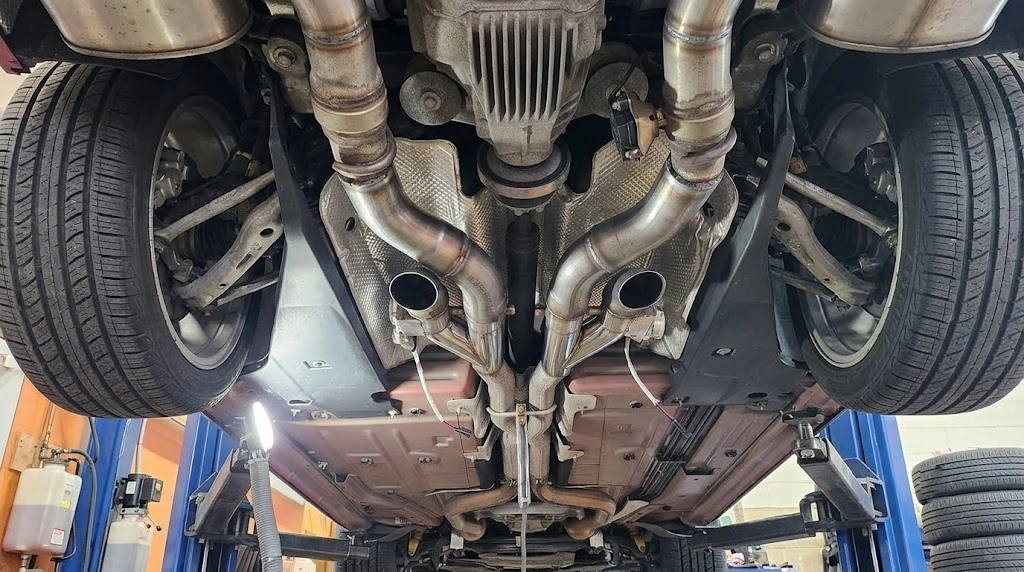
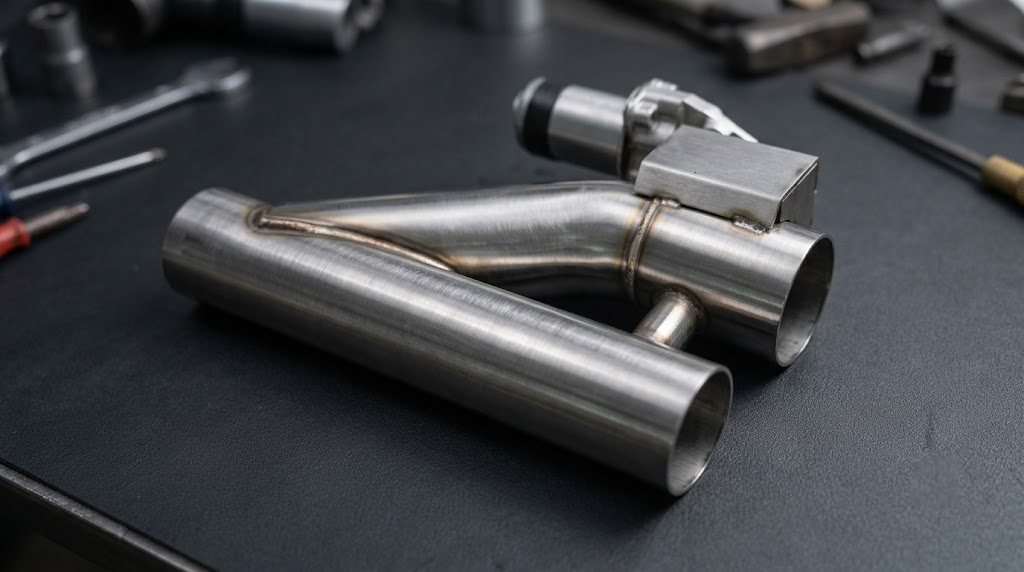
It’s the part of the build nobody plans for. The valve is mounted, the cable is run, the switch sits where your hand falls naturally — and the car’s been on the road for a couple of weekends before anyone asks the question you can’t answer: is this actually legal where I live? The usual replies are things you’ve heard. “It’s a noise thing.” “As long as you keep it closed on the street, you’re fine.” Neither of those is a legal standard. They’re guesses.
Here’s the part that trips people up: nothing about the device changes at the state line — the wording of the statute does. Some states ban the device itself from being on the vehicle. Others ban using it on the road. Those are two different rules with two different consequences, and which one applies to you depends entirely on where you’re standing. Exhaust cutout laws are written one state at a time — and where the line falls is decided by wording, not by how the valve sounds. So if you’re asking are exhaust cutouts legal where you live, the answer starts with your state’s own text — not with a forum thread.
Nothing Changes at the State Line Except the Wording
Read enough muffler cutout statutes and a pattern shows up. The language splits into two families, and the split is not cosmetic — it decides whether the device can be on the car at all.
The “equip” family. These statutes target the hardware: no muffler or exhaust system shall be equipped with a cutout, bypass, or similar device. The trigger is the device being present on the system. Nothing in the sentence asks whether it’s open, closed, or loud at the moment. It’s on the vehicle; that’s the problem the statute describes.
The “use” family. These statutes target the act: no person shall use a muffler cut-out, bypass, or similar device upon a motor vehicle on a highway. Here the verb is use, and the location is a public road. The language is aimed at the action on the street, not at the part sitting in your garage.
Why this matters before you buy anything: if you’re in an equip-wording state, the question of “but is it loud right now” never enters the analysis — the text doesn’t ask it. If you’re in a use-wording state, the text is written around what happens on a highway. Neither family says installed is fine as long as it’s quiet; that sentence appears in forum threads, not in statute books.
| Wording family | What the text targets | States we checked | Count |
|---|---|---|---|
| “…shall be equipped with…” | The device being on the system | CA, NY, PA | 3 |
| “…shall use…on a highway/way” | The act of using it on the road | WA, TX, MI, NJ, NH, FL, NC | 7 |
| Stricter / sales language | MO (lever must be disconnected) · VA (sales banned) | MO, VA | 2 |
The 12 States We Checked: Quick Reference
A note on the sample before the table, because it matters. The twelve exhaust cutout laws below are listed by statute number, what the text actually addresses, and the wording family it falls into — but first, the sample itself. These twelve states are the ones we checked — chosen because they’re where the search interest is, not drawn at random from all fifty. We are not describing the whole country here, and you shouldn’t read the table as if we were. If your state isn’t listed, the entry that applies to you is the one we haven’t read yet.
The statute numbers and sources for all twelve are listed at the end of this article.
| State | Statute | What the statute addresses | Wording family |
|---|---|---|---|
| CA | Veh. Code § 27150(a) | Equipping an exhaust system with a cutout | bans the device |
| NY | VTL § 375(31)(a) / (31)(b) | Equipping; also selling/installing a noise-increasing device | bans the device |
| PA | 75 Pa.C.S. § 4523(c) | Equipping; with (d)/(e) exceptions | bans the device |
| WA | RCW 46.37.390(1) | Using on a highway | bans road use |
| TX | Transp. Code § 547.604(b) | Using on a motor vehicle (no highway limit) | bans road use |
| MI | MCL 257.707 | Using on a motorcycle or moped | bans road use |
| NJ | N.J.S.A. 39:3-70 | Using on a highway | bans road use |
| NH | RSA 266:59 I | Using on a way | bans road use |
| FL | § 316.272(1) | Using on a highway | bans road use |
| NC | § 20-128(b) | Using a “muffler cut-out” on a highway | bans road use |
| MO | § 307.170.2 | Use; plus physical disconnect from operating lever | stricter |
| VA | § 46.2-1047 | Selling + operating on Commonwealth highways | stricter |
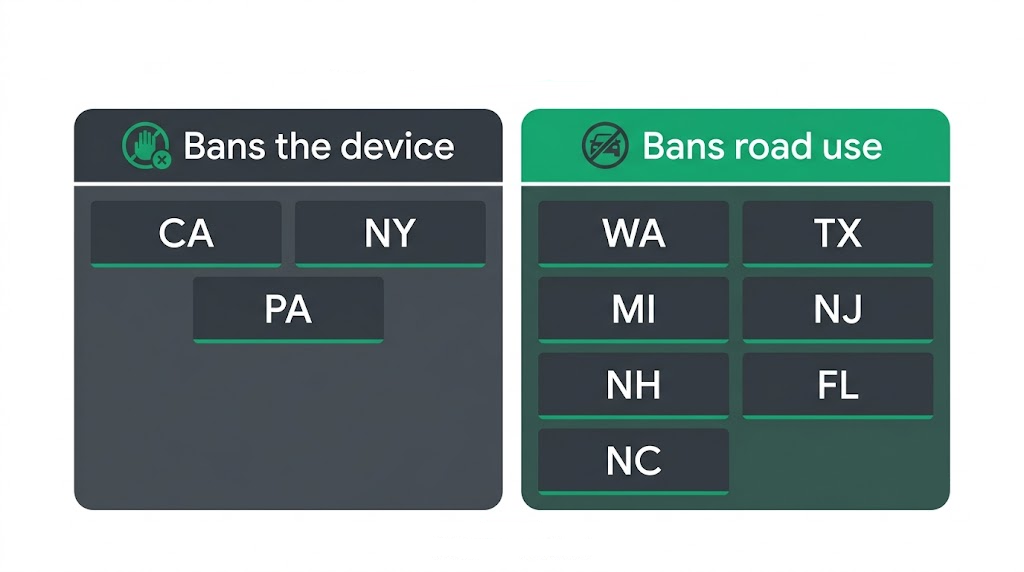
States That Ban the Device Itself (CA, NY, PA)
Three of the twelve write the rule around the hardware.
California. Vehicle Code § 27150(a): no muffler or exhaust system shall be equipped with a cutout, bypass, or similar device. Read the sentence again — the subject is the exhaust system and the verb is equipped. Nothing in it depends on how the valve is set.
New York. VTL § 375(31)(a) tracks the same construction: no such muffler or exhaust system shall be equipped with a cut-out, bypass, or similar device. What makes New York worth a close look is the next subdivision. § 375(31)(b) goes after the sale and installation side too: no person shall, in the state, sell, offer for sale or install a cut-out, bypass, or similar device which will amplify or increase the noise above that originally installed. That last clause is doing real work, and skipping it changes the meaning — New York’s sales prohibition is tied to devices that raise the noise level, not to the part in the abstract. Quoting the subsection while dropping the qualifier turns a narrower rule into a broader one than the text supports.
Pennsylvania. 75 Pa.C.S. § 4523(c) sits inside a duty section — every motor vehicle shall be equipped with a muffler or other effective noise suppressing system in good working order and in constant operation — and then adds: no muffler or exhaust system shall be equipped with a cutout, bypass or similar device. Same equip construction. But Pennsylvania is also the state where the same section gives something back; that’s worth its own section below, not a footnote here.
States That Ban Using It on the Road (WA, TX, MI, NJ, NH, FL, NC)
Seven of the twelve write the rule around the act. Each muffler cutout statute below is quoted by number, with the wording that does the work.
Washington. RCW 46.37.390(1): the section first requires a muffler, then adds — and no person shall use a muffler cut-out, bypass, or similar device upon a motor vehicle on a highway. The target is use on a public road. The same section also carries a separate restriction on modifying a muffler to amplify sound, and it carves out exemptions for older vehicles and racing use, which we come back to later.
Texas. Transportation Code § 547.604(b): a person may not use a muffler cutout, bypass, or similar device on a motor vehicle. Worth flagging two details — Texas writes cutout without the hyphen, and the sentence contains no highway limit at all. It says a motor vehicle, full stop. If you’re comparing state texts side by side, that omission is exactly the kind of difference that matters.
Michigan. MCL 257.707 reads: nor shall a person use a muffler cutout, bypass, or similar device upon a motorcycle or moped on a highway or street. The scope here is narrow on purpose. Michigan’s prohibition as written is aimed at motorcycles and mopeds — not at “vehicles” in general. Quote it without that limitation and you’ve written a rule Michigan didn’t write.
New Jersey. N.J.S.A. 39:3-70: no person shall use a muffler cut-out, bypass, or similar device upon a motor vehicle on a highway. Straight use construction, tied to the highway.
New Hampshire. RSA 266:59 I: no person shall use a muffler cutout, bypass or similar device upon a motor vehicle on a way. New Hampshire says way, which is the term its code uses for a public roadway. The same section separately bars straight-pipe exhaust, so the muffler requirement and the cutout prohibition sit side by side.
Florida. § 316.272(1): no person shall use a muffler cutout, bypass or similar device upon a vehicle on a highway. Note the statute number — Florida’s visible-emissions and noise provisions live in a different section, and the two get mixed up regularly. The cutout language is in 316.272.
North Carolina. § 20-128(b): it shall be unlawful to use a “muffler cut-out” on any motor vehicle upon a highway. North Carolina is the outlier on wording — the prohibition names only the cut-out, with no bypass and no similar device trailing it. Shorter list of what’s named; same highway framing.
The through-line across all seven: the verb is use and the setting is a public road. That does not translate into fine if you’re quiet. These statutes aren’t written as noise thresholds — they name the act. Whether your valve is open or closed on the street isn’t the question the text poses. If you’re choosing between electric and manual cutouts, understand that the choice affects how you operate the valve, not how the statute reads.
Two States That Read Stricter (MO, VA)
Two of the twelve go further, and they go further in different directions.
Missouri. § 307.170.2 doesn’t stop at banning use. It also requires that any cutout or opening in the exhaust pipe between the motor and the muffler be completely closed and disconnected from its operating lever — and that it cannot automatically open, or be opened or operated while the vehicle is in motion. That’s an unusual level of specificity. It isn’t enough for the valve to be shut in Missouri; the mechanism that lets you open it from the cabin has to be off it. A cable or electric actuator that stays hooked up is, by the text, not in compliance.
Virginia. § 46.2-1047 is titled, plainly enough, Muffler cutout, etc., illegal. The first sentence: it shall be unlawful to sell or offer for sale any muffler without interior baffle plates, or any gutted muffler, muffler cutout, or straight exhaust. The second: it shall be unlawful for any person to operate on the highways in the Commonwealth a motor vehicle, moped, or motorized skateboard or foot-scooter equipped with a gutted muffler, muffler cutout, or straight exhaust. Two things stand out. Virginia bans the sale, and it does so with no noise qualifier attached — compare that to New York’s sales clause, which is limited to devices that increase noise. And the operating prohibition keeps its location limit: on the highways in the Commonwealth. Virginia also means the same section to cover more than cars — the list runs to mopeds and motorized skateboards.
So the sales angle in these statutes runs through two states, not one: Virginia without a noise qualifier, New York with one. And Virginia’s highway limit is part of the sentence, not an afterthought — drop it and you’ve widened the rule.
For the sales-side view of the same device — how a dealer frames compliance and risk when a customer asks — that’s covered in how dealers handle cutout compliance.
What Actually Counts as an Exception
This is the section most articles skip, and it’s where the text gets interesting.
Pennsylvania writes the exceptions into the same section. § 4523(d): headers and side exhausts are permitted provided the vehicle meets all the requirements of this section. § 4523(e): this section does not apply to fire equipment, or to racing vehicles being operated in an organized racing or competitive event conducted under a permit issued by local authorities. That’s a real carve-out, in the statute, for competition use.
Washington carries its own exemptions for older vehicles and racing use in RCW 46.37.390, alongside the modification restriction.
Missouri’s disconnect requirement sits here as a contrast point: it isn’t an exception at all. It’s what compliance looks like in that state — valve closed, lever off, no way to open it from inside while driving.
Hold the shape of this. These exceptions are written state by state, and a carve-out in one state’s text tells you nothing about the state next door. It isn’t a general permission to run a cutout at the track and drive home on the road.
Federal Law Is About Emissions Equipment, Not the Cutout
One thing that gets flattened in these discussions: federal law and state law are aimed at different things.
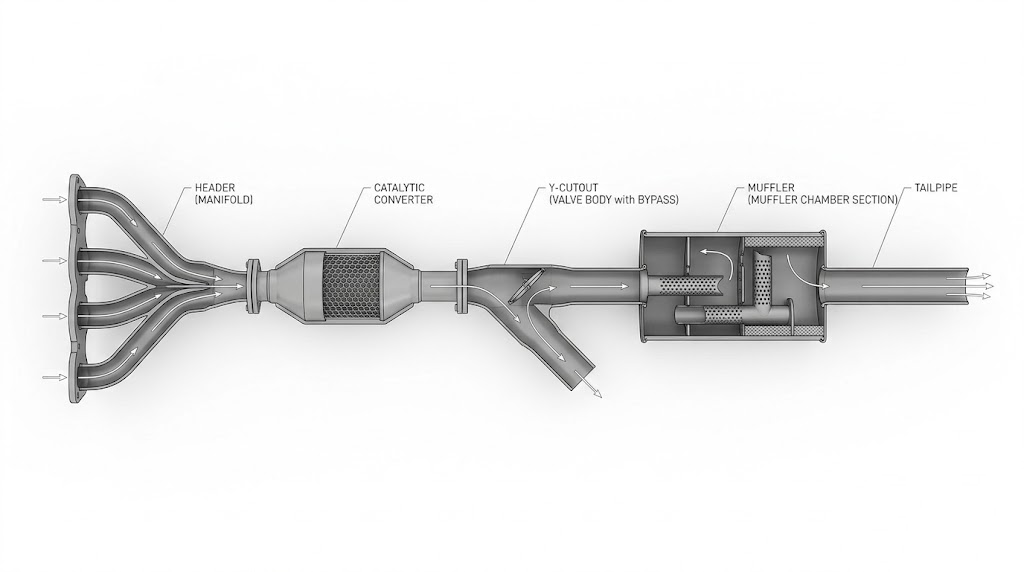
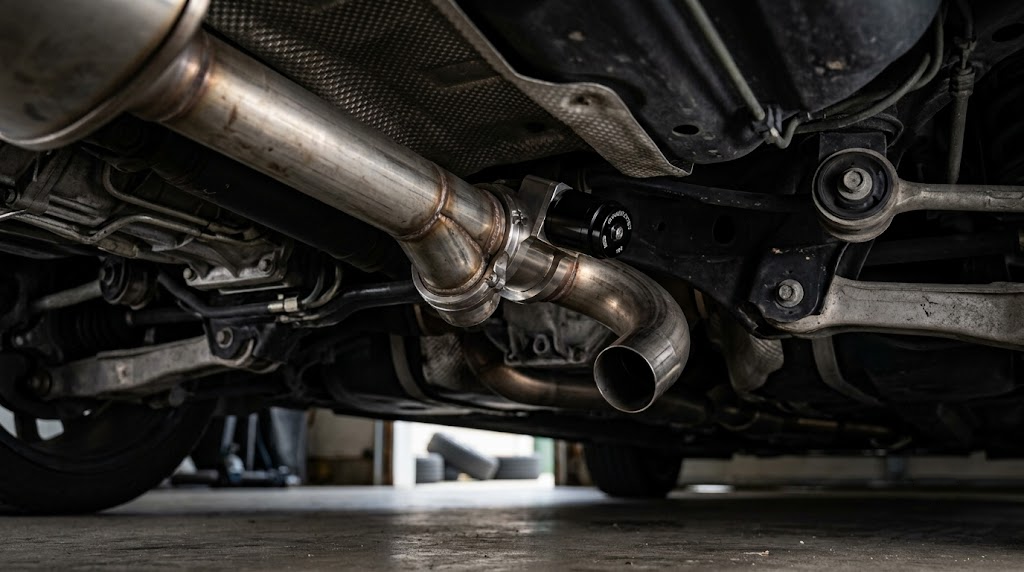
At the federal level there is no statute that specifically bans a cutout. The federal hook is emissions tampering — Clean Air Act § 7522(a)(3)(B), 42 U.S.C. — which targets defeating emissions equipment. Where the cutout sits decides which side of that line it falls on:
- Installed after the catalytic converter, it doesn’t defeat the converter. The federal tampering concern isn’t triggered by the device being there.
- Installed before the converter, opening it routes exhaust around the catalyst. That’s where the federal tampering problem lives.
That distinction is about the converter, not the cutout. It says nothing about whether a state has its own prohibition on the device or its use — and as the twelve states above show, state text is where the cutout itself gets addressed.
One more habit worth dropping: a “track use only” label. It’s often read as a shield for street use. It isn’t. A product label doesn’t rewrite a state statute, and it doesn’t change where the device is installed.
This article is not legal advice. State statutes change — check your state’s current law before you install or use anything.
FAQ
Are exhaust cutouts legal in my state?
Is a cutout legal in my state? Start with the statute number in the table above — that’s the text that decides it. In the states we checked, all twelve have language that addresses cutout devices in some form — but what that language targets differs, and that’s the part that matters for you. That number is your starting point — not a forum thread.
Is a cutout illegal just because it’s installed?
In equip-wording states — California, New York, Pennsylvania — the text addresses the device being on the system, so installation is what the statute describes. In use-wording states, the text is written around using it on a road. That’s the dividing line, and it’s drawn by the wording, not by the device.
Can I run a cutout on the street if I keep it quiet?
That inference doesn’t come from the statutes. The use-wording states name the act of using the device on a road; they aren’t written as noise thresholds you can pass. Noise is regulated separately, by state provisions and local ordinances, and that’s a different question from what these cutout statutes say.
Does a “track use only” cutout keep me legal on the road?
No. The label is a product description, not a legal carve-out. Where a state does write a competition exemption — Pennsylvania and Washington both do, for permit-held events — it’s written into the statute as a narrow condition, not transferred by a sticker.
What should I know before buying a cutout?
Three things: what your state’s statute actually says, whether your state’s wording targets the device or the act of using it, and where the unit will sit relative to the converter. If you want to know what the part is and does before the legal reading, start with what an exhaust cutout actually does.
What to Do Before You Buy
If there’s one habit worth building here, it’s this: pull your state’s statute and read the verb. Equipped means the device on the system is what the text addresses. Use means the text is written around the road. Neither one asks whether it’s loud right now.
Three steps, in order:
- Find your state’s statute number in the table above, and open the text itself.
- Read what the wording targets — the device, or the act.
- Before you install, confirm where the unit sits relative to the converter, because that’s the line the federal emissions rule turns on.
Statutes change, and they’re state-specific by design. Read the current text for your state before you buy or install anything.
Once the legal question is settled, the next step is picking the hardware — our exhaust cutout buying guide covers valve types, pipe sizes, and what to check before ordering.
Ready to look at cutout options? Browse exhaust cutouts.
Ready to source a cutout? Tell us your vehicle and where you plan to mount it — we supply the hardware, and we will not guess at your state’s law for you.
Sources
Statute numbers and official text for the twelve states covered above.
- CA — Vehicle Code § 27150(a): https://leginfo.legislature.ca.gov/faces/codes_displaySection.xhtml?lawCode=VEH§ionNum=27150
- NY — VTL § 375(31)(a) / (b): https://www.nysenate.gov/legislation/laws/VAT/375 — Statute text verified via third-party full-text mirror; official state site unavailable at time of writing.
- PA — 75 Pa.C.S. § 4523(c): https://www.legis.state.pa.us/WU01/LI/LI/CT/HTM/75/00.045.023.000..HTM
- WA — RCW 46.37.390(1): https://app.leg.wa.gov/RCW/default.aspx?cite=46.37.390
- TX — Transportation Code § 547.604(b): https://statutes.capitol.texas.gov/Docs/TN/htm/TN.547.htm#547.604
- MI — MCL 257.707: https://www.legislature.mi.gov/Laws/MCL?objectName=mcl-257-707
- NJ — N.J.S.A. 39:3-70: https://law.justia.com/codes/new-jersey/title-39/section-39-3-70/ — Statute text verified via third-party full-text mirror; official state site unavailable at time of writing.
- NH — RSA 266:59 I: https://www.gencourt.state.nh.us/rsa/html/XXI/266/266-59.htm
- FL — § 316.272(1): https://www.leg.state.fl.us/statutes/index.cfm?App_mode=Display_Statute&URL=0300-0399/0316/Sections/0316.272.html
- NC — § 20-128(b): https://www.ncleg.gov/EnactedLegislation/Statutes/HTML/BySection/Chapter_20/GS_20-128.html
- MO — § 307.170.2: https://revisor.mo.gov/main/OneSection.aspx?section=307.170
- VA — § 46.2-1047: https://law.lis.virginia.gov/vacode/title46.2/chapter10/section46.2-1047/
- Federal — 42 U.S.C. § 7522(a)(3)(B) (Clean Air Act anti-tampering)