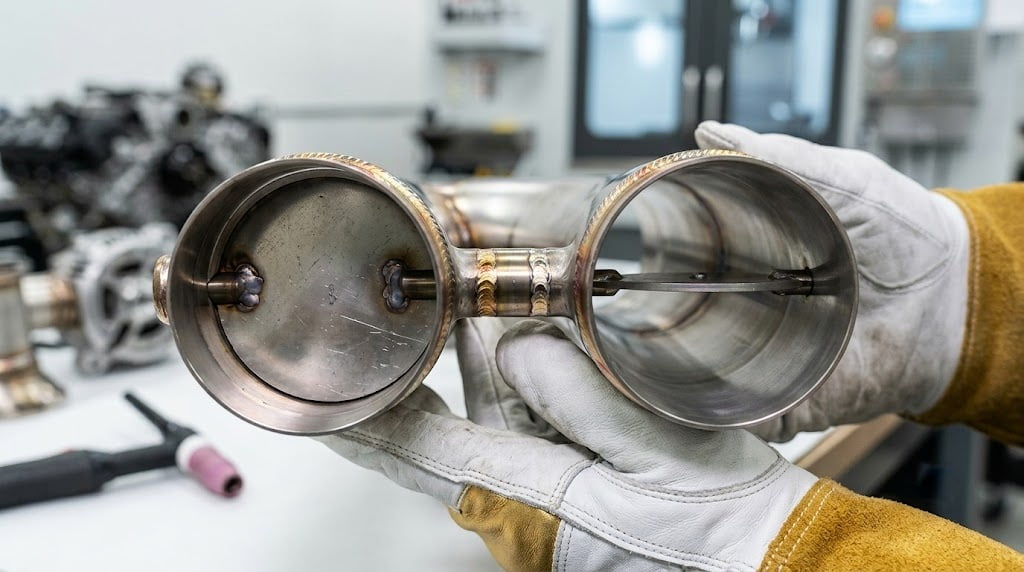
TL;DR An exhaust cutout is a valve installed in your exhaust pipe. Open it and the exhaust bypasses the muffler and exits through a short dump — the note goes from factory-quiet to loud in a second. Close it and the exhaust flows through the stock path again, as if nothing had changed. This guide explains how the valve works, the difference between electric and manual versions, what it actually delivers, and where the legal lines sit.
What Is an Exhaust Cutout?
If you’ve ever wanted your car to sound like a full race machine but still be quiet enough for a commute, an exhaust cutout is the answer. It’s essentially a valve, or a branch pipe with a valve, installed into your exhaust system — usually in the mid-pipe section — that lets exhaust gases bypass your muffler and exit directly.
When the valve is closed, exhaust flows through your muffler and resonator just like factory, keeping the sound normal and civilized. When the valve is open, the gases take a shorter, unrestricted path out of the pipe, giving you that deep, loud, straight-pipe note.
Think of it like a window in your exhaust. Roll it up, and it’s a normal car. Roll it down, and it’s a monster.
At LEDAUT, we make both electric exhaust cutouts and manual exhaust cutouts, in corrosion-resistant SS304 stainless steel, available in 2.5-inch and 3-inch pipe sizes to suit most builds. The whole idea is that you don’t have to commit to one exhaust personality — you get a switchable setup that adapts to how you’re driving.
Electric vs Manual Cutout
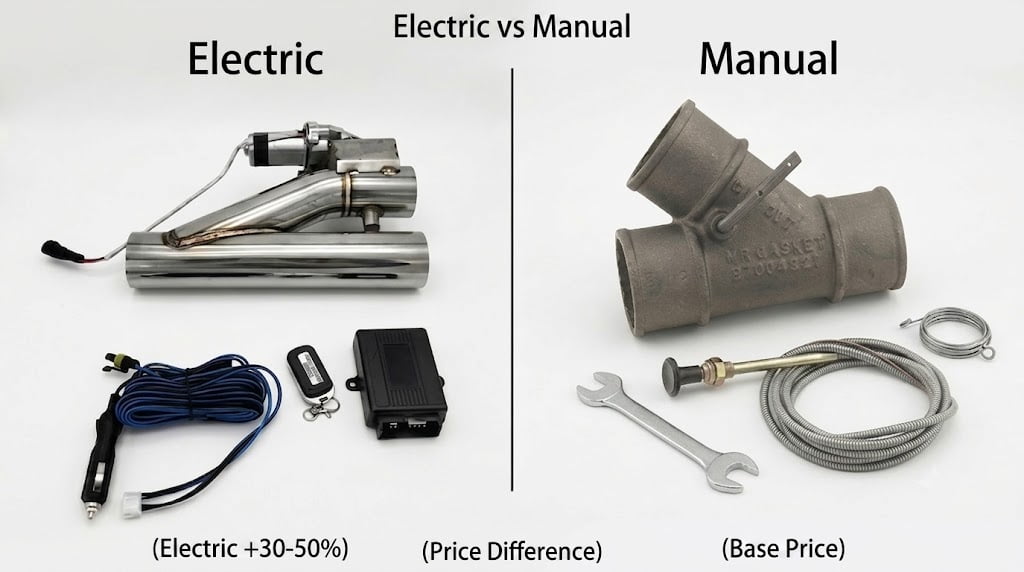
There are two main ways to operate an exhaust cutout, and the choice comes down to convenience versus simplicity.
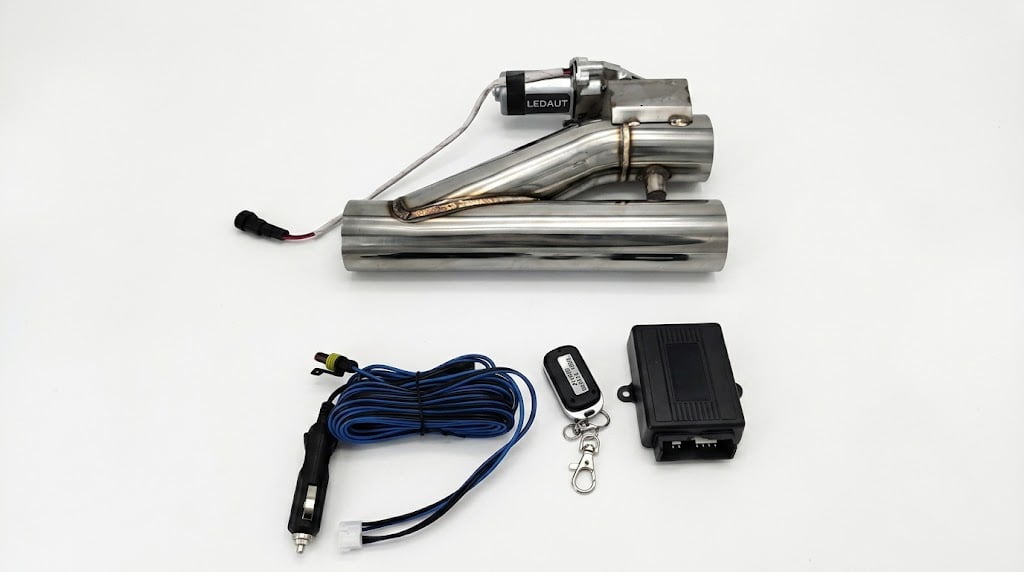
Electric exhaust cutouts use a small electric actuator wired to a remote control. You sit in the driver’s seat, press a button, and the valve opens or closes in seconds. Because the switch is instant, an electric setup is also the safer choice in a pinch — if you need to quiet the car quickly (think pulling into a neighborhood late at night, or passing a noise-sensitive area), you can flip it closed immediately without getting out of the car.
That fast switching is a bigger deal than it sounds. Real-world driving throws surprises at you — a school zone, a quiet residential street, a bored officer with a sound meter. Being able to close the cutout from the driver’s seat in under a second is the difference between an awkward moment and no moment at all.
Manual exhaust cutouts are operated by a cable or a wrench — you reach under the car and open or close the valve by hand. They’re simpler in design, with fewer parts and nothing electronic to fail. But they’re genuinely less convenient for daily use. Every time you want to change the sound, you have to stop, get out, and reach under the car. And in an emergency, there’s no way to switch it fast from the driver’s seat.
For most people, electric is the way to go. Manual still has its place — it’s a straightforward, no-electronics option that appeals to purists and to anyone who wants the absolute simplest mechanism — but the electric remote control is what makes a cutout truly usable day to day.
Benefits of Installing a Cutout
So why bother? Here’s what a cutout actually does for you.
Sound control on demand. This is the number-one reason people install cutouts. You get a completely stock, quiet exhaust when you want it, and a loud, aggressive one when you don’t. No chopping up your system, no switching between exhausts, no permanent commitment.
It doesn’t hurt your daily driving. Here’s the part a lot of people worry about — and the good news is, a properly functioning cutout leaves your car exactly as it was when the valve is closed. With an electric cutout, once you shut the valve, it returns to the factory setting, and the sound is identical to stock. If you ever notice a slight difference in tone, that usually means the valve isn’t seating fully — a sign of a leak or a valve that needs attention, not a permanent change to your car. In other words, when it’s working right, you get stock behavior at the flick of a switch.
A weekend toy and a weekday commuter in one. You don’t have to choose between a car you love to drive and a car that’s livable. The cutout gives you both, on the same car, with the press of a button. On Monday it’s the quiet daily driver your neighbors appreciate; on Saturday it’s the loud, rowdy machine you actually enjoy.
A simple, reversible concept. Because the cutout is a bolt-on branch with a valve, you’re not permanently altering the core of your exhaust. If you ever want to return to a fully stock system, the concept is straightforward to undo. And if you’re ready to make the switch, browse our exhaust cutouts to see the electric and manual options LEDAUT offers.
How to Choose the Right Cutout
Picking the right cutout comes down to a few practical questions.
Electric or manual? If convenience matters — and it usually does — go electric. The remote control and fast switching make it dramatically easier to live with. Choose manual only if you want the simplest possible mechanism and don’t mind getting under the car to change the sound.
What pipe size? Match the cutout to your exhaust pipe diameter. LEDAUT offers 2.5-inch and 3-inch options, so measure your pipe or check your build specs before ordering. Getting the right size keeps the flow smooth and the install clean — an undersized or oversized cutout can hurt performance and make the valve harder to fit.
Where does it go? The cutout is typically installed in the mid-pipe section, downstream of the catalytic converter, so it’s positioned to bypass the muffler when open. Good placement matters — you want the branch to flow cleanly and the valve to have room to operate.
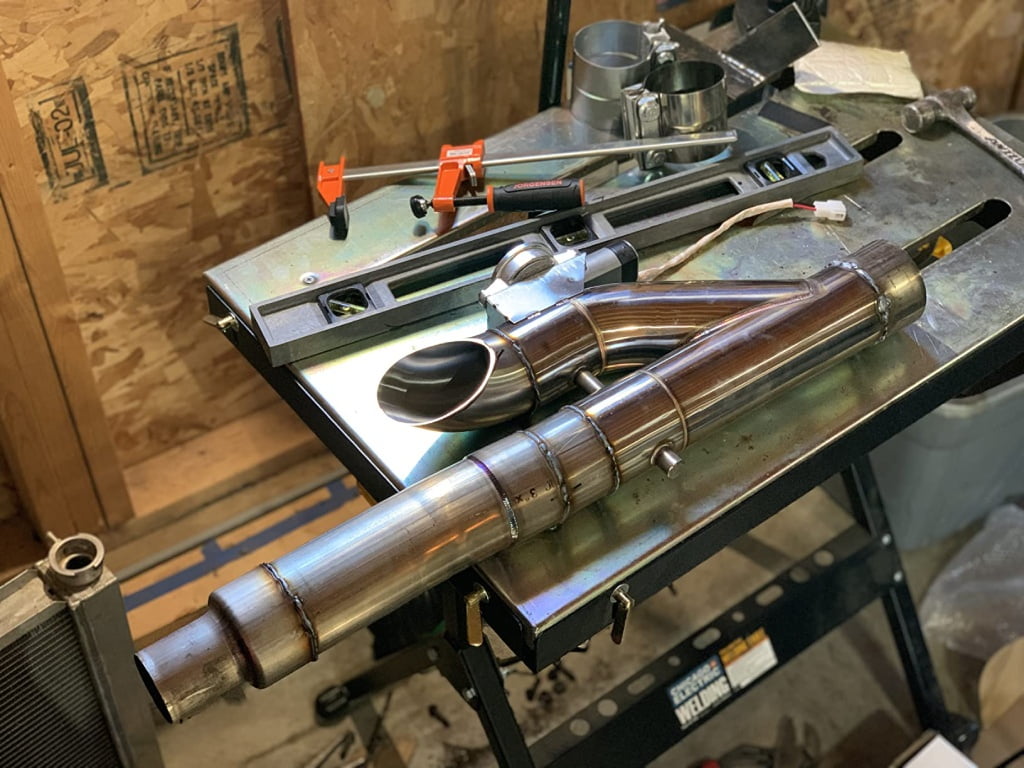
Installation. A cutout install involves cutting into your exhaust, welding the branch in place, and wiring up the actuator for electric models. Budget roughly half a day for the job including welding and wiring — it’s not a 15-minute bolt-on, but it’s a very doable weekend project for anyone comfortable with basic exhaust work. Take your time on the welding, because a clean, sealed weld is what keeps the system leak-free.
FAQ
Will an exhaust cutout void my warranty?
It depends on your vehicle and warranty terms. Because it modifies the exhaust system, it can affect exhaust-related warranty coverage. Check with your dealer or manufacturer before installing.
Is an exhaust cutout legal on the road?
Laws vary by location. Many regions restrict cutouts or open exhaust on public roads — they’re often more acceptable for off-road or track use. Check your local regulations before you install and before you drive with the valve open.
Does a cutout hurt performance?
No. When closed, your exhaust performs exactly as stock. When open, it reduces backpressure for a freer-flowing feel — some report a mild power gain at high RPM, though it varies by vehicle.
Can I install a cutout on any car?
Most vehicles with a standard exhaust pipe can accept a cutout. It’s most common on performance cars and trucks. Check your pipe diameter and clearance before buying.
How long does a cutout last?
Built from stainless steel, a quality cutout is durable. Electric models have an actuator that’s the most likely wear point — keep wiring and connections clean for long service life. A stainless body resists corrosion, so with reasonable care a cutout can outlast several exhaust systems.
Do I need a tune after installing a cutout?
In most cases, no. Because the cutout simply bypasses the muffler when open, it doesn’t change how the engine is tuned — your ECU keeps working the same way whether the valve is open or closed. Some enthusiasts add a tune to take advantage of the freer-flowing exhaust, but it’s not required for the cutout to function. If you’re already running a tune, an open cutout can complement it at high RPM.
Conclusion
An exhaust cutout is the simplest way to give your car two personalities — quiet when you need it, loud when you want it. With electric and manual options, SS304 stainless construction, and a straightforward install, it’s a smart upgrade for any enthusiast who doesn’t want to choose between daily comfort and weekend fun.
If you’re ready to add a switchable exhaust to your build, reach out to LEDAUT for sizing help and a quote — we’ll point you to the right cutout for your pipe diameter and your driving style. Get in touch with our team for pricing and to confirm the exact setup for your vehicle. And if you’re still weighing electric versus manual, ask us — we’ll walk you through which one fits your driving habits best.
Ready to upgrade? Contact LEDAUT today to check stock, confirm sizing, and request a quote for your exact vehicle.