The most common wrap failure we field questions about isn’t a bad roll of material — it’s a wrap that went in wrong and came apart months early. The fiberglass crumbles, the ends lift, and someone’s back under the car redoing the whole job. The install usually looked fine at first: tight passes, consistent overlap. Then, months ahead of schedule, the fibers go brittle and start shedding powder. That failure shows up in our inbox every week, and it always circles back to the same question: how long does exhaust wrap last, and why do some installs fail fast while others hold up for years?
The honest answer depends on three things most sellers don’t explain upfront: material grade, installation quality, and operating conditions. Fiberglass wrap on a street vehicle typically lasts 1–2 years. Bare basalt or titanium fiber holds around 12–18 months of street service; with a high-temp silicone topcoat reapplied over its life, that window pushes toward 2–5 years. Put that same wrap on a track car, a rain-exposed motorcycle, or a salted-roads fleet truck, and you’re looking at replacement every 12–18 months — sometimes sooner.
This isn’t guesswork — it’s what we’ve seen supplying exhaust heat wrap for over twenty years across thousands of applications. Here’s the straight answer on what to expect.
TLDR
- Fiberglass wrap: 1–2 years on street vehicles; shorter under extreme heat or moisture exposure
- Basalt/titanium fiber wrap: 12–18 months bare — toward 2–5 years if you keep a silicone topcoat on it
- What we ship: bare basalt, 12–18 months of street service — no coating baked in, no coating markup in the price. A ten-dollar can of high-temp silicone spray after install pushes it toward 2–5 years.
- High-stress applications (track, motorcycles, salted roads): inspect every 12–18 months and replace as needed
- Installation quality is critical: loose tension, insufficient overlap, or missing sealant cuts lifespan in half
- Maintenance extends life: periodic inspection, reapplication of silicone coating, and drying after wet exposure
How Long Does Exhaust Wrap Last? Average Lifespan
Let’s start with the numbers that matter for real-world planning. When customers ask how long does exhaust wrap last, they’re usually trying to decide whether to budget for annual replacement or expect multi-year service. The answer splits by material and use case across our exhaust heat wrap lineup.
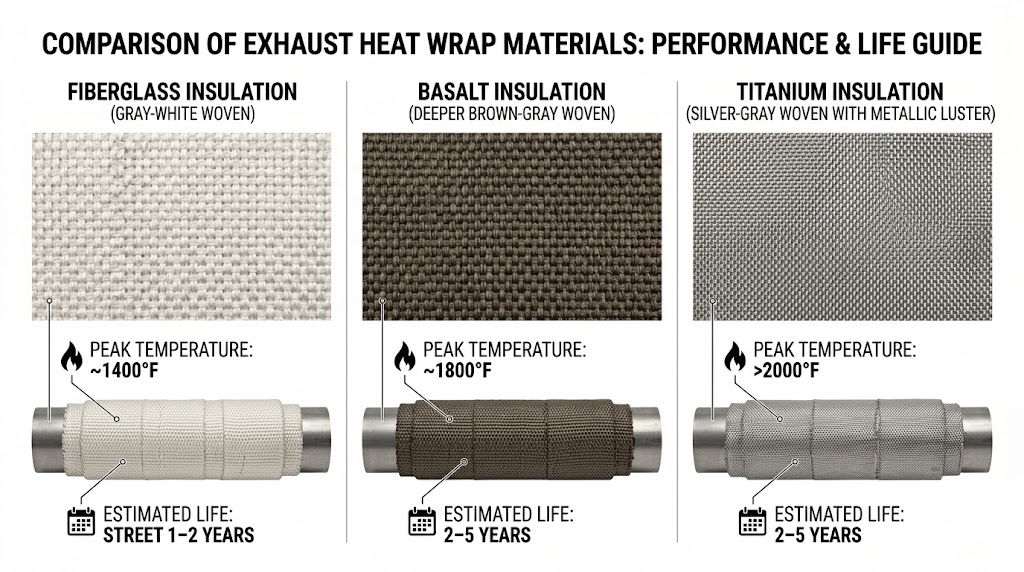
Fiberglass exhaust wrap — the most common and cost-effective option — handles the moderate heat of street applications, with a general material ceiling around 1400°F. On a typical street vehicle, expect 1–2 years before visible degradation sets in: fibers char, lose tensile strength, and eventually crumble. It’s gradual, not sudden — brittleness around month 12, flaking by month 18.
Basalt fiber wrap resists thermal cycling better than fiberglass. Under similar street conditions, bare basalt holds up for 12–18 months — stretching toward 2–5 years if you keep a silicone topcoat on it. If installed poorly or left unsealed, it won’t outlast cheap fiberglass by much. Material alone doesn’t guarantee longevity; execution does.
Titanium fiber wrap is the premium tier for the most extreme heat. It’s overkill for most street applications but essential for high-performance turbo builds or racing headers. With proper installation and a silicone topcoat, titanium fiber can stretch toward 2–5 years even under aggressive thermal cycling. The trade-off is cost — titanium runs significantly higher per foot than basalt or fiberglass.
Material sets the ceiling — coating, installation, and operating conditions decide where you land. Our rolls ship as bare basalt: 12–18 months of street service, no coating baked in and no coating markup in the price. Want it to last longer? A ten-dollar can of high-temp silicone spray after install pushes service toward 2–5 years — your call, not our margin.
Track cars, motorcycles, and fleet vehicles in harsh environments (salted roads, coastal humidity, off-road mud) age faster from moisture retention, vibration, and extreme thermal swings. Rule of thumb: inspect every 12–18 months and replace at the first signs of significant degradation — waiting for total failure means loose fibers, corrosion underneath, and compromised heat protection.
Factors Affecting Durability
Three variables determine whether your wrap lasts two years or twenty months. Understanding them helps you set realistic expectations and avoid premature failures.
Material Quality
Not all exhaust wraps are created equal, and the price difference reflects real performance gaps. Here’s the hierarchy:
| Material | Typical Lifespan (Street) | Best For |
|---|---|---|
| Fiberglass | 1–2 years | Budget builds, NA engines, moderate heat |
| Basalt Fiber | 12–18 months bare; toward 2–5 years with a silicone topcoat | Turbo manifolds, high-performance street |
| Titanium Fiber | 12–18 months bare; toward 2–5 years with a silicone topcoat | Racing, extreme turbo applications |
Basalt fiber, made from volcanic rock, resists heat and moisture absorption better than fiberglass — the sweet spot for serious street builds.
Whatever grade you pick, every LEDAUT wrap is rated for continuous 1,000–1,200°F service — the number that actually covers street and most performance use. We don’t chase the inflated ceiling figures competitors print.
Titanium fiber is the top tier, handling extreme temperatures and resisting chemical attack from road salts and oils. The downside is cost — it’s premium-priced versus fiberglass. It’s justified for race cars and commercial fleets where downtime costs far more than material, but overkill for a weekend cruiser.
Our SS304 stainless steel ties pair well with any wrap grade, and a high-temp silicone spray adds moisture protection on bare fiber.
Installation Quality
This is where most failures happen — not because the material is bad, but because the install was sloppy. We’ve pulled apart wraps that looked clean from a distance but had fatal flaws up close: inconsistent tension, gaps in overlap, unsecured ends. Those mistakes cut lifespan dramatically.
Tension matters. Wrap applied too loosely will shift under vibration, creating gaps where heat escapes and moisture pools. Too tight, and you risk damaging the pipe or crushing the fibers. The right tension feels firm but not strained.
Keep overlap consistent. Each pass should overlap the previous one by 1/4″–1/2″. Less overlap leaves seams exposed to direct heat and moisture ingress. More overlap wastes material and creates uneven thickness that can interfere with component clearance. Consistent overlap ensures uniform thermal protection and prevents weak points.
Secure the ends. Stainless steel wire or high-temp zip ties at both ends keep the wrap from creeping. Skipping this means it works loose with engine vibration, exposing bare pipe.
Poor installation turns premium material into a short-lived liability. We’ve seen premium titanium wrap fail in six months because it was wrapped with no tension and zero overlap, while properly installed budget fiberglass held up for two years. The material sets the ceiling; installation determines how close you get to it.
Operating Conditions
Where and how the vehicle operates has an outsized impact on wrap longevity. Three factors dominate:
Heat concentration at the header. The exhaust header — especially on turbocharged engines — sees the highest sustained temperatures in the system. After wrapping, internal pipe wall temperatures can rise substantially because heat stays trapped in the gas stream. This makes the header the first place fibers degrade and the highest-risk zone for corrosion underneath, so it’s the one area worth inspecting regularly.
Moisture exposure. Fiberglass and basalt wraps are porous — they absorb water from rain, humidity, road spray, and condensation. Trapped moisture accelerates fiber breakdown and promotes rust on mild steel or cast iron pipes. Coastal regions, heavy rainfall, and puddle-heavy roads see faster degradation than dry climates, and motorcycles are especially vulnerable with the exhaust fully exposed.
Thermal cycling frequency. Every heat-up and cool-down cycle stresses the wrap. Track cars that swing from ambient to 1600°F and back experience far more thermal shock than a daily driver, causing fibers to expand and contract until they fatigue. Salt exposure compounds the problem, accelerating corrosion on moisture-trapped areas.
Signs It’s Time to Replace
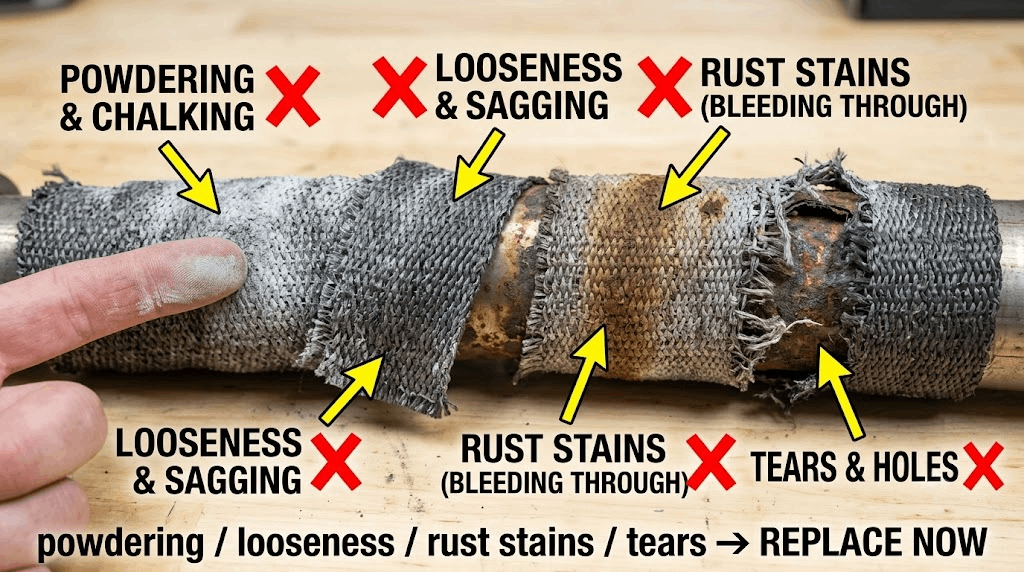
Don’t wait for catastrophic failure — catching degradation early prevents collateral damage to nearby components. Watch for these indicators:
Powdering or chalking. White or gray dust on your finger after running it along the wrap means the fibers are breaking down. This is the earliest visible sign; the wrap still works but is losing integrity. Plan replacement within a few months.
Looseness or sagging. Shifted, bunched, or loose sections create hot spots where radiant heat escapes unchecked. Retightening might buy a few weeks, but replacement is the real fix.
Rust stains bleeding through. Brown or orange discoloration signals corrosion underneath, caused by moisture sitting against mild steel or cast iron headers. It means the protective barrier has failed — immediate replacement is recommended, and consider stainless steel piping if corrosion is advanced.
Visible holes or tears. Any breach compromises thermal protection. Small tears can be patched with high-temp tape, but large holes or multiple tears warrant full replacement. Small damage expands quickly under thermal stress.
Reduced effectiveness. If nearby components (wire harnesses, plastic parts, brake lines) show heat damage despite the wrap, the material has degraded past useful life or the original install finally gave out.
When in doubt, unwrap a small section and inspect the pipe underneath — surface rust, pitting, or discoloration confirms it’s time for a full redo.
How to Extend the Life
Proper maintenance can add months or even years to your wrap’s service life. Here’s what actually works:
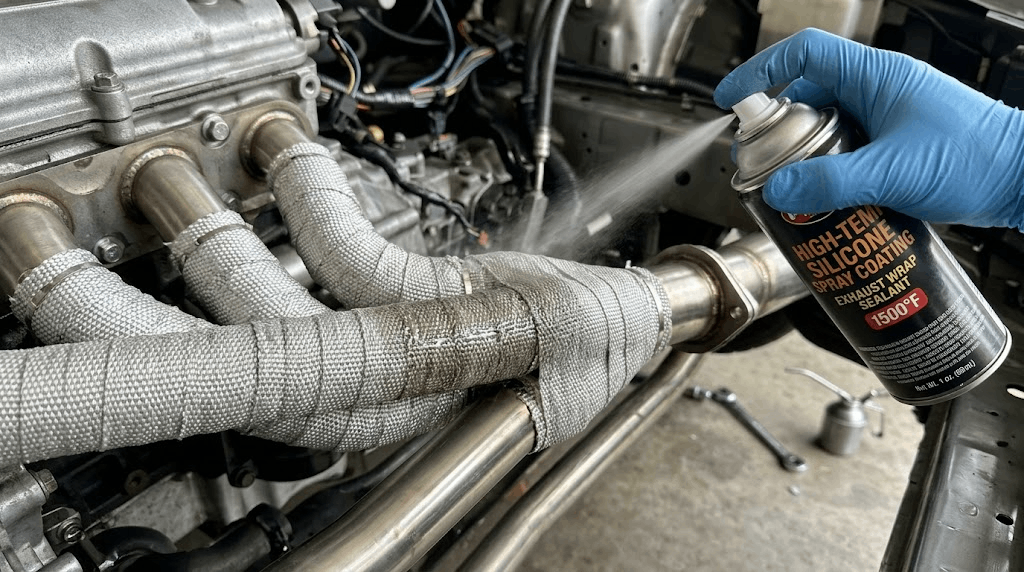
Apply high-temp silicone coating periodically. This is the single most effective maintenance step. Silicone spray seals porous fibers and blocks moisture. Reapply every 6–12 months, more often for vehicles exposed to rain, salt, or heavy use.
Dry the wrap after wet exposure. After rain, puddles, or a wash, let the engine run 10–15 minutes to evaporate trapped moisture. This matters most for motorcycles and off-road vehicles with fully exposed exhausts — letting a soaked wrap sit cold overnight invites accelerated degradation.
Inspect regularly and address issues early. Check the wrap every oil change or every 3,000–5,000 miles for powdering, looseness, rust stains, or tears. Catching problems early lets you plan replacement on your schedule instead of dealing with loose fibers and corrosion underneath.
Seal ends and overlaps during installation. Stainless steel wire or high-temp zip ties at both ends, plus consistent 1/4″–1/2″ overlap, prevent the most common failure modes. A good install is half the battle.
These steps aren’t optional extras — skip them and you’re gambling with premature failure.
For detailed guidance on getting the technique right, see “How to Install Exhaust Wrap“.
FAQ
Real questions from our inbox:
Q: How long does exhaust wrap last on a daily driver?
For fiberglass, expect 1–2 years under normal street use. Basalt or titanium fiber, properly installed and sealed, can stretch toward 2–5 years. Our bare basalt carries a 12–18 month estimate on street vehicles — longer with regular silicone topcoat maintenance.
Q: Does exhaust wrap last longer if I apply silicone coating?
Yes. Silicone coating seals the porous fibers and blocks moisture. Reapplied every 6–12 months, it pushes fiberglass from 1–2 years toward 2+, and basalt toward the upper end of its 2–5 year range.
Q: Why does my exhaust wrap fail faster than expected?
Three common culprits: poor installation (loose tension, insufficient overlap, unsecured ends), harsh conditions (moisture, salt, extreme thermal cycling), or low-grade material unsuited to your heat levels. Header sections fail first.
Q: Can I reuse exhaust wrap after removing it?
No. Removed fibers are stretched, weakened, and contaminated with oils and debris. Always use fresh material for replacements.
Q: How long does exhaust wrap last on a motorcycle?
Motorcycle exhausts face constant weather exposure without a car’s engine-bay shielding. Expect shorter lifespans — often 12–18 months even with quality material. Regular silicone coating and post-ride drying are essential; inspect every few months.
Conclusion
So, how long does exhaust wrap last? The realistic range is 1–2 years for fiberglass on a street vehicle, and 12–18 months for bare basalt — stretching toward 2–5 years if you keep a silicone topcoat on it. Harsh environments, poor installs, or neglected maintenance cut those numbers significantly. The wrap itself isn’t the variable; execution and care are.
Want to understand the tradeoffs before choosing a material? Read “Exhaust Wrap Pros and Cons” for a detailed comparison.
LEDAUT supplies exhaust heat wrap in fiberglass, basalt, and titanium fiber constructions — available in 2″ wide, 50-foot rolls. We support OEM/ODM customization for repair shops, modification shops, and fleet operators worldwide. Contact LEDAUT for a quote on bulk orders or custom specifications tailored to your application needs.
—