Exhaust Wrap Pros and Cons: Is It Worth It?
TL;DR exhaust wrap is a fiberglass or basalt sleeve wrapped around your exhaust pipes to insulate them — keeping heat inside the pipe instead of radiating into your engine bay. The main pros are better heat management (lower surface and under-hood temperatures), protection for nearby wiring and components, and a cleaner look. The main cons are the effort of installation, and the fact that wrap has a limited lifespan and needs replacement after a few years. Is it worth it? For most DIY builders managing heat, yes — as long as you pick the right material and install it properly.
Pros — Why People Use Exhaust Wrap
The whole reason exhaust wrap exists is heat management. Your exhaust pipes run extremely hot, and that heat radiates outward into everything around them — your engine bay, your wiring, your fuel lines, your intake. Wrap works by insulating the pipe, trapping heat inside and slowing its transfer to the outside world.
The most noticeable effect is on surface temperature. Because the wrap holds heat in the pipe, the outer surface of the wrap stays noticeably cooler than bare pipe. You can reduce exhaust surface temperature significantly — in the range of up to roughly 50% in many real-world tests — which means you can get closer to the exhaust and work around it more safely. And the effect on radiated heat is even bigger: the amount of heat radiating into the engine bay can drop by as much as 70%, which is the number that matters most for protecting everything around the exhaust.
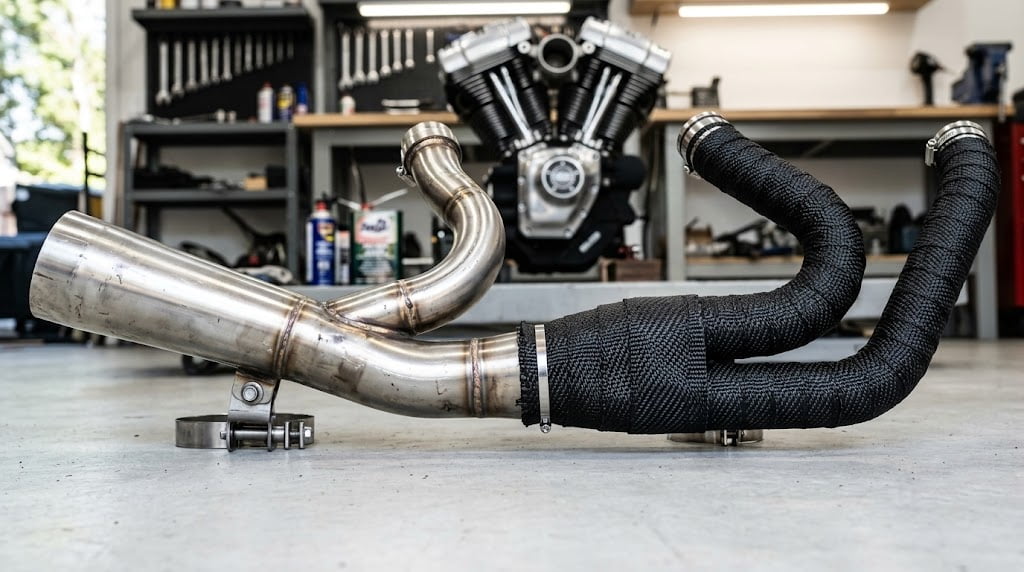
That leads to the second big pro: protecting nearby components. With less heat radiating outward, your wiring harnesses, plastic connectors, fuel lines, and brake lines run cooler. For engine bays where clearance is tight, that’s a real reliability win — heat is one of the biggest silent killers of under-hood components over time.
And there’s a performance angle, though it’s easy to overstate. By keeping heat in the exhaust, wrap helps keep exhaust gases hotter and moving faster, which supports more efficient scavenging. The result is a modest improvement in exhaust flow — the actual power gain is small, but it’s real, and it pairs well with other breathing mods. The bigger, more tangible benefit remains heat management and component protection.
There’s also the look. A cleanly wrapped exhaust — especially in a heat-resistant basalt fiber — gives the engine bay a purposeful, motorsport-style finish that many builders genuinely like. If you’re showing your engine, wrap can be part of the aesthetic as much as the function.
Cons — What You Need to Know Before Buying
Exhaust wrap isn’t all upside, so it’s fair to look at the downsides before you commit.
Installation takes effort. Wrapping isn’t a 10-minute job. You typically need to remove or at least access the pipes, then carefully wrap them by hand, overlapping the wrap as you go and securing it with ties. It’s fiddly work, especially in tight engine bays, and doing it properly takes time. Plan for a good chunk of a weekend if you’re doing a full exhaust.
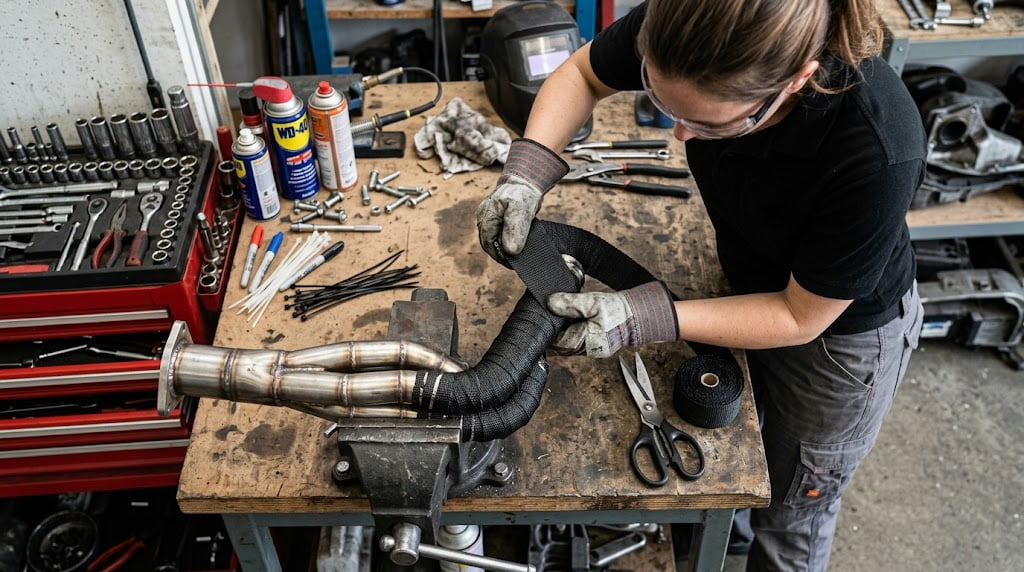
Wrap has a limited lifespan. This is the one that surprises people. Exhaust wrap doesn’t last forever. Under constant high heat and vibration, the material gradually degrades — it can fray, crack, or lose its integrity over time. Depending on the material and how hard the car is used, a wrap typically lasts a few years before it needs to be replaced and rewrapped. It’s a maintenance item, not a fit-and-forget mod.
Moisture is a concern with fiberglass. Standard fiberglass wrap can absorb moisture, which over time can promote corrosion where the wrap sits against the pipe. This is why higher-end materials like basalt or titanium-fiber wrap are popular — they’re more resistant to moisture and oil, at a higher cost. If you go with basic fiberglass, be aware of the moisture trade-off.
It can trap heat in the wrong places if misapplied. Because wrap holds heat in the pipe, it also keeps that pipe hot longer after shutdown. That’s usually fine, but it means you shouldn’t wrap anything you’d rather keep cool, and you should be thoughtful about where you apply it.
Exhaust Wrap vs Header Wrap — Which One Do You Need?
People often use “exhaust wrap” and “header wrap” interchangeably, but they’re the same material applied in different places.
Exhaust wrap is applied to the exhaust pipes — the sections between the headers and the muffler — to manage heat along the whole system. If your goal is protecting the components along your exhaust path and reducing under-hood heat, this is the general-purpose choice.
Header wrap is specifically applied to the exhaust headers (the pipes right at the engine), where temperatures are at their absolute highest. Headers get the hottest of anything in the exhaust, so header wrap targets the most extreme heat zone. If your headers are cooking nearby wiring or components, this is the focused fix. For a closer look at what exhaust heat wrap actually does, that page breaks it down.
In practice, many builders wrap both. If you’re choosing one, think about where the heat is causing you the most trouble. Managing the hottest point (headers) tends to give the biggest bang for the buck, but a full exhaust wrap gives more comprehensive coverage. For headers specifically, make sure you use a material rated for very high sustained temperatures, because that’s the harshest environment in the system.
How to Choose the Right Exhaust Wrap
Picking the right wrap comes down to material, width, and length — and understanding what actually matters.
Material: fiberglass vs basalt (titanium fiber). Here’s a point that surprises a lot of people: at the same thickness, fiberglass and basalt/titanium-fiber wrap have very similar insulating ability. The real difference isn’t in how much they cool — it’s in durability and temperature rating. Fiberglass is cheaper and insulates well, but it absorbs moisture, degrades faster, and has a lower sustained temperature ceiling (roughly 1000-1200°F). Basalt/titanium-fiber wrap handles higher sustained temperatures (around 1800°F), resists moisture and oil better, and lasts longer — typically two to three years versus roughly a year for basic fiberglass. So choose basalt if you want longevity and high-heat durability; choose fiberglass if you’re on a budget and the wrap won’t see extreme conditions.
Width. Standard wrap comes in widths like 1, 1.5, or 2 inches. Wider wrap covers pipe faster and is easier on long straight sections; narrower wrap is better for tight bends and headers. Our standard titanium exhaust heat shield wrap is 2 inches wide, which suits most exhaust work.
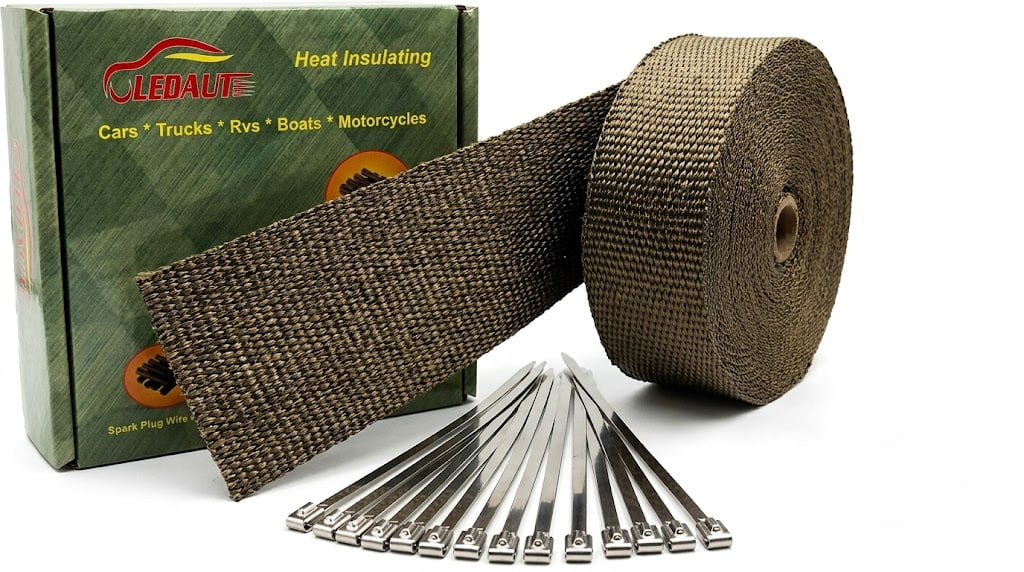
Length. Measure your pipe runs before buying. You need enough wrap to cover everything with the proper overlap (usually about a 50% overlap as you spiral). It’s better to buy a little more than you think you need — running out mid-wrap is the worst way to discover you under-bought. LEDAUT offers wrap in rolls (for example, 50-foot rolls) so you can size to your job.
The “fiber vs silicone” note. You’ll sometimes see silicone-coated wrap or fire sleeves described as a separate material class. For wrapping exhaust pipes, the insulation core is really fiberglass or basalt — the silicone outer layer is a protective coating that improves moisture and oil resistance and durability, not a different cooling material. Silicone-coated sleeves are more often used to protect wiring and hoses than to wrap exhaust pipes themselves. So when choosing exhaust wrap, think “fiberglass vs basalt,” and treat any coating as a durability feature, not a cooling upgrade.
FAQ
How long does exhaust wrap last?
It depends on material and usage. Basic fiberglass wrap typically lasts about 6-18 months under heat; higher-end basalt or titanium-fiber wrap can last 2-3 years. Expect to rewrap eventually.
Can I install exhaust wrap myself?
Yes, it’s a DIY-friendly job, though it takes patience. You wrap the pipe by hand with overlap and secure it with ties. Just give yourself time and work carefully for a clean result.
Does exhaust wrap melt or burn?
Quality wrap is rated for very high temperatures and won’t melt under normal exhaust heat. The risk isn’t melting — it’s long-term degradation and, with fiberglass, moisture absorption over time.
Will exhaust wrap damage my exhaust system?
Not if installed and maintained properly. The main concern is moisture trapped under fiberglass promoting corrosion — which is why higher-end moisture-resistant materials are worth considering. Keep the wrap dry and inspect it periodically.
Can I paint over exhaust wrap?
Some wraps can be painted with high-temp exhaust paint for looks, but it’s generally not necessary and can reduce the wrap’s breathability. Most builders leave quality wrap bare or use it as-is.
Conclusion
So is exhaust wrap worth it? For managing heat and protecting your engine bay, yes — it lowers surface temperatures, cuts radiated heat into the bay, and protects nearby wiring and components. The trade-offs are the effort of installation and the fact that wrap wears out and needs replacing. Choose the right material (basalt for durability, fiberglass for budget), get the width and length right, and it’s a worthwhile upgrade for most DIY heat-management builds.
If you’re installing it yourself, our how to install exhaust wrap step-by-step guide walks through the overlap technique. Ready to wrap your exhaust? Contact us for exhaust heat wrap and header wrap options, sizing help, and a quote for your setup.