Choosing the right muffler type is one of the most important decisions in any exhaust build. The muffler you pick determines how your car sounds, how much power it makes, and whether your neighbors file a noise complaint. But with chambered, glasspack, turbo, and straight-through designs all on the market, how do you know which one fits your build?
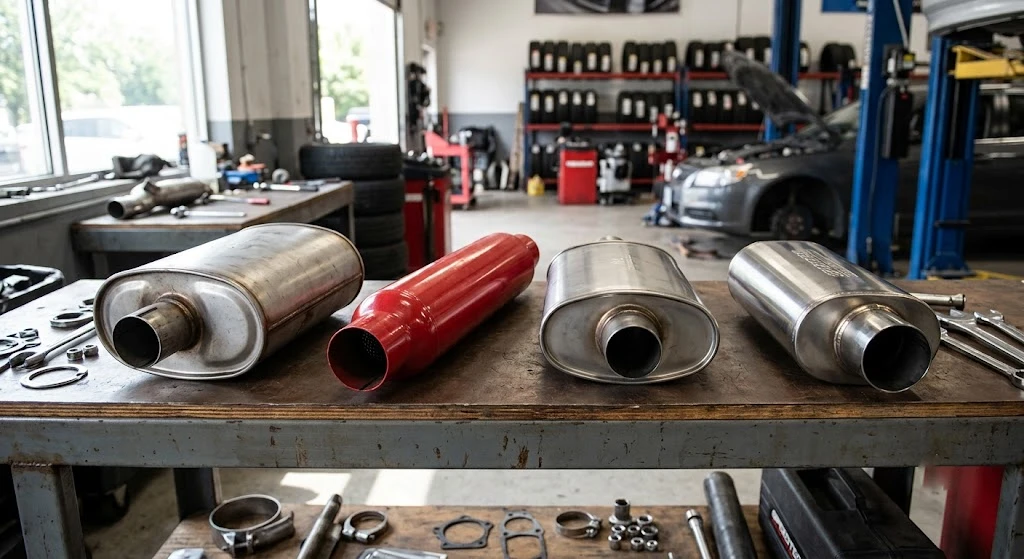
This guide breaks down the four main muffler types — how each one works inside, what they sound like, and which application they suit best. Whether you are building a weekend track car, upgrading your daily driver, or restoring a classic, understanding muffler design helps you make the right choice the first time.
How Mufflers Work: The Basics
Every muffler does the same thing: reduce exhaust noise while allowing gases to flow out of the engine. Sound waves from the engine pulses travel down the exhaust pipe, and the muffler uses various methods to cancel or absorb those waves before they exit the tailpipe.
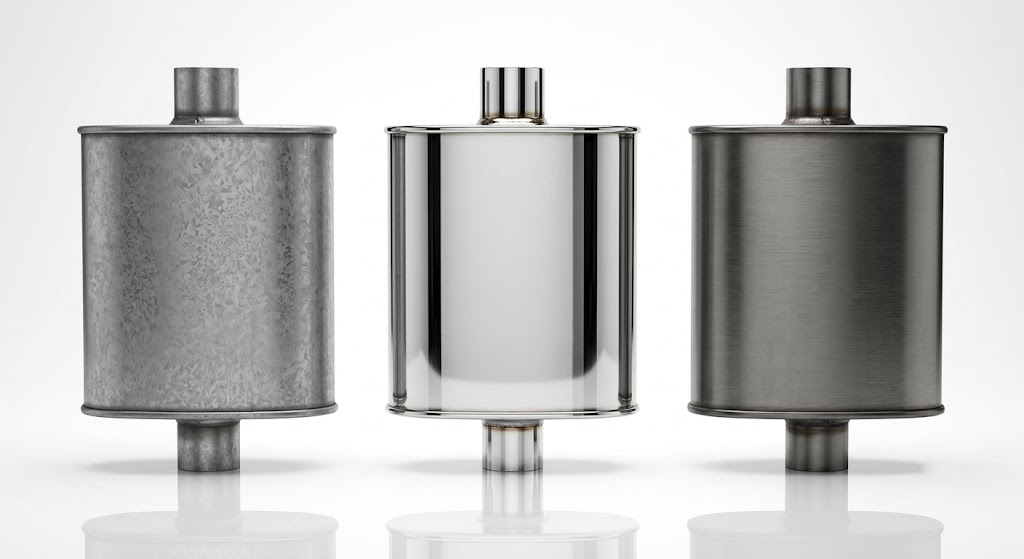
The key trade-off in muffler design is flow vs. noise reduction. More restriction means quieter operation but less power. Less restriction means more flow and power but louder sound. Beyond the internal acoustic design, the casing alloy also dictates lifespan under thermal cycling and road salt; before finalizing your specs, check out our comprehensive muffler material comparison covering T304 stainless steel versus aluminized options.
The 4 Main Muffler Types

Chambered Muffler
How it works: Chambered mufflers use a series of internal baffles and chambers to redirect exhaust gases through a maze-like path. The exhaust pulses bounce off the chamber walls, and the sound waves cancel each other out through destructive interference. This design relies entirely on metal chambers — no packing material is used.
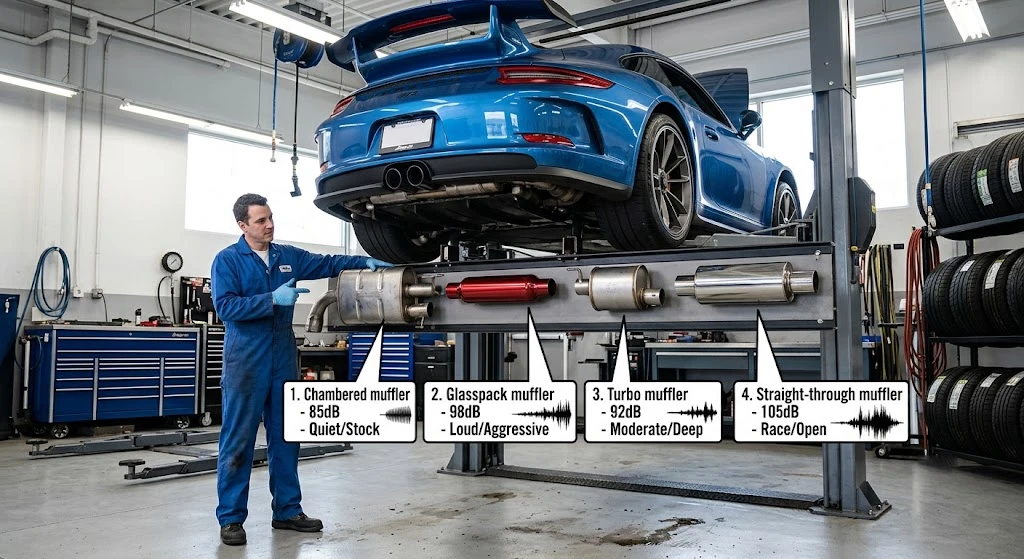
Sound profile: Deep, mellow tone — often described as “muscle car sound.” At approximately 85dB, it offers a rich low-end rumble without excessive volume. The sound is consistent over time because there is no packing material to degrade.
Pros: No packing to blow out over time, deep classic performance sound, extremely durable construction.
Cons: More restrictive than straight-through designs, heavier than other types, can produce interior drone at highway cruising speeds.
Best for: Daily drivers who want a deeper tone without excessive volume. Classic muscle cars and street performance builds where sound quality matters more than peak horsepower.
Glasspack Muffler
How it works: A glasspack muffler consists of a perforated straight-through core surrounded by fiberglass packing material inside a metal shell. Exhaust gases flow straight through the perforated core, and the fiberglass absorbs high-frequency sound waves. This is one of the simplest and most affordable muffler designs available.
Sound profile: Aggressive, raspy — the classic “cherry bomb” sound. At approximately 98dB, it is noticeably louder than chambered designs with a sharp, crackling note on deceleration. The sound changes over time as the packing material burns out.
Pros: Inexpensive, simple design that is easy to install, aggressive sound that stands out from the crowd.
Cons: Fiberglass packing burns out over 6-18 months of regular use, causing the muffler to get progressively louder. Can sound raspy or tinny on some engine configurations.
Best for: Budget performance builds, off-road vehicles, and anyone who wants an aggressive sound without spending hundreds of dollars. Easy to replace when the packing wears out.
Turbo Muffler
How it works: Turbo mufflers combine baffled chambers with perforated tubes. Exhaust gases follow a winding path through multiple chambers, with perforated sections that absorb sound. Despite the name, turbo mufflers have nothing to do with turbochargers — the name comes from the internal turbine-like flow pattern.
Sound profile: Moderate, deep tone at approximately 92dB. Good low-end presence without being overpowering. This is often considered the best all-around sound for street-driven vehicles.
Pros: Moderate sound level that is legal in most areas, better flow than fully chambered designs, no packing material to replace over time.
Cons: Heavier than straight-through options, not as free-flowing as glasspack or straight-through mufflers.
Best for: Street performance builds that need to pass noise ordinances. A compromise option for daily drivers who want more sound than a chambered muffler but less than a glasspack.
Straight-Through Muffler
How it works: A straight-through muffler uses a perforated core running straight through the center, surrounded by sound-absorbing packing material — typically stainless steel wool or ceramic fiber. Exhaust gases flow in a straight line with minimal obstruction, making this the most free-flowing muffler design available.
Sound profile: Open, race-inspired sound at approximately 105dB. Loud and aggressive with a raw edge that performance enthusiasts love. This is the loudest muffler type and may not be street-legal in all areas.
Pros: Best flow of any muffler type — maximum horsepower, straight-through design minimizes backpressure, race-proven technology used in professional motorsports.
Cons: Loudest option — may not be street-legal everywhere, packing material eventually needs replacement, can be too loud for comfortable daily driving.
Best for: Track cars, race builds, and dedicated performance vehicles where maximum flow is the priority and noise restrictions are not a concern. If you are debating between running a high-flow straight-through unit versus taking the canister off entirely, review our technical guide on straight pipe vs. muffler delete to weigh the sound characteristics and drone impact.
Sound Comparison
| Muffler Type | dB Level | Sound Character | Best Application |
|---|---|---|---|
| Chambered | 85dB | Deep, mellow, muscle car tone | Daily driver, street |
| Turbo | 92dB | Moderate, deep, balanced | Street performance |
| Glasspack | 98dB | Aggressive, raspy, crackling | Budget build, off-road |
| Straight-Through | 105dB | Open, race-inspired, raw | Track, race builds |
While a straight-through muffler shaves high-frequency rasp while keeping flow high, enthusiast builds chasing pure unbaffled sound often look at pipe modifications. Our head-to-head breakdown of straight pipe vs muffler delete outlines what happens to low-end torque, scavenge velocity, and cabin volume when the muffler is bypassed completely.
How to Choose the Right Muffler Type
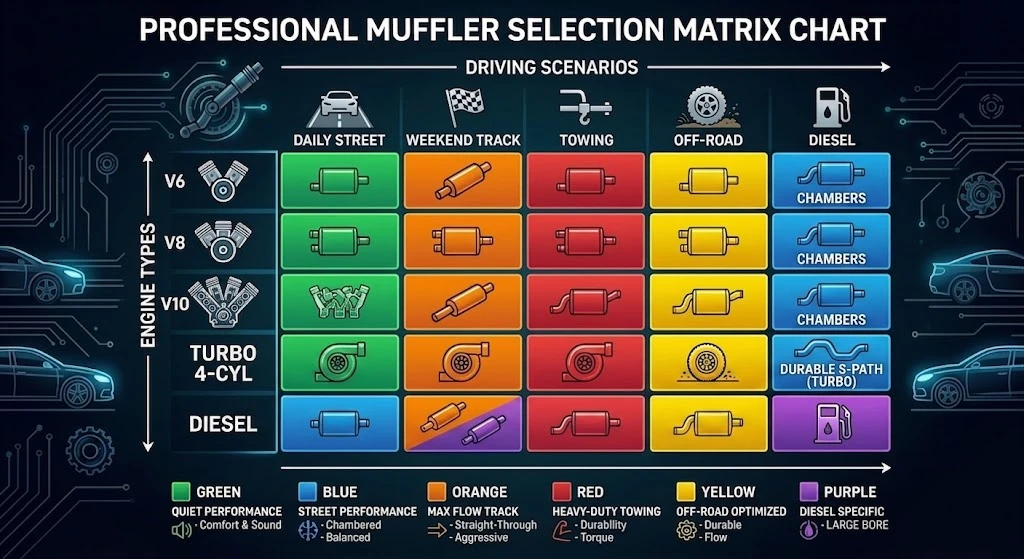
Daily street driving: Choose chambered or turbo mufflers for a satisfying sound without excessive volume. These types will not attract unwanted attention from law enforcement while still giving you a noticeable exhaust note.
Weekend track days: Go with straight-through for maximum flow and power. Track days are about performance, and straight-through mufflers deliver the best horsepower numbers.
Towing and heavy use: Turbo mufflers offer the best balance of flow and noise control. You need the power for towing but do not want cabin drone on long highway trips.
Off-road: Glasspack mufflers are affordable, sound aggressive, and easy to replace when the packing burns out.
Want the quiet, drone-free tone of a street muffler on your daily commute, but want to unlock open-header sound and maximum flow at the track? You can integrate valved exhaust cutouts upstream of the muffler to switch between mild and wild at the flick of a switch.
Frequently Asked Questions
Which muffler type is loudest?
Straight-through mufflers are the loudest at approximately 105dB, followed by glasspack at 98dB, turbo at 92dB, and chambered at 85dB.
Which muffler type flows the best?
Straight-through mufflers offer the best flow because exhaust gases travel in a straight line with minimal obstruction. This design maximizes horsepower but produces the most noise.
Do mufflers affect horsepower?
Yes. More restrictive mufflers (chambered designs) reduce peak power slightly but offer better noise control. Less restrictive mufflers (straight-through) maximize flow and horsepower at the expense of noise.
How long do different muffler types last?
Chambered and turbo mufflers use metal baffles and last indefinitely when built from 304 stainless steel. Glasspack and straight-through mufflers with fiberglass packing need repacking or replacement every 1-2 years depending on thermal exposure. For detailed lifespan differences, consult our muffler material comparison guide.
Does a muffler change horsepower?
A muffler changes flow velocity and backpressure more than it changes peak power on a stock vehicle. A restrictive chambered muffler can cost a few horsepower at redline; a straight-through frees that up, though gains are most noticeable on forced-induction or cammed applications.
Sourcing mufflers or exhaust parts in bulk? We manufacture clamps, cutouts, and wrap for shops and distributors. Request a wholesale quote with your product list.
Conclusion
Choosing the right muffler type comes down to your priorities. If you want deep sound without excessive volume, go chambered. If you are building a track car and need every bit of flow, straight-through is the answer. For most street performance builds, a turbo muffler hits the sweet spot between sound and performance.
Match your muffler to your engine, your driving style, and your local noise regulations — and you will get the sound and performance you are looking for. If you need help choosing, contact our team for personalized recommendations based on your specific vehicle and goals.