TLDR
Motorcycle exhaust wrap reduces heat, protects rider from burns, and gives your bike a custom look — but it also traps moisture against pipes and can accelerate corrosion on non-stainless steel systems. The decision comes down to your bike type, riding conditions, and whether appearance matters more than long-term pipe condition. For most riders on modern bikes with stainless steel exhausts, the pros outweigh the cons.
Introduction
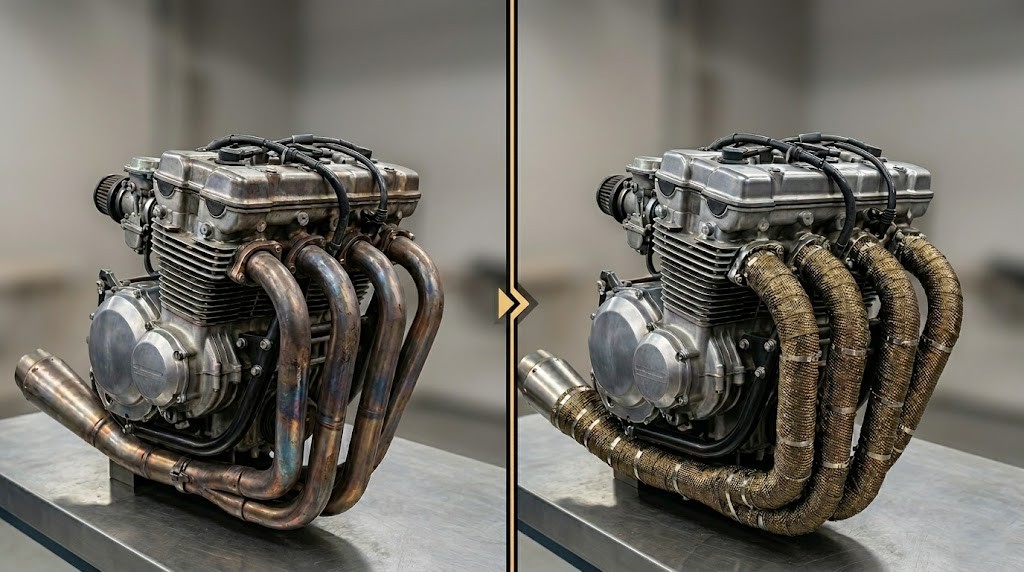
If you’ve spent any time around motorcycle forums or custom bike shops, you’ve seen exhaust-wrapped pipes. They look aggressive, functional, and undeniably cool. But is wrapping your motorcycle exhaust actually a good idea?
The answer isn’t simple — and that’s exactly why we wrote this guide. Whether you’re a weekend rider thinking about a custom look, a shop owner deciding what to recommend to customers, or a B2B buyer sourcing wraps for resale, understanding the real pros and cons keeps you from making an expensive mistake.
Let’s break down what motorcycle exhaust wrap does well, where it falls short, and how to decide if it’s right for your specific situation.
Pros of Motorcycle Exhaust Wrap
1. Significant Heat Reduction
The #1 reason riders wrap their exhaust: heat management. On a motorcycle, exhaust pipes run inches from your legs. An unwrapped pipe can reach 800-900°F during operation — enough to cause serious burns on contact.
Quality exhaust wrap reduces radiant heat by 40-50%, dropping surface temperatures within reach of your leg by 200-300°F. For riders who frequently lane-split in heavy traffic or ride in hot climates, this is a genuine safety improvement.
2. Rider Comfort
Lower radiant heat means your legs don’t cook during long rides. Riders who’ve wrapped their exhausts consistently report more comfortable rides, especially on cruisers and sport bikes where leg contact with the exhaust area is unavoidable.
3. Custom Aesthetics
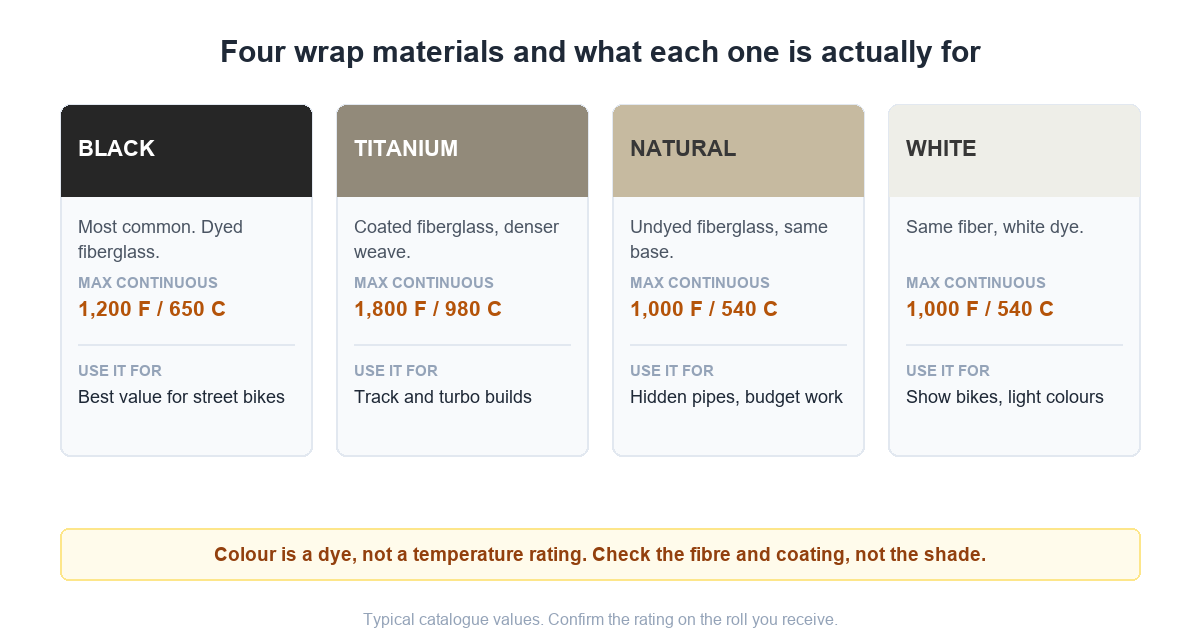
Let’s be honest — wrapped exhausts look good. The textured, matte finish adds a performance-inspired look that sets your bike apart. With color options including black, titanium, red, and blue, riders can match their wrap to their bike’s style. White exhaust wrap offers the hottest look, while black exhaust wrap is the most popular choice.
4. Performance Gain (Modest)
Same principle as automotive applications: keeping exhaust gases hotter improves scavenging at high RPMs. On motorcycles, the effect is typically 1-2 horsepower — noticeable on a dyno but not earth-shattering. For track riders optimizing every detail, it’s worth the effort.
5. Weight Savings
A full exhaust wrap kit weighs less than a heat shield. For riders concerned about weight, wrap saves 1-3 pounds compared to aftermarket heat shields.
6. Protection for Nearby Components
On modern motorcycles with compact layouts, exhaust heat damages wiring, brake lines, and suspension components over time. Wrap extends the life of these parts.

Cons of Motorcycle Exhaust Wrap
1. Moisture Trapping and Corrosion
This is the biggest concern. When wrapped, moisture gets trapped between the wrap and the pipe. On non-stainless steel exhausts (mild steel or chrome), this accelerates rust and pitting.
The reality check: If your bike has a stainless steel exhaust, this is not a problem. If you have chrome or mild steel pipes, consider:
– Coating the pipes with high-temp paint before wrapping
– Using anti-corrosion treated wrap
– Allowing the system to fully dry after wet rides
Also note that cracked or pitted chrome traps moisture anyway — wrap may not make it worse.
2. Difficult to Inspect Pipes
Once wrapped, you can’t easily check for cracks, rust spots, or exhaust leaks. On older bikes or high-mileage machines, this means you’re wrapping potential problems out of sight.
3. Installation is Permanent-Looking
While you can remove exhaust wrap, it’s not a quick job. The wrap can harden and bond to pipes over time. Removal often reveals discoloration underneath. If you change your mind later, you’ll likely need to polish or replace the pipes.
4. Not Ideal for Off-Road Use
Dirt bikes and adventure bikes face mud, water, and debris that saturate the wrap. Wet wrap loses its insulating properties and takes a long time to dry. On off-road bikes, wrap is more trouble than it’s worth.
5. Can Mask Exhaust Leaks
Wrapping over small holes or loose joints hides the problem. Exhaust leaks affect performance and can be dangerous (carbon monoxide). Always inspect and repair pipes before wrapping.
6. First Startup Smoke
New wrap produces smoke and smell during the first heat cycle as binders cure. This is normal but can catch new users off guard. Always cure in a well-ventilated area.
Motorcycle vs. Car: Key Differences
While the basics are the same, motorcycle exhaust wrapping has unique considerations:
| Factor | Motorcycle | Car |
|---|---|---|
| Burn Risk | High — pipes near rider’s legs | Low — pipes under vehicle |
| Exposure | Visible, part of bike’s look | Hidden under chassis |
| Moisture | More exposure to rain/road spray | Better protected |
| Pipe Material | Often chrome or stainless | Usually mild or stainless steel |
| Installation | Easier — pipes are accessible | Harder — tight engine bays |
| Re-wrapping | More frequent (aesthetic pressure) | Less frequent |
Which Motorcycles Benefit Most from Exhaust Wrap?
Great candidates:
- Cruisers (Harley, Indian) — Rider’s legs near exhaust, high heat, custom look fits the style
- Sport bikes — Tight packaging, many heat-sensitive components, track use benefits from heat reduction
- Cafe racers / customs — Aesthetic is the whole point
- Naked bikes — Exposed pipes, rider comfort improvement
Less ideal:
- Dirt bikes / dual sports — Mud and water ruin wrap performance
- Vintage bikes — Chrome preservation matters more than heat reduction
- Bikes with catalytic converters — Cat runs hotter than normal pipe, can accelerate wrap degradation
Best Exhaust Wrap Materials for Motorcycles
Black Exhaust Wrap (Most Popular)
Best balance of appearance and performance. Black matches most bike aesthetics and hides dirt better than lighter colors.
Titanium Exhaust Wrap
Premium choice. Handles higher temperatures, looks distinctive, and lasts longer. Popular on high-end builds.
Fiberglass Exhaust Wrap
Budget option. Works fine but sheds fibers more over time. OK for temporary applications or track bikes.
White Exhaust Wrap
Less common but visually striking. Shows dirt more easily. Often chosen for vintage-style builds.
Installation Tips Specific to Motorcycles
- Remove the pipes if possible — Easier to wrap evenly and achieves better tension
- Soak fiberglass wraps before installation — Wring out excess water
- Start at the header flange — Work toward the muffler, maintaining 50% overlap
- Use stainless steel zip ties — Regular zip ties melt. Position them every 4-6 inches
- Leave O2 sensors exposed — Wrapping over sensors can damage them and affect readings
- Cure properly — Run the engine at idle for 15 minutes, then let cool. Repeat twice
FAQ
Q: Will exhaust wrap damage my motorcycle pipes?
A: On stainless steel pipes, no. On chrome or mild steel, moisture trapping can accelerate rust. Using anti-corrosion treated wrap and ensuring pipes are clean before wrapping significantly reduces this risk.
Q: Is motorcycle exhaust wrap worth it?
A: For most riders, yes — especially if heat reduction or rider comfort is a concern. The modest cost ($20-60 for quality wrap) delivers noticeable benefits.
Q: How long does motorcycle exhaust wrap last?
A: 1-3 years depending on material and riding conditions. Titanium wrap lasts longest. Frequent rain riding shortens lifespan.
Q: Can I wrap my motorcycle exhaust without removing it?
A: Yes, but removing the pipes makes for a cleaner installation. In-frame wrapping requires patience and is harder to keep tension consistent.
Q: Does exhaust wrap affect motorcycle performance?
A: Slightly positive — improved exhaust scavenging at high RPMs. The effect is modest (1-2 hp) but real on naturally aspirated engines.
Q: What color exhaust wrap is best for a motorcycle?
A: Black is the most popular and practical. Titanium for premium builds. Red or blue for custom looks. White for vintage-style bikes.
Conclusion
Motorcycle exhaust wrap delivers real benefits — heat reduction, burn protection, custom looks, and modest performance gains. The key downside is moisture trapping, which only matters on non-stainless steel pipes.
For the vast majority of riders on modern bikes with stainless steel exhausts, the pros win. For vintage bike owners or off-road riders, skip it.
Looking for quality motorcycle exhaust wrap? Browse LEDAUT’s motorcycle wrap collection or contact our team for B2B pricing and bulk orders.