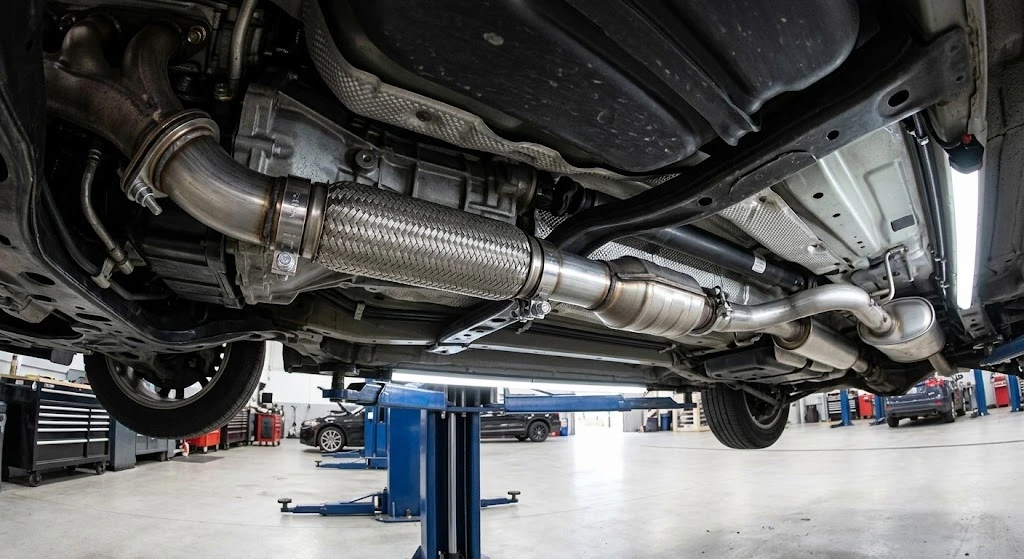
Two shops, same car, same worn flex pipe. One quote comes back low, the other several times higher.
Neither shop is necessarily wrong, and neither is necessarily greedy. The two quotes are usually for two different jobs wearing the same name — a different part, a different way of attaching it, and a different amount of work around it while the car is in the air.
Understanding those three pieces is how you read a quote instead of just reacting to the bottom line. If you’re still deciding whether the pipe needs replacing at all, the when to replace a flex pipe guide covers that judgement first.
What Are You Actually Paying For?
A flex pipe replacement quote is really three numbers stacked together. Shops often present them as one figure, which is why the totals look arbitrary.
Part type and material
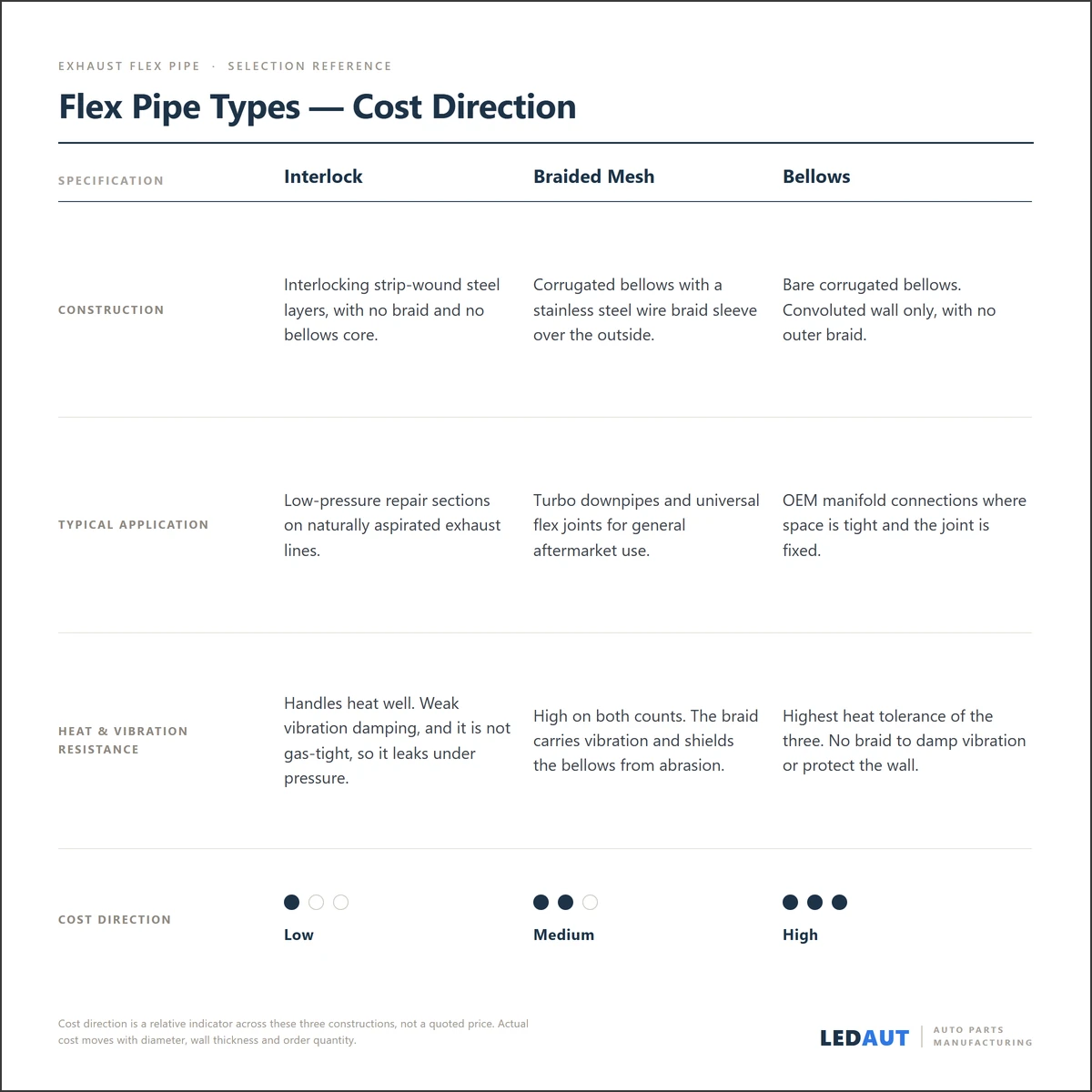
Flex pipes come in three constructions, and they are not priced the same:
- Interlock — interlocking strip-wound steel, no bellows core and no braid. The cheapest of the three, but it is not gas-tight, so it leaks under pressure. It belongs on low-pressure repair sections of a naturally aspirated exhaust line, not on turbo work.
- Braided mesh — a corrugated bellows with a stainless wire braid wrapped over it. The general passenger-car choice, the most common aftermarket part, and what most turbo downpipes and universal flex joints use. Middle of the range, and where most vehicles land.
- Bellows — bare corrugated wall, no braid. The highest heat tolerance of the three and the smoothest internal flow, but there is no braid to damp vibration or shield the wall. Used on OEM manifold connections where space is tight and the joint is fixed — and the most expensive of the three to make.
Material grade sits on top of that. A high-temperature stainless grade for a turbo or diesel application costs more to make than a general-purpose grade for a naturally aspirated passenger car. You’re paying for how long it holds up under heat, not for a brand name.
Labour: what it takes to reach the pipe
The flex section sits close to the manifold on most vehicles. Getting to it can mean removing a heat shield, dropping part of the exhaust, or working in a space where the fasteners have been cooking for a decade.
Two cars with identical pipes can need very different amounts of labour. A clean, recently serviced vehicle comes apart. A car that has spent ten winters on salted roads does not. Rusted fasteners add time to every part of the job, and time is what a shop is quoting.
Collateral work: what else gets touched
A flex pipe rarely comes out alone. The clamps at both ends are usually due. Gaskets can be reused or can crumble on removal. The adjacent pipe section may be thin enough that clamping or welding to it creates a new problem.
A shop that quotes only the pipe and then bills for clamps, gaskets, and a section of adjacent pipe is not being dishonest — but you should know what’s in the scope before you approve it.
Why the same shop can quote differently on two visits. If the first visit was an inspection and the second is the actual job, the scope may have grown — a clamp that looked reusable crumbled, a pipe section that measured thin. That’s not a bait and switch; it’s the difference between a visual estimate and what the job actually needs once it’s apart. Ask for the scope in writing at the estimate stage and the surprise shrinks.
Weld-On vs Clamp-On: Two Different Jobs
How the new pipe attaches changes both the labour and the character of the repair.
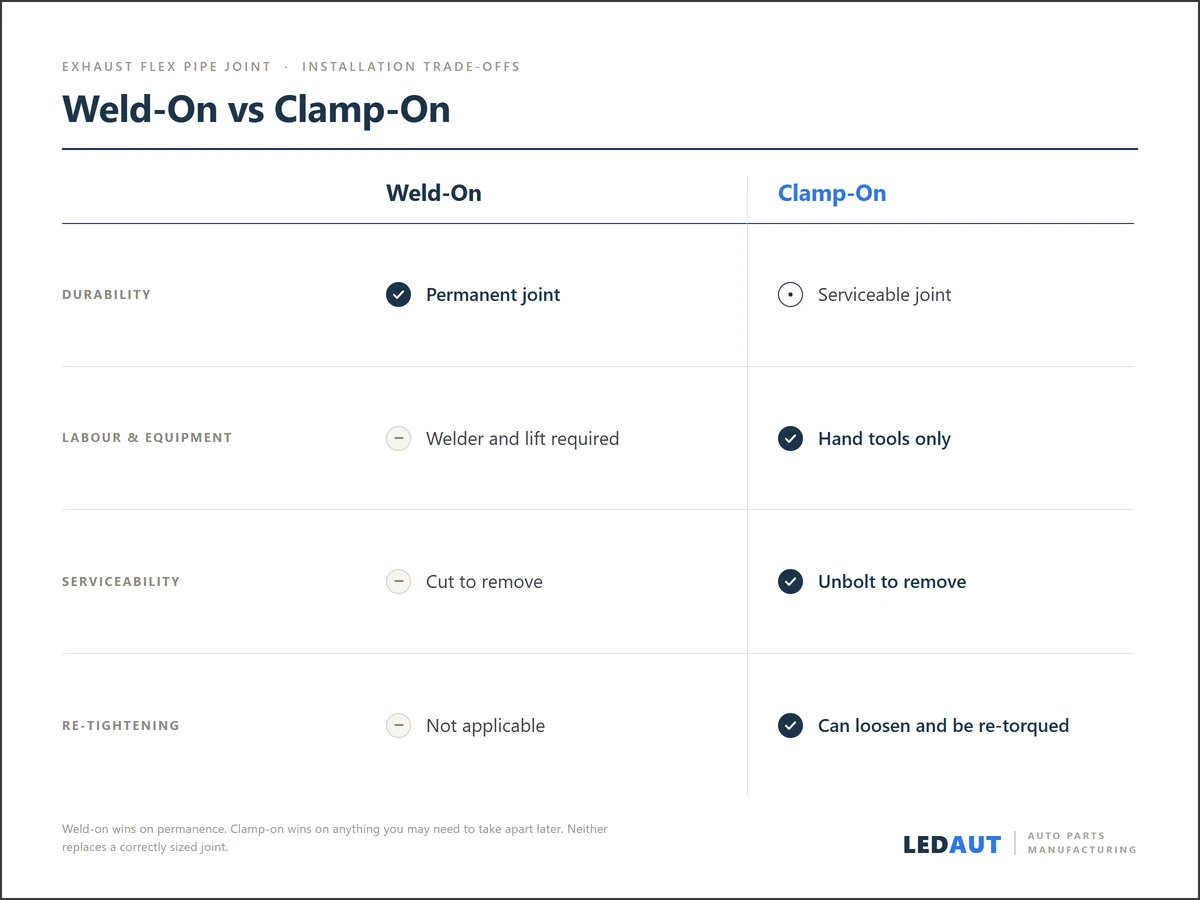
Weld-on is the factory-style approach. The joint is permanent, it doesn’t move, and it doesn’t loosen. It requires a welder, a lift, and the skill to keep the weld from distorting thin pipe. On a modified system — a downpipe, a turbo setup, anything where the geometry isn’t stock — welding is usually the right answer, because nothing else will hold the shape.
Clamp-on uses a sleeve or a band clamp over a lap joint. It’s faster, it doesn’t need welding equipment, and it can be taken apart again. The trade-off is that a clamped joint is a moving joint, and a moving joint can loosen over time.
Which is right is a question about the application, not about which is cheaper to do today. A clamped joint on a stock commuter exhaust is fine and can be re-tightened if it starts to tick. The same clamp on a turbo downpipe that heat-cycles hard is a leak waiting to happen.
What each method does to the pipe around it. Welding puts heat into the surrounding steel, and thin or corroded pipe doesn’t take that well — it can warp or burn through, which turns a pipe replacement into a section replacement. Clamping puts no heat in, but it needs a clean, round surface to seal against, and a pitted pipe won’t give you one. Neither method is universally better; each has a condition it needs.
If you already have a leaking clamped joint and the pipe itself is sound, that’s a different and much smaller job — the fix a flex pipe leak yourself guide walks through retorquing to spec before you consider replacing anything.
Why Quotes Differ So Much
Three things explain most of the gap between quotes for the same car.
Non-standard length or diameter. Flex sections come in common sizes, and a vehicle that doesn’t take a common size needs either a custom piece or a splice. Either one adds work. If a shop is quoting a custom length and another is quoting a stock part, you’re comparing two different repairs.
Frozen fasteners. Every bolt that shears adds an extraction job. A shop that has done this car before and knows what’s underneath is quoting differently from one that hasn’t. This isn’t padding — it’s an honest difference in expected time.
Scope: pipe only, or the whole section. Replacing the flex pipe and reusing the surrounding pipe is one job. Replacing the flex pipe and the rusted section behind it is another. Some quotes cover the second without saying so, others cover only the first and will add the rest later.
A short checklist before you approve anything:
- What part, exactly? Ask for the type (interlock / braided / bellows) and the material grade. A quote that just says “flex pipe” doesn’t tell you what you’re buying.
- Welded or clamped? This one question explains most of the labour difference between two quotes.
- What’s included? Clamps, gaskets, any adjacent pipe section. Get it in writing, because this is where the surprise line items come from.
How to Avoid Paying Twice
The second bill is usually more expensive than the first one would have been.
Match the part to the application, not to the quote. A general-purpose braided section is fine for a commuter car. On a diesel, a high-heat turbo setup, or anything that heat-cycles hard, a high-temperature grade in a braided or bellows construction will outlast a cheaper general-purpose part, and the labour to replace it a second time is the same labour you already paid once. The exhaust flex pipe types comparison covers which construction belongs where.
Listen in the first month. After a replacement, pay attention to cold starts. The tick of a developing leak is loudest when the metal is cold and quiet once it’s warm — the same signature that started this whole thing. Catching it in the first month means a retorque rather than a replacement.
Know when to spend the labour. If the pipe is welded in, or the fasteners are seized, or the surrounding section is thin, the money is in the labour and doing it yourself rarely saves what you think. If it’s a clamped joint with good access, the job is one an experienced DIY owner can do — the flex pipe installation guide walks through the fit-up.
FAQ
Is it cheaper to repair or replace a flex pipe?
It depends entirely on the damage stage. A loose clamp is a retorque. A small hole in an otherwise sound braid can be patched temporarily. A frayed braid or an enlarging hole can’t be repaired in any way that lasts. Repair is genuinely cheaper — when repair is actually possible.
How long should a replaced flex pipe last?
There’s no published service interval that covers every application, so the honest answer is that it depends on heat, vibration, and how well the part matches the job. A part matched to the application outlasts a cheaper general-purpose part in the same position. Judge it on condition, not on a promised number.
Does a flex pipe leak mean the catalytic converter is damaged?
Not necessarily, but it’s worth checking. A leak upstream of the converter lets unburnt fuel reach it, and a rich-running engine can overload the catalyst over time. If the leak has been there a while, have the converter checked at the same time rather than discovering it later.
Can I save by buying the part myself?
Sometimes, and with caveats. Many shops won’t stand behind the labour on a customer-supplied part, and some won’t install one at all. Ask before you buy, because a part you can’t get installed is not a saving.
What should I ask before approving the repair?
Three things: the exact part type and material, whether the joint will be welded or clamped, and what else is included in the scope. Those three answers explain most of the variation between quotes.
Putting the Three Pieces Together
If you want a mental model for reading any quote:
- Part type and material set the floor. That’s what the parts cost before anyone touches the car.
- Labour is the variable most people underestimate, and it depends on the car as much as the pipe.
- Collateral work is where two quotes for “the same job” diverge without either shop lying.
When a quote seems high, the useful question isn’t “why so much” but “which of these three is doing the work here.” A quote that’s high on labour and low on parts is a different animal from one that’s the reverse — and each tells you something about what the job actually involves.
The One Thing to Take Away
Read a flex pipe quote as a scope document, not a number. Part type, attachment method, and what else is in the job — get all three in writing, and the question stops being “why is this one so expensive” and becomes “is this the repair I actually need.”
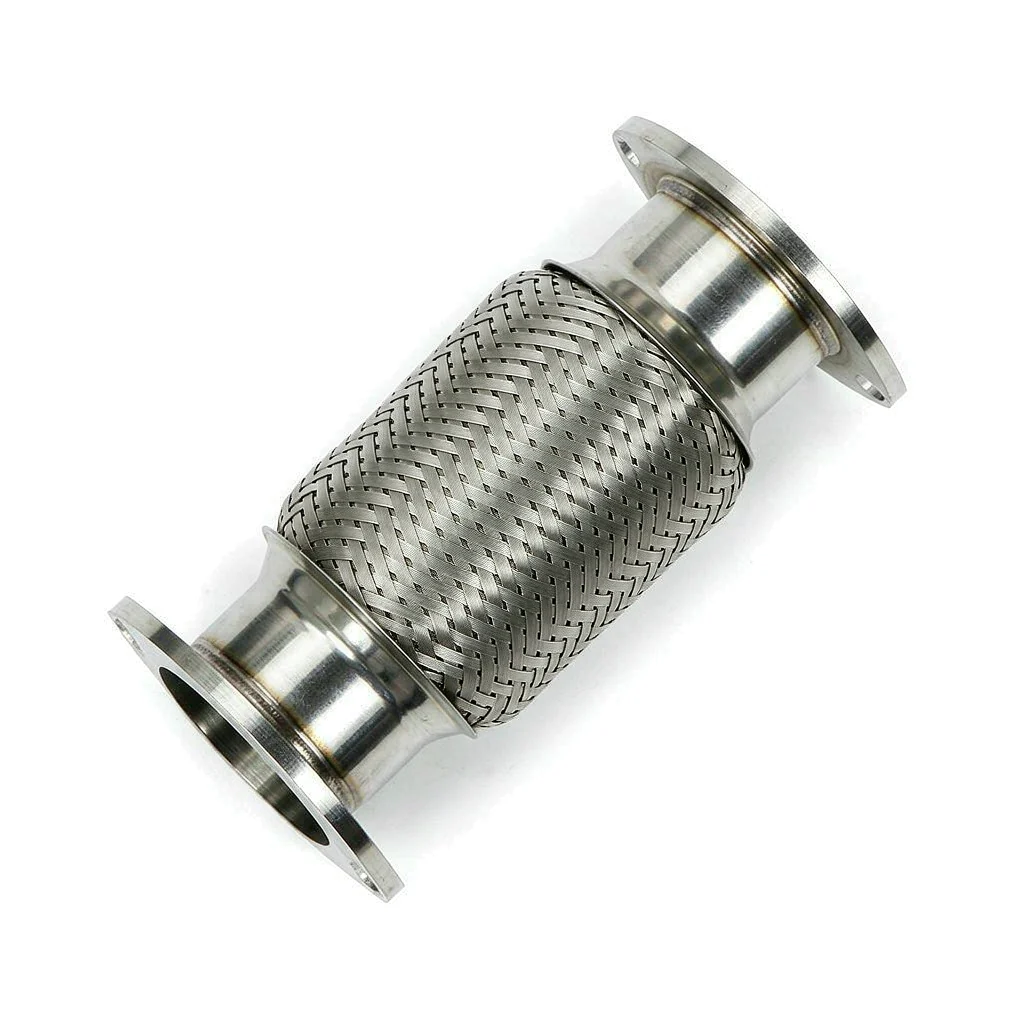
Need a flex pipe or the clamps and hardware to go with it? LEDAUT supplies stainless steel flex sections in interlock, braided, and bellows constructions across common diameters — get in touch with your pipe size and application.