Exhaust Flex Pipe.
304 Stainless, 16.5".
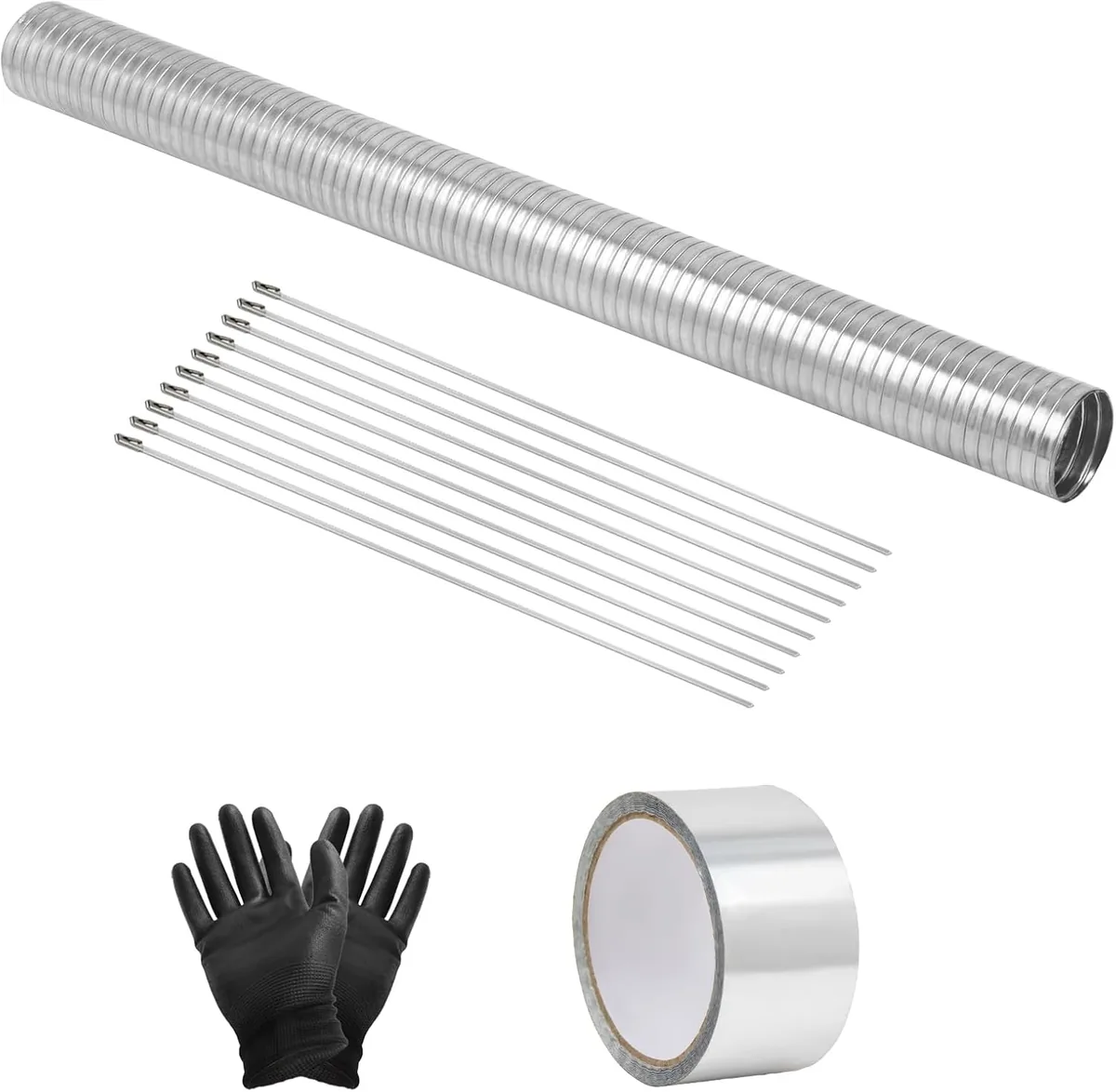
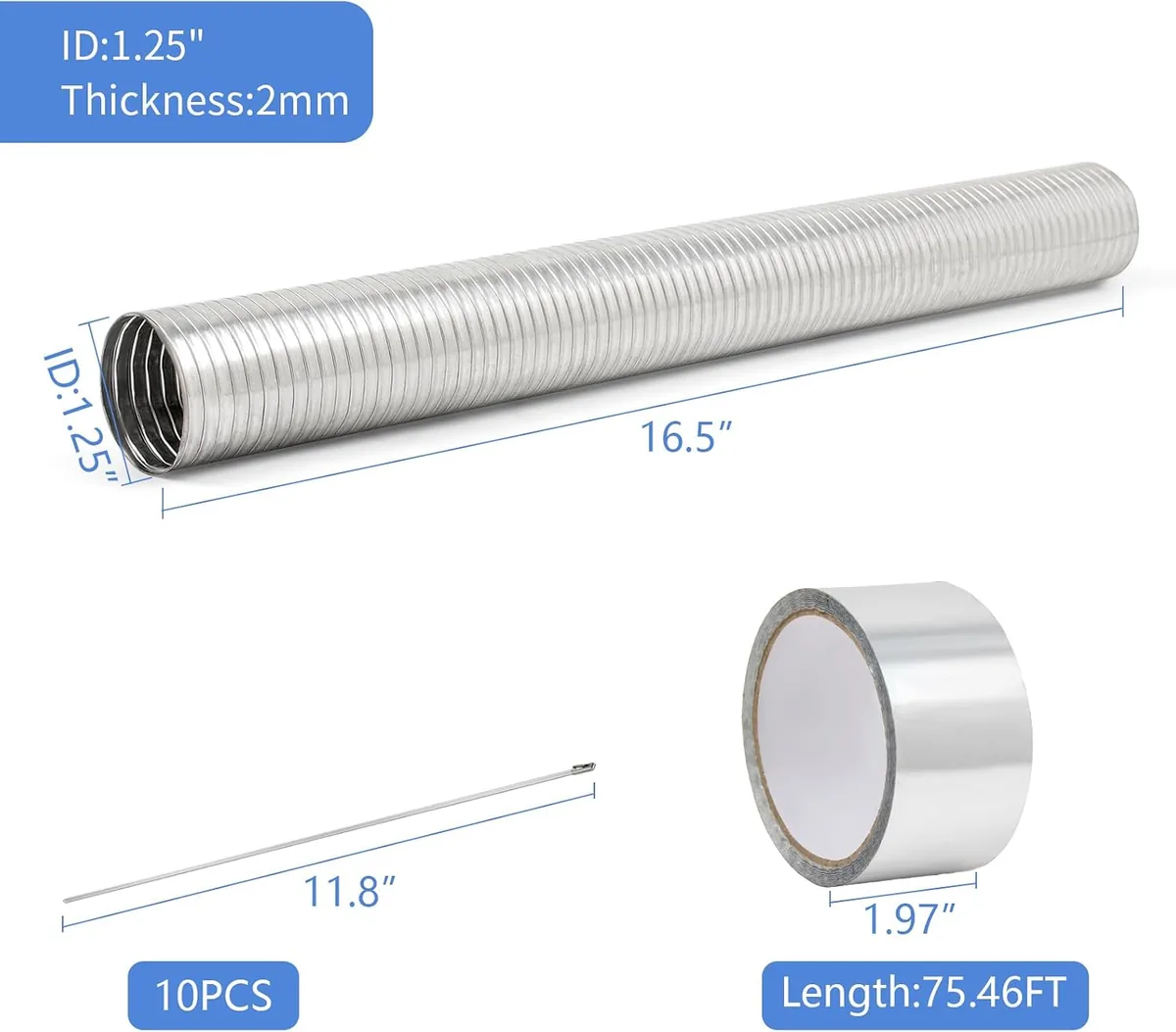
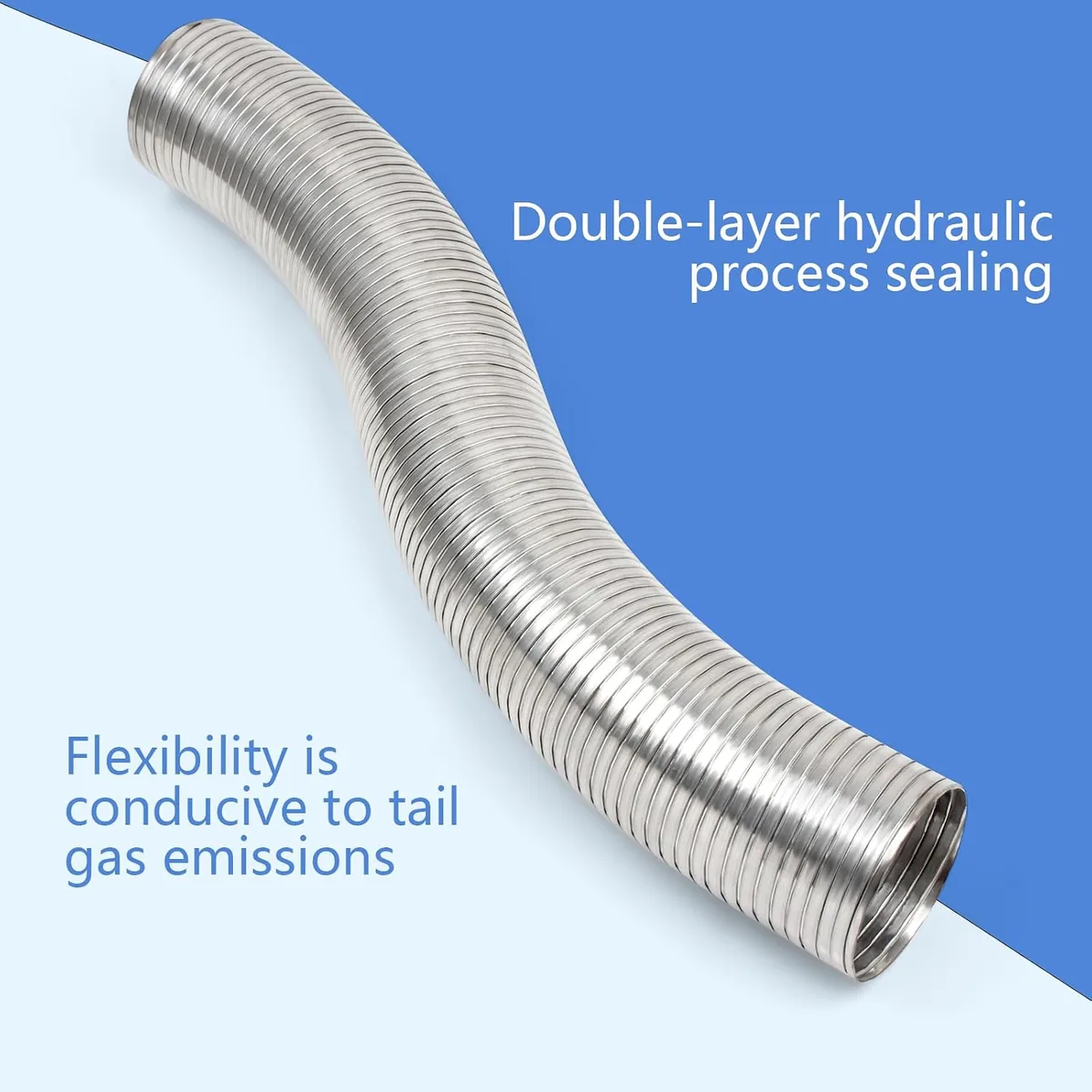
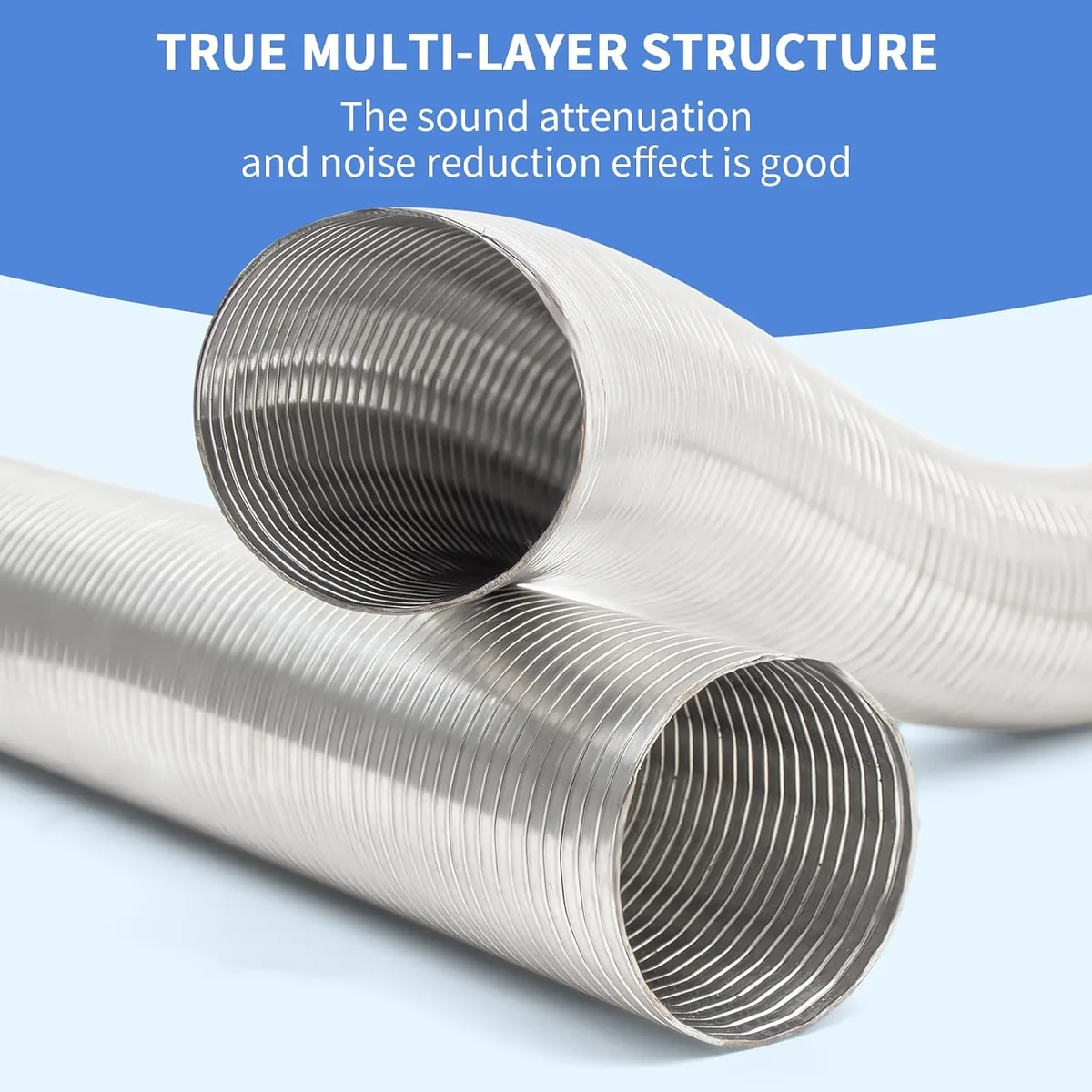
A universal replacement flex section in 304 stainless steel, stocked in six inside diameters from 1-1/4" to 2-3/4". Every pipe is 16.5 inches at rest and extends to roughly 20 inches when fitted with slack — that is the same pipe stretching, not a second size. Cut to length, then weld it or clamp it. The multi-layer interlock wall absorbs the vibration that eventually cracks a solid pipe, and it arrives with the tape, ties and gloves you need to fit it the same afternoon.
Single sizes and two-piece sets ship retail-ready via Amazon. As an Amazon Associate, LEDAUT earns from qualifying purchases.
Sizes & Stock Matrix
| Model Reference | Inside Diameter (ID) | Metric Equivalent | Working Length | Packing |
|---|---|---|---|---|
| LDBXGRXG1.25IN | 1-1/4" | 32 mm | 16.5" → 20" | Single Piece |
| LDBXGRXG1.5IN | 1-1/2" | 38 mm | 16.5" → 20" | Single Piece |
| LDBXGRXG1.75IN | 1-3/4" | 45 mm | 16.5" → 20" | Single Piece |
| LDBXGRXG2IN | 2" | 51 mm | 16.5" → 20" | Single Piece |
| LDBXGRXG2.25IN | 2-1/4" | 57 mm | 16.5" → 20" | Single Piece |
| LDBXGRXG2.75IN | 2-3/4" | 70 mm | 16.5" → 20" | Single Piece |
| Set — Short | 1-1/4" + 2" | 32 + 51 mm | 16.5" → 20" | Two Pieces |
| Set — Long | 1-1/4" + 2-3/4" | 32 + 70 mm | 16.5" → 20" | Two Pieces |
* Inside diameter is measured across the open end, not across the bulge of the body. Metric figures are conversions for reference. Need help picking a size? Measure the old pipe before you order — our exhaust flex pipe size chart takes ID, OD and length in ten minutes. Our exhaust clamp size guide shows the same caliper method we use on the bench.
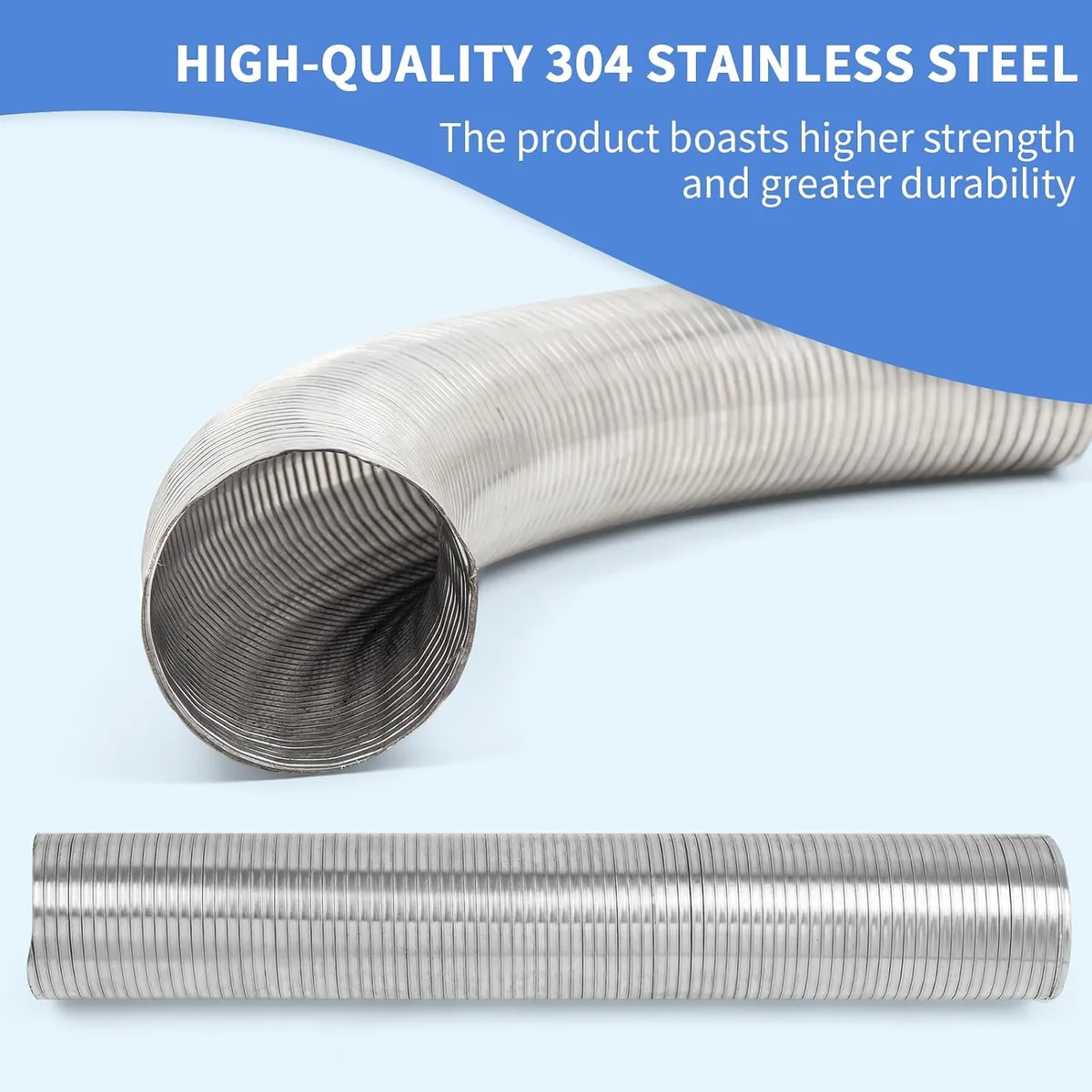
SS304, Not Aluminised Steel
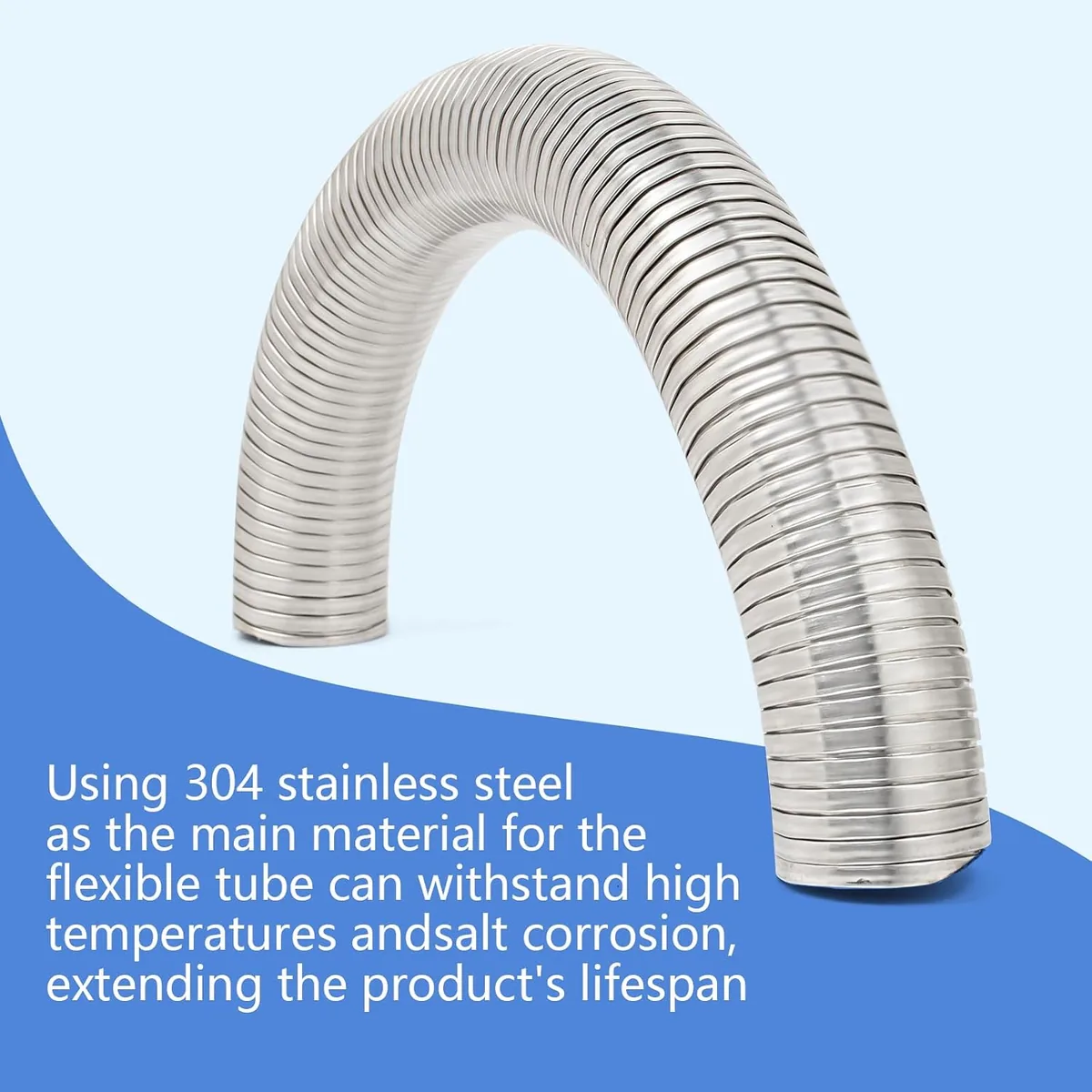
The body is 304 stainless steel rather than the aluminised mild steel used on most budget flex sections. That choice matters at the two places these parts actually fail: the crimped ends and the first corrugation after them. Aluminised pipe loses its coating there first, then rusts from the outside in. 304 has no coating to lose, so it holds its surface through road salt, condensation and the heat cycles of a daily driver.
- Resists corrosion without a coating that can chip or burn off.
- Handles repeated bending and compression without work-hardening to a crack.
- Weldable with standard 308L filler — no special procedure for a repair bay.
Multi-Layer Interlock Wall
The wall is built from interlocking stainless strip, layered and formed so the edges grip from both sides instead of relying on a single thin corrugated sheet. Bending force is spread along the interlock rather than concentrated in one rib, which is why the pipe flexes without collapsing or pinching shut. It is also the reason the same part works as a diesel heater flue section, where continuous low-grade heat and vibration do the same damage at a slower rate.
- Absorbs engine movement instead of transferring it into the welds either side.
- Bends through a radius without kinking or reducing flow area.
- Seals along the interlock, so the wall itself is not a leak path.
What Ships in the Box
Every pipe ships as a fit-it-now kit rather than a bare tube, because the two things that stall a driveway repair are always the same: nothing to seal the joint with, and nothing to hold the section in place while you weld or clamp it. Both are in the carton.
- Aluminium foil tape, 2 in × 75 ft — wraps the joint before the clamp goes on.
- Stainless steel cable ties — hold the section at the right length while you work.
- A pair of gloves — the cut edge of interlocked strip is sharp, and a hand blade leaves a burr.
Weld It or Clamp It
Both joints are valid. Welding is permanent and needs no extra hardware. A stainless band clamp is the choice when the section has to come off again — and it is the only option on the roadside. Whichever you pick, mount the pipe with slack: not stretched tight between two fixed points, not looped. A stretched flex section has nowhere left to move, so the vibration goes into the ends, which is exactly where these parts fail.
- Torque a band clamp to the clamp maker’s figure and stop — past that you crush the wall. Our exhaust clamp range lists the sizes that match each ID here.
- For a slip-over joint on a larger pipe, use a lap joint band clamp rather than a U-bolt.
- Already leaking at the joint? The causes and the fixes are in how to fix an exhaust flex pipe leak.
Choosing Between Interlock, Braided and Bellows
Interlock is the workhorse: tolerant of movement, and good enough for the vast majority of repair and OEM exhaust work. Braided flex sections add an outer wire mesh that takes abrasion and radiant heat better but cost more and still fail at the end crimps. Bellows sections are the softest of the three and very effective at isolating vibration, which is why they turn up on performance systems where noise isolation is the priority. All three crack at the same place if they are fitted tight. The full comparison, with the failure mode of each type and what it costs you when it goes, is in our exhaust flex pipe guide. Already hearing something? Bad exhaust flex pipe signs maps each sound and smell to what is happening inside the pipe, and the order to fix them in.