A modification shop owner put the same question to our sales desk that shows up in nearly every pre-order conversation: his customer wanted the loudest setup they could get, and he wasn’t sure where along the pipe to put the cutout. That question has a real answer, and it changes depending on the truck, the goal, and the local rules.
Where you install an exhaust cutout decides almost everything about how it performs. The same unit, moved a few feet forward or back, produces a different sound, a different amount of attention from law enforcement, and a different effect on the rest of the system. If you have not chosen the unit itself yet, the exhaust cutout buying guide covers electric versus manual and what to look for. In our time supplying exhaust parts, we’ve seen shops get this right and we’ve seen them get it wrong. The difference usually isn’t the hardware.
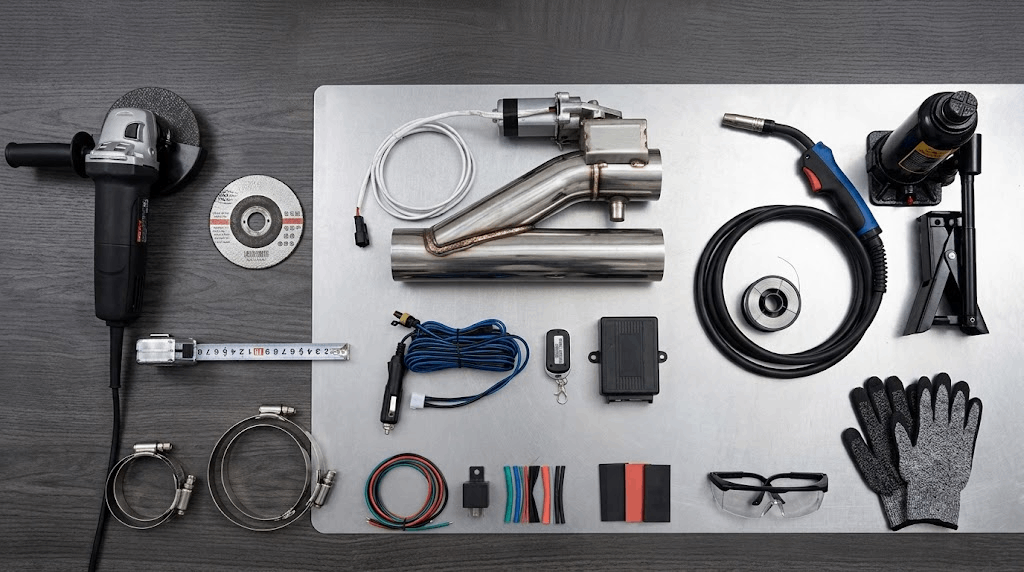
The Three Main Placement Zones
Every cutout lands in one of three zones relative to the catalytic converter and the muffler. Each zone has a distinct character, and knowing which one you’re targeting is the first decision in any build.
After the Catalytic Converter
This is the most common zone, and for good reason. Placing the cutout just downstream of the catalytic converter gives you the loudest result while still sending exhaust gas through the converter during normal driving. The converter does its job when the cutout is closed, and when you open it the gas takes the shortest path out. That short path is why this zone produces the sharpest, loudest note. Many builders default here because it balances sound with keeping the emissions hardware functional. It’s also the zone most likely to draw legal scrutiny, which we’ll get to.
The practical detail that trips people up is the joint itself. In this zone you are usually working with a section of pipe that runs close to the converter outlet, and the exit point matters as much as the valve. Most builders aim for a spot eight to twelve inches downstream of the converter outlet flange on a car, which leaves enough straight pipe to mount a clean flange without crowding the converter’s heat shield. Full-size trucks often run a couple of feet of straight pipe here, so the same zone gives them more room to work with. Go much closer and you are fighting the converter body and its sensors; go further and you start giving up the volume advantage that makes this zone attractive in the first place.
Here you also have the real choice between clamp-on and weld-in hardware. A clamp-on cutout is the faster option and can be reversed if the owner changes their mind, which suits shops that test a sound before committing. A weld-in cutout is permanent, seals better under heat cycling, and is the usual pick when the customer knows what they want. On a converter-back install the pipe is often thin factory tubing, so the clamp has to be sized to the actual outside diameter rather than a nominal figure, and a mismatched clamp is one of the most common reasons a front-zone install leaks at the joint.
Before the Muffler
Putting the cutout between the converter and the muffler gives a middle-ground result. The gas still has some pipe to travel before it exits, so the note is louder than stock but more controlled than a converter-back install. This zone suits drivers who want a noticeable change without the full attention that comes with the front zone. The muffler is bypassed when the cutout opens, so you get the sound benefit, but you keep the pipe length that smooths the tone.
Installation here is often the most forgiving. You are working in a stretch of pipe that already has a natural joint near the muffler inlet, which means the shop can sometimes reuse or adapt an existing flange instead of fabricating a new one. The trade-off is clearance: on many layouts the muffler is the widest part of the system, and a valve placed just ahead of it can sit low enough to become the first thing to scrape on a steep driveway. Angling the branch pipe upward rather than straight down is the usual fix, and it also tucks the valve away from road spray.
For the clamp-on versus weld-in question, this zone is where clamp-on gets used most. The pipe is accessible, the gas temperature is lower than at the converter, and a clamp lets the owner swap back to a quiet setup before a trip or a check without cutting anything. Weld-in still wins on long-term sealing, particularly on lifted trucks where the pipe flexes over rough ground.
After the Muffler
Placing the cutout behind the muffler gives the mildest result. The exhaust has already passed through the muffler, so when the cutout opens you are essentially creating a second tailpipe path rather than bypassing the muffling entirely. This zone rarely produces the dramatic sound change that drives most customers to buy a cutout. It shows up more often on builds where a specific routing constraint pushes the unit rearward.
When it is chosen, it is almost always for space reasons. The rear section of a system tends to have more open room on some platforms, especially on trucks with a long over-axle run, and a shop that cannot fit anything forward may settle here. The install itself is usually straightforward, but two details deserve attention. First, the exit angle has to be checked against the bumper and any trailer hitch, because the open valve now points wherever the tailpipe points. Second, this zone is where a clamp-on makes the least sense, since the pipe here is often smaller and thinner than the mid-section, and clamps on thin tube are the ones most likely to loosen over time. Weld-in is the more common choice.
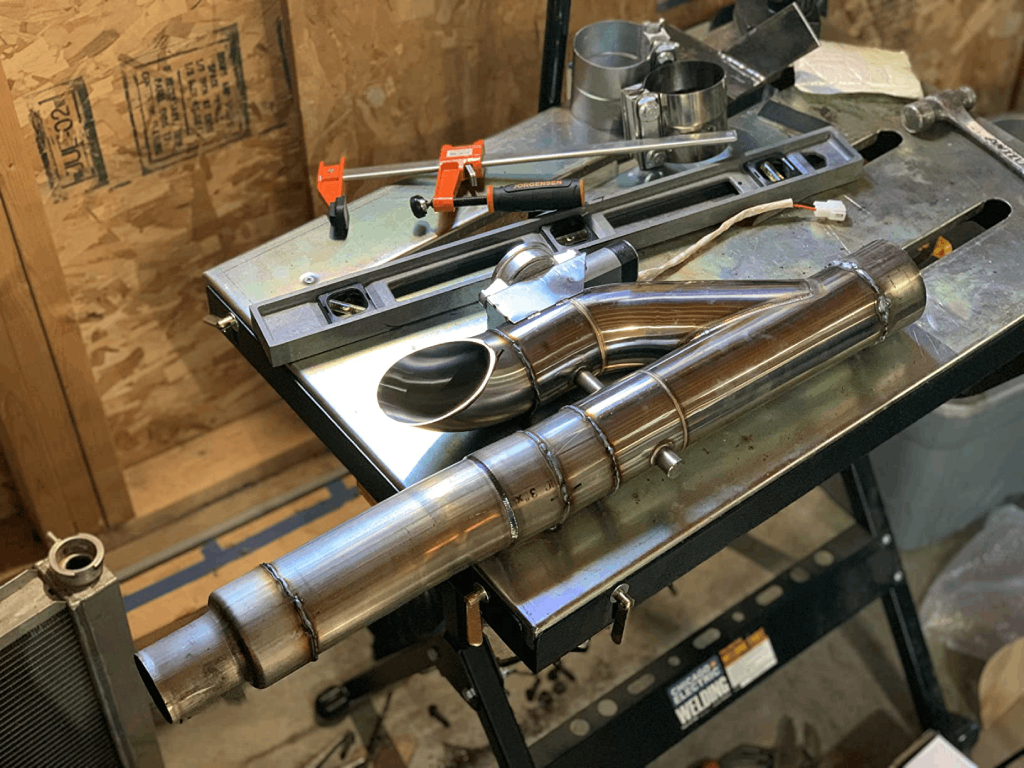
How Placement Affects Sound
The zone you pick changes two things about the sound: how loud it gets, and what it sounds like.
Volume follows the gas path. The shorter the path from the engine to the open cutout, the louder the result. A converter-back cutout sits closest to the engine of the three zones, so it delivers the biggest jump in volume. Moving the cutout rearward adds pipe between the engine and the outlet, which quiets it down.
Tone changes with the same logic. A front-mounted cutout produces a sharper, more aggressive note because the gas exits before it has time to smooth out. A rear-mounted unit gives a flatter, duller sound. The contrast between the cutout open and closed is also strongest at the front, because the difference between muffled and unmuffled flow is greatest there.
Open-versus-closed contrast is really the number most customers are chasing, even if they never say so. A front-zone install can go from a fully muffled cruise to a sharp bark with almost no middle ground, which is what makes it feel dramatic. A rear-zone install has a much narrower contrast, because in both states the gas has still passed the muffler, so the open valve mostly adds a little volume and a little rasp rather than transforming the note. If we are describing this to a shop, we frame it as a ratio rather than a raw loudness figure: front-zone builds change the character most when the valve moves, rear-zone builds change it least.
For shops, this matters because customers describe what they want in sound terms, not placement terms. Someone asking for “aggressive” is usually a converter-back candidate. Someone who wants “a little more rumble than stock” is usually looking at the middle zone.
Legal Considerations by Placement
State rules vary widely. The exhaust cutout laws by state guide covers the legal picture state by state.
Sound levels are regulated almost everywhere, and placement affects how likely a cutout is to cause a problem.
A cutout placed after the catalytic converter is the most likely to be flagged, simply because it is the loudest and the most visible violation when open. Many jurisdictions set a decibel limit for exhaust systems, and this zone is the one most likely to exceed it. Some areas also treat any modification to the exhaust ahead of the converter as a violation regardless of sound.
A before-the-muffler placement is somewhat less conspicuous. It is quieter than the front zone, so it is less likely to trigger a roadside sound check, but it can still fall foul of the same decibel rules when open. Rear placements are the least likely to draw attention because the sound output is closest to stock.
The other point that catches owners out is that a cutout does not have to be open to be a problem. Some jurisdictions assess the vehicle as presented, and a visible bypass valve or an obvious aftermarket exit can prompt a closer look even when the valve is closed. In others, the requirement is that the system as driven stays within the limit, which means the closed state is what is being judged on a normal commute. A roadside check in practice is less scientific than people assume: an officer who suspects a violation typically listens first, then may ask the driver to hold a steady rpm while a meter is held at a set distance and angle from the tailpipe. That is why the same vehicle can pass in one county and fail in the next.
We raise both possibilities because they change how a shop should advise a customer. The safest framing we can offer, and still just a framing rather than legal advice, is that a build should be checked in both states against the local rule, not only the state the owner uses on weekends.
The rules vary widely by state and by municipality within a state. We always tell customers to check their local code before they commit to a zone, because a build that is fine in one county can be a ticket in the next one over. We’re a supplier, not a law firm, so we point people to the letter of their local rules rather than guess.
Vehicle-Specific Placement
The right zone also depends on what the cutout is going into.
Trucks and SUVs give you the most room to work with. Longer frames mean more pipe to choose from, so a truck build can place the cutout almost anywhere along the run without crowding. This flexibility is why truck installs are the most common candidates for a converter-back placement, where sound is the priority.
Cars run tighter. Unibody layouts, low ground clearance, and tightly routed exhaust leave fewer workable spots. A car build usually needs a measurement-first approach, where the shop maps the available pipe before ordering. Fitting a cutout into a cramped car undercarriage is where careful planning pays off, and where a wrong guess costs a rework.
Diesels have their own considerations. The exhaust note of a diesel is already different, and the hardware that suits a gasoline system may not behave the same way. On a modern diesel the valve belongs downstream of the DPF, full stop — anything ahead of it interferes with the aftertreatment system. Diesel builds are their own specialty, and they reward a shop that knows the platform rather than guessing from a gasoline template.
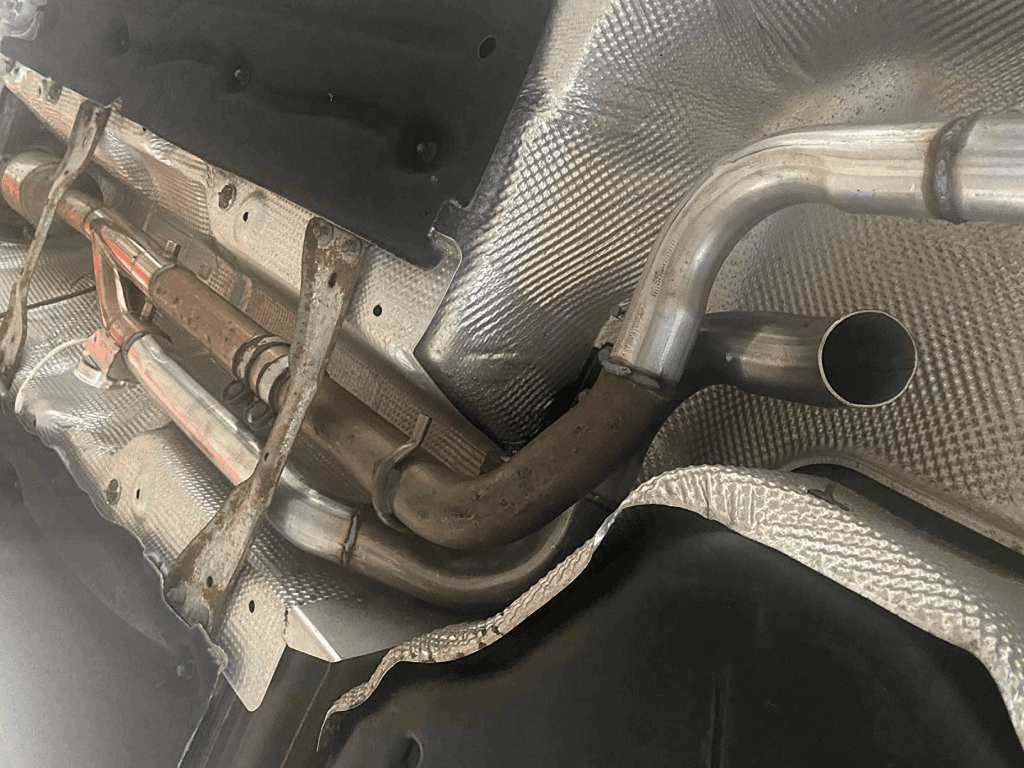
Common Placement Mistakes
Mounting too far forward. Pushing the cutout ahead of the converter is a common error. It can interfere with the converter’s operation and it invites legal trouble. The converter needs the exhaust flow to do its job, and bypassing it defeats the emissions hardware the vehicle was built with.
Mounting too far back. A cutout placed behind the muffler often disappoints. The customer paid for a sound change and got very little of one, because the muffler is still in the path. This is usually a case of a shop not confirming what the customer actually wanted.
Forgetting the service path. A cutout that blocks access to other components, or that sits where a lift arm will crush it, creates problems down the road. We’ve heard from shops that had to redo a placement because the unit blocked an oil drain or a sensor. Planning the location with the rest of the undercarriage in mind saves that rework.
FAQ
Where should an exhaust cutout go on most vehicles?
For most people who want a strong sound change, just after the catalytic converter is the usual choice. It gives the loudest result while keeping the converter in the loop during normal driving. If you want a more moderate change, move it back toward the muffler.
Should the cutout go before or after the muffler?
Before the muffler gives a louder, more aggressive note. After the muffler gives a mild change that many drivers find disappointing. Decide based on how much sound you actually want, not on which spot is easier to reach.
Will a cutout pass inspection?
It depends entirely on where you live and where the cutout sits. A rear placement is less likely to draw attention than a front one. Check your local rules, and keep the cutout closed when you’re not using it.
Does placement change how much power I gain?
Placement affects sound far more than power. A cutout’s main benefit is the sound and the ability to bypass the muffler, not a large horsepower gain. We cover the power question in our Do Exhaust Cutouts Increase HP? article.
Can I install a cutout myself?
It’s a job that rewards experience with exhaust work. The placement decision is the hard part, and it’s easier with a lift and the right tools. Our How to Install an Exhaust Cutout: Step-by-Step Guide walks through the steps.
For the full range of cutout systems and hardware, see the exhaust cutouts collection.
Conclusion
Placement shapes everything else about a cutout build. Decide what you actually want to hear first, then match the zone to it, and the sound, the legal risk, and the fit fall into line.
For cutout hardware, our range covers installs in all three zones. Electric vs Manual Exhaust Cutout: Which Should You Choose? covers the actuation choice once you’ve settled on a location.
Need a quote? Send us your part number. We’ll reply within 24 hours with pricing, MOQ, and delivery options.